
Road safety depends on maintaining enough distance from other road users and being able to stop in time when necessary. That is why stopping distance and following distance are important concepts for both your driving theory exam and everyday driving.

In this article, we explain what stopping distance and following distance are, which factors influence them, and how to calculate them.
What Is Stopping Distance?
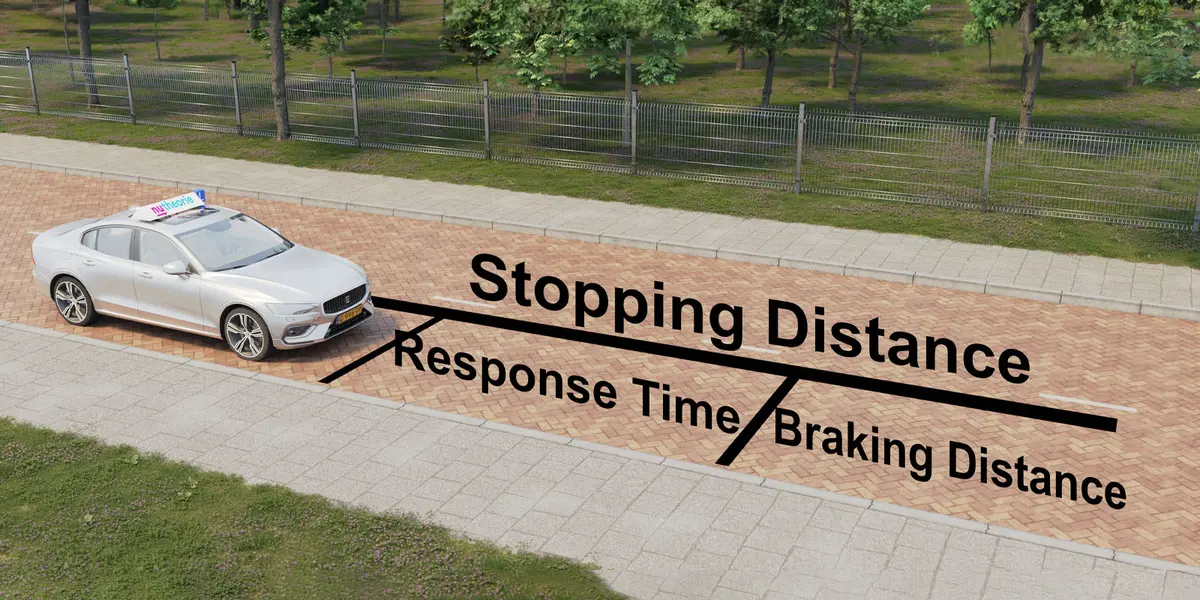
Stopping distance is the total distance a vehicle travels from the moment a driver notices a hazard until the vehicle comes to a complete stop.
Stopping distance consists of two components:
- Reaction distance
- Braking distance
Reaction Distance
Before you can brake, your brain must first recognize what is happening. Then you need to decide to take action and move your foot to the brake pedal. The distance your vehicle travels during this reaction time is called the reaction distance. On average, a driver's reaction time is approximately one second, although this can vary from person to person.
Braking Distance
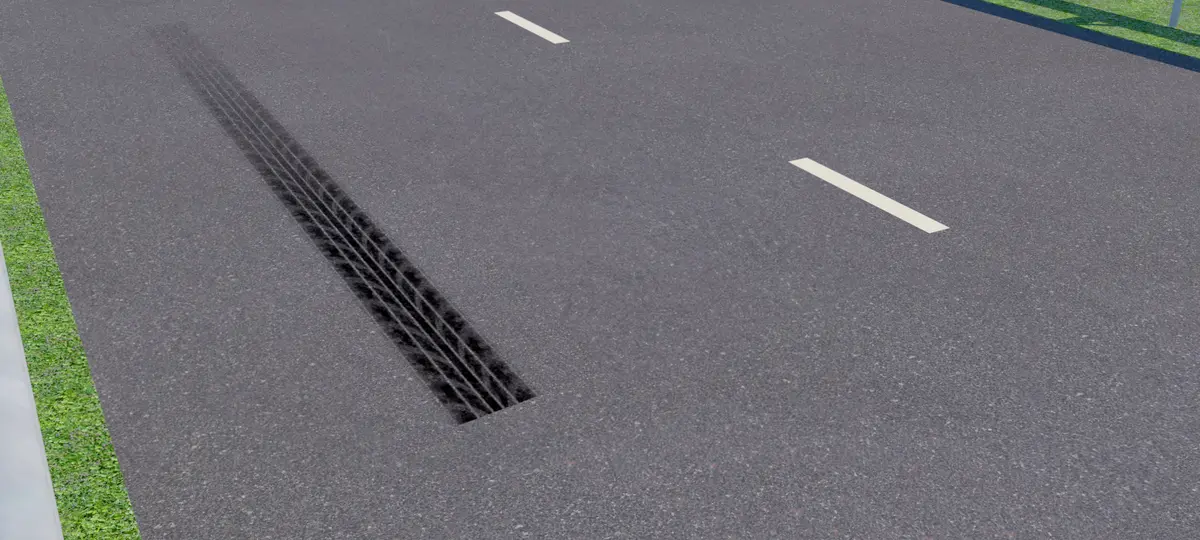
The braking distance is the distance your vehicle travels from the moment you start braking until it comes to a complete stop.
The higher your speed, the longer the braking distance. Other factors can also play an important role.
Stopping Distance
When you add the reaction distance and braking distance together, you get the total stopping distance.
Stopping Distance = Reaction Distance + Braking Distance
What Factors Affect Stopping Distance?
Stopping distance is not always the same. Various circumstances can increase the time and distance needed to come to a complete stop.
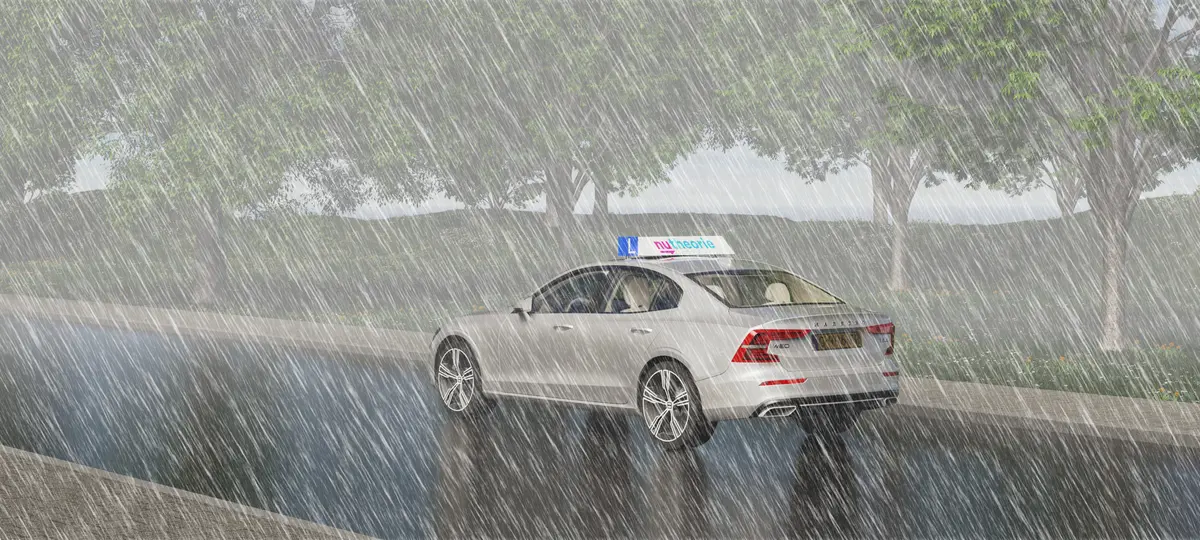
Rain and Snow
A wet or snowy road surface reduces the grip between your tires and the road. As a result, the braking distance becomes longer, which also increases the stopping distance.
New Asphalt
Many people assume that new asphalt is always safer, but that is not entirely true. New asphalt is often smoother than older asphalt, especially when wet. This can increase the braking distance.
Loose Sand, Mud, or Gravel
Materials such as sand, gravel, mud, or loose stones can cause your vehicle to skid. This increases the braking distance and, consequently, the stopping distance.
Fatigue
A tired driver reacts more slowly to unexpected situations. This increases reaction time and therefore increases stopping distance.
Alcohol, Drugs, and Medication
Alcohol, drugs, and certain medications affect a driver's reaction ability. Drivers respond more slowly and need more time to recognize dangerous situations.
Distraction Caused by Phone Use
Even hands-free calling or operating a phone mounted in a holder can be distracting. This means you may react more slowly to situations in traffic, increasing both reaction distance and stopping distance.
For this reason, it is always advisable to wait until you are safely parked before making calls or checking messages.
What Is Following Distance?
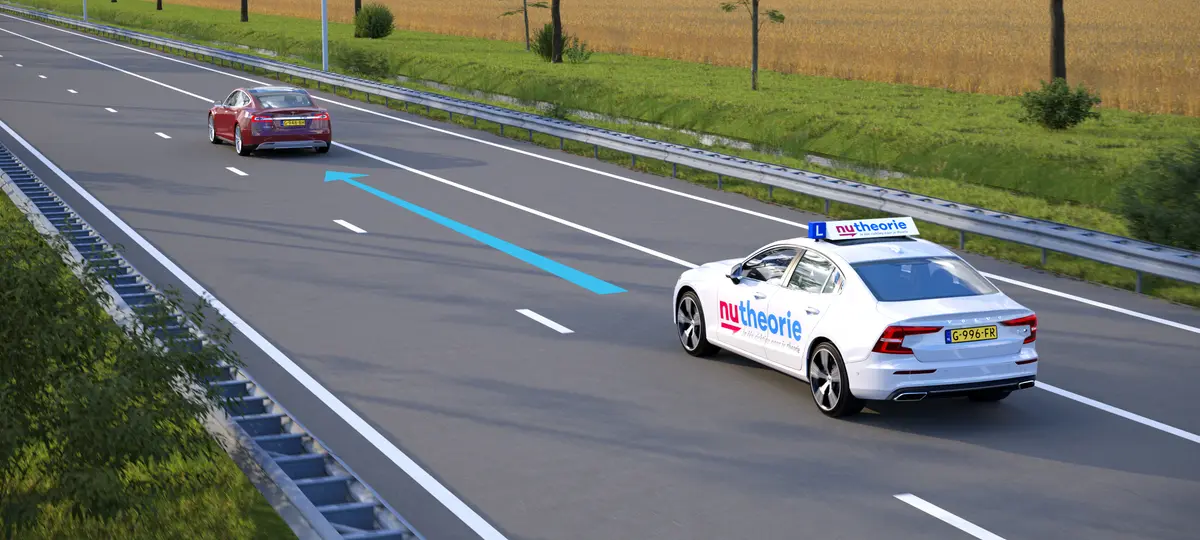
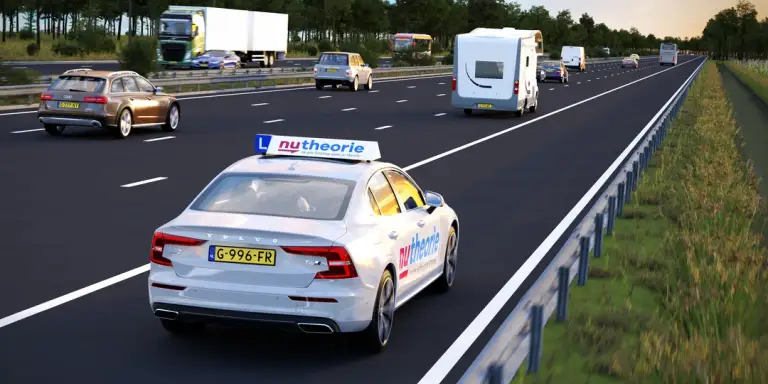
Following distance is the space between your vehicle and the vehicle in front of you.
This distance must be large enough to allow you to stop safely if the driver ahead suddenly brakes. A following distance that is too short significantly increases the risk of a rear-end collision.
The 2-Second Rule
A common method for maintaining a safe following distance is the 2-second rule.
Here's how it works:
- Choose a fixed object along the road, such as a signpost or tree.
- When the vehicle in front passes that object, start counting.
- If you pass the same object at least two seconds later, your following distance is sufficient.
- If you reach the object in less than two seconds, you are following too closely.
The 2-second rule is a simple way to quickly check whether you are maintaining a safe distance while driving.
Calculating Following Distance in Meters
During your theory exam, you may also be asked to calculate following distance in meters.
A useful rule of thumb is:
- Divide your speed by 2.
- Add 10% to the result.
Example
You are driving at 100 km/h.
- 100 ÷ 2 = 50
- 10% of 50 = 5
- 50 + 5 = 55 meters
At a speed of 100 km/h, you should maintain approximately 55 meters of following distance.
Increase Your Following Distance in Bad Weather
In poor weather conditions, a two-second following distance is often not enough.
Examples include:
- Rain
- Snow
- Ice
- Fog
Slippery roads increase braking distance, while fog reduces visibility. Therefore, it is important to reduce your speed and maintain a greater following distance than usual.
Conclusion
Stopping distance and following distance are essential concepts for both your driving theory exam and safe driving in practice. Stopping distance consists of reaction distance and braking distance, while following distance determines how much space you keep between your vehicle and the one in front of you.
By maintaining sufficient distance, adapting to weather conditions, and avoiding distractions, you not only improve your chances of passing the theory exam but also help create a safer road environment for everyone.




.webp)
