.jpg)

Anyone who drives regularly will eventually experience it: you suddenly hear a siren or notice flashing blue lights in your mirror. It could be a police car, ambulance, fire engine, or another emergency vehicle responding to an urgent call. In that moment, it's important to know exactly what to do.

Many drivers panic when an emergency vehicle approaches at high speed. However, staying calm and acting predictably is the safest response. By making the right decisions, you help emergency services reach their destination as quickly as possible while keeping everyone on the road safe.
In this article, we'll explain when you need to move aside for an emergency vehicle, how to do it safely, and the rules you should know for your driving theory test.
When Should You Move Aside for an Emergency Vehicle?
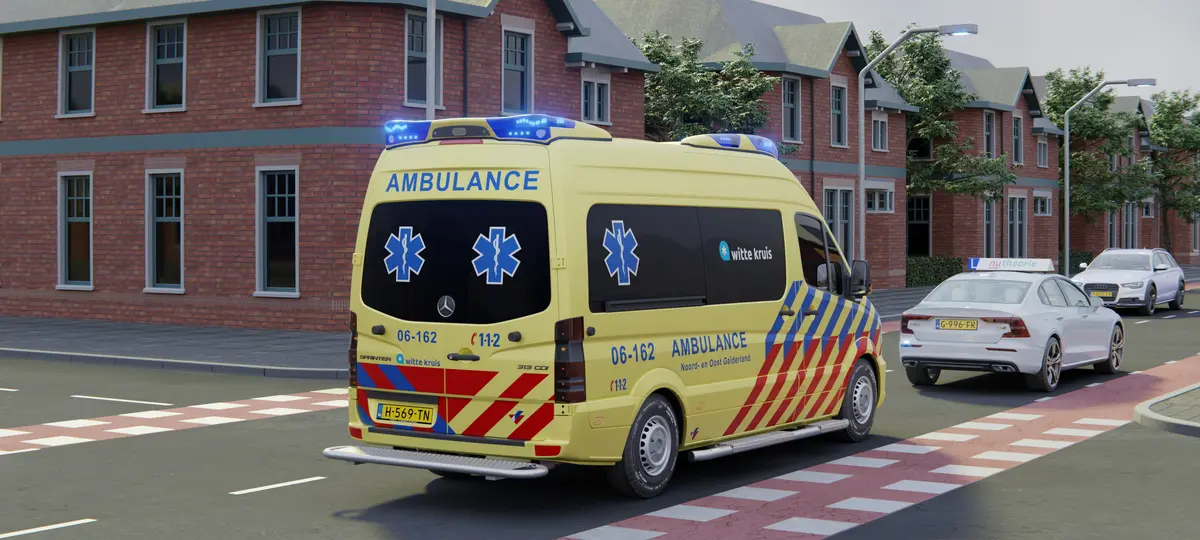
You do not have to pull over for every emergency service vehicle. You are only required to make way when an emergency vehicle is using flashing blue lights, a siren, or both.
If you see or hear these warning signals, you must make space so the vehicle can continue safely and without unnecessary delay.
An emergency vehicle using its lights and siren always has priority. This applies even if you would normally have the right of way under standard traffic rules.
What Should You Do if an Emergency Vehicle Is Behind You?
If an emergency vehicle approaches from behind with flashing lights and a siren, stay calm.
The driver of the emergency vehicle needs to predict your movements. Avoid sudden steering, harsh braking, or unexpected lane changes.
Follow these steps:
- Check your mirrors to see where the vehicle is approaching from.
- Continue driving in a predictable manner.
- Move as far to the right as it is safe to do so.
- Allow the emergency vehicle to pass on your left whenever possible.
- Continue your journey only after it is safe.
Remaining calm and predictable allows emergency drivers to safely navigate through traffic.
What Should You Do at an Intersection?
If you arrive at an intersection at the same time as an emergency vehicle using flashing lights and a siren, always allow the emergency vehicle to go first.
It doesn't matter:
- which direction the vehicle is coming from;
- who would normally have the right of way;
- whether there are traffic lights or priority signs.
An emergency vehicle responding to an emergency always takes priority. Make space safely without creating additional hazards for other road users.
Moving Aside During Traffic Jams
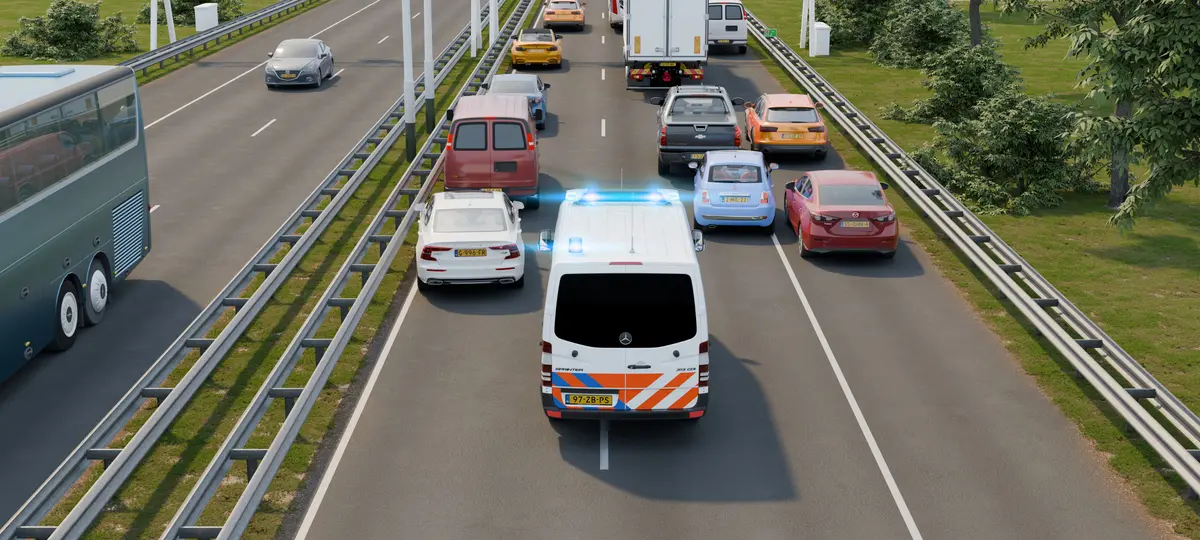
During heavy traffic or a traffic jam, moving aside can be more challenging because all lanes may be occupied. In these situations, drivers should create an emergency corridor.
This is done by:
- vehicles in the left lane moving to the left;
- vehicles in all other lanes moving to the right.
This creates a clear path in the middle of the road, allowing emergency vehicles to pass quickly.
Create the emergency corridor as soon as you notice an emergency vehicle approaching and keep it clear until all emergency vehicles have passed.
Which Vehicles Are Emergency Vehicles?
The most common emergency vehicles include:
- police cars;
- ambulances;
- fire engines.
However, other vehicles may also be legally permitted to use flashing lights and sirens.
Road Service Vehicles
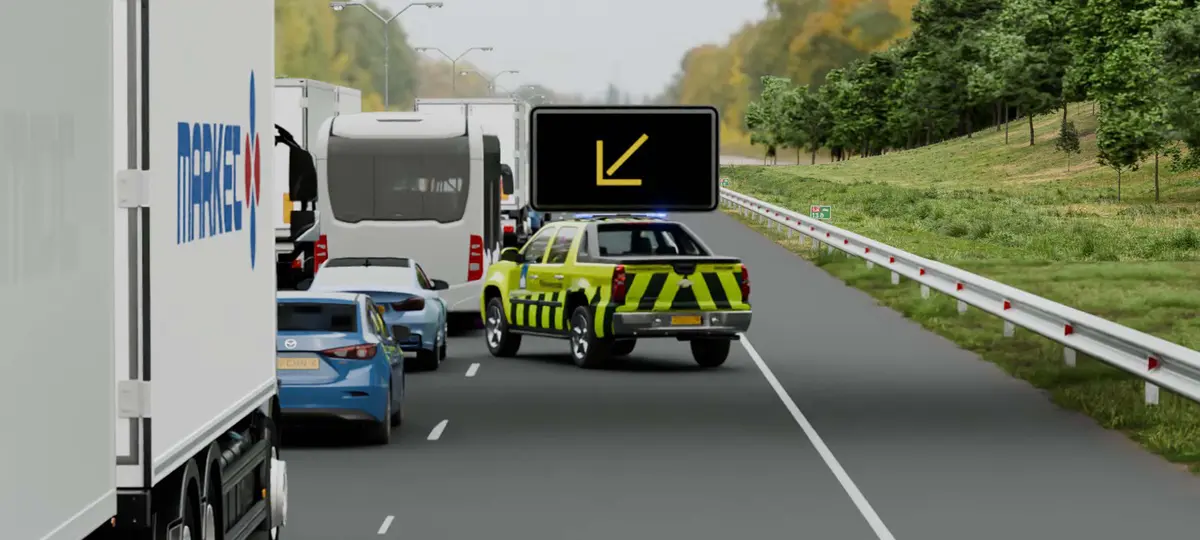
In the Netherlands, certain Rijkswaterstaat road service vehicles may also operate as emergency vehicles when using flashing blue lights and a siren.
These vehicles are often deployed to:
- major traffic accidents;
- road closures;
- dangerous traffic situations.
Because they need to reach incidents quickly to keep roads safe, you must also give these vehicles enough room to pass.
Unmarked Police Vehicles
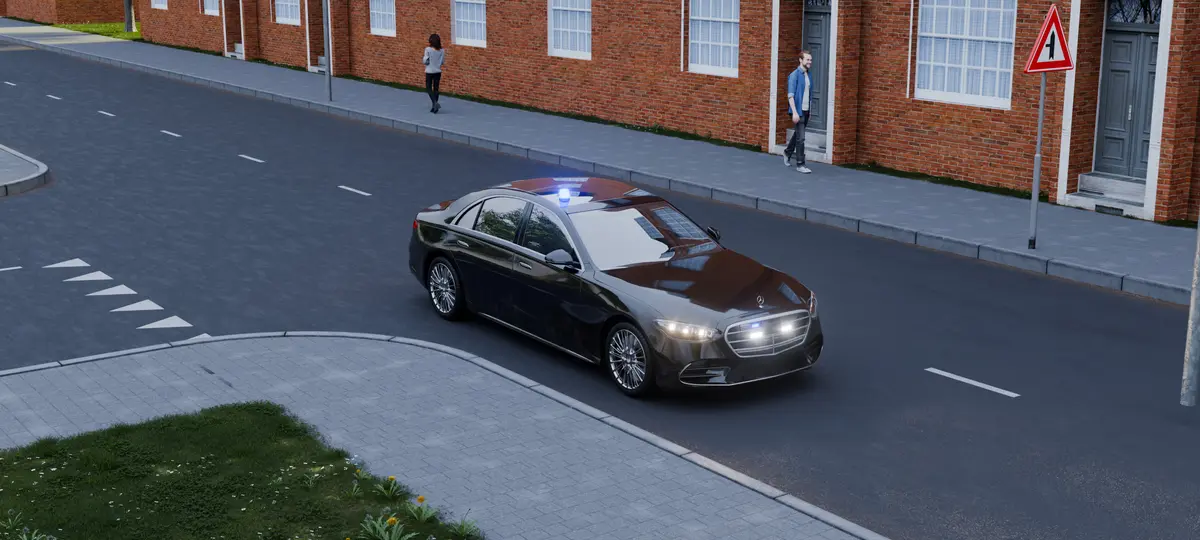
Sometimes you'll see an unmarked black or grey car using flashing blue lights and a siren. These are often undercover or specialist police vehicles.
Although they may not look like a traditional police car, the same rules apply.
If an unmarked police vehicle is using its emergency signals, you must safely give it the right of way.
Common Mistakes Drivers Make
Many drivers make the same mistakes when an emergency vehicle approaches.
Some of the most common are:
- braking suddenly;
- changing lanes unexpectedly;
- stopping in the middle of the road;
- failing to check mirrors;
- not making space when it is safe to do so.
In almost every situation, staying calm and driving predictably is the safest approach.
Why Is This Important for Your Driving Theory Test?
Questions about emergency vehicles regularly appear on driving theory tests. You should understand:
- when a vehicle qualifies as an emergency vehicle;
- when you are required to make way;
- how to move aside safely;
- what to do at intersections and in traffic jams.
Understanding these rules not only improves your chances of passing your theory test but also makes you a safer and more responsible driver.
Prepare with Confidence
Knowing how to react when an emergency vehicle approaches is an essential part of safe driving. During your theory test, you may be asked about situations involving police cars, ambulances, fire engines, or other emergency vehicles using flashing lights and sirens.
At Nutheorie, we explain these traffic situations step by step through clear lessons, practice questions, and real-world examples.
Whether you choose a one-day course or an online course, you'll gain the knowledge and confidence you need to pass your car theory test.



.webp)
