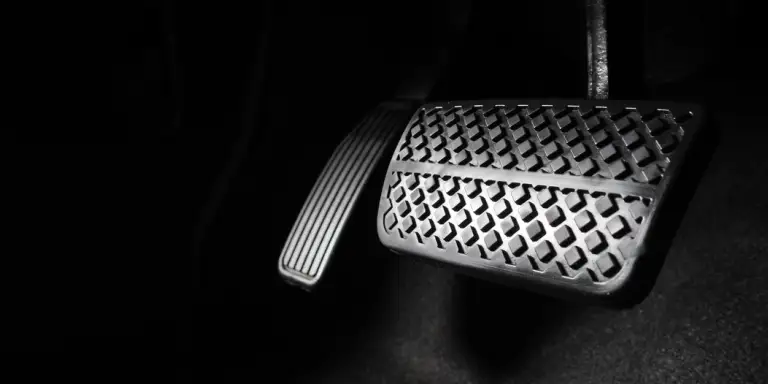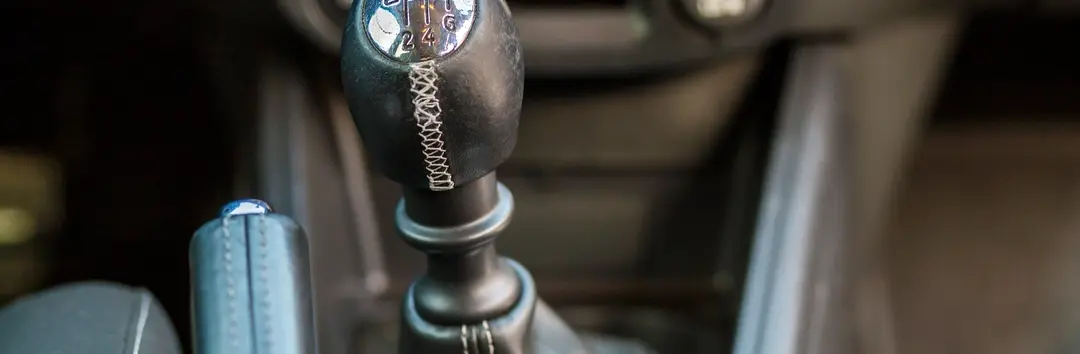

Press the clutch, select a gear, accelerate, and slowly release the clutch again. It sounds simple, but shifting gears can be quite challenging during your first driving lessons. Especially when you stall at a traffic light and have to try pulling away again while cars are waiting behind you.

Fortunately, driving a manual car becomes easier the more you practise. You learn to feel the clutch, recognise when the engine needs a different gear, and gain more control over the car.
But how does a manual gearbox actually work? Why do you need a clutch, and when should you shift up or down? In this blog, we explain step by step how the system works and how to learn to change gears smoothly in different traffic situations.
How Does a Manual Gearbox Work?
A manual gearbox ensures that the engine's power is transferred to the wheels in a suitable way. The different gears help you move off from a standstill, build up speed, and maintain sufficient control over the car while driving.
For example, you use first gear to move off from a standstill. This gear provides relatively high pulling power, but it is not designed for sustained high-speed driving. Once you have built up some speed, you shift into second gear. You can then continue shifting up to third, fourth, and possibly fifth or sixth gear.
But how do you actually change gears without making the car jerk?
This is where the clutch comes in. It allows you to temporarily disconnect the engine from the gearbox. This means you can select a different gear without the engine continuing to drive the gearbox during the gear change.
When you press the clutch pedal, you interrupt this connection. You then use the gear lever to select another gear. By gradually releasing the clutch afterwards, you restore the connection smoothly.
When moving off, you gently apply the accelerator to help the car move forward smoothly. When changing gears while already driving, you also release the clutch in a controlled manner after selecting the next gear.
In short: the clutch helps you change gears smoothly, while the gearbox ensures that the engine's power suits your speed and driving conditions.
When Should You Shift Up?
Shifting up means changing to a higher gear. You usually do this as you build up speed and the engine begins to run at higher revs.
When moving off, you use first gear. Once you have built up enough speed, you shift into second. You can then continue shifting into third, fourth, and possibly fifth or sixth gear.
There is no fixed speed at which you must always change gears. The right moment depends on factors such as the car, the engine, the traffic situation, and how quickly you are accelerating. That is why it is important not only to look at the speedometer but also to listen to the engine and feel how the car responds.
Is the engine revving higher and sounding as though it is working hard? It may be time to shift into a higher gear. When driving gently, you can generally shift up sooner than when accelerating more firmly.
The road situation also plays a role. For example, when joining a busy road, you may need to stay in a lower gear for a little longer to maintain sufficient pulling power.
At first, you may need to think consciously about every gear change. That is normal. As you gain more driving experience, you will recognise more quickly when the car needs a different gear.
How Do You Change Gears Smoothly?
Smooth gear changes are mainly about timing and control. You want to avoid making the car jerk, causing the engine to rev unnecessarily high, or losing drive because you operate the clutch incorrectly.
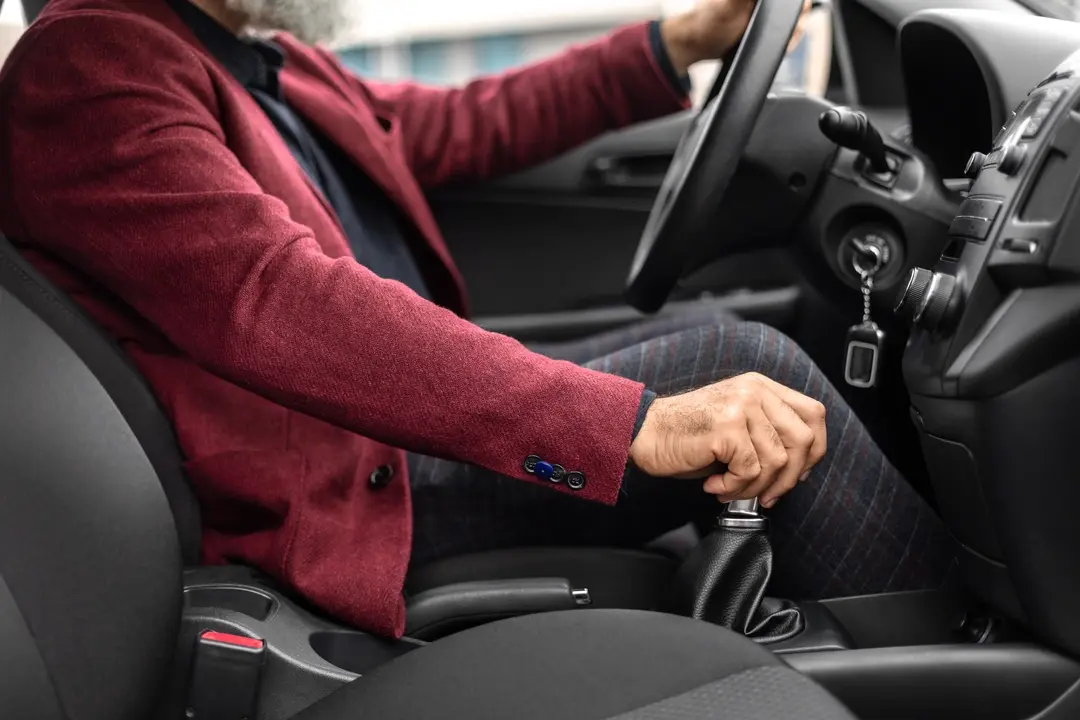
When shifting up while driving, release the accelerator and press the clutch pedal. Then use the gear lever to select the next gear. Release the clutch in a controlled manner and apply the accelerator again.
It is important not to release the clutch unnecessarily slowly once you are changing gears, but you should not release it abruptly either. The right movement varies depending on the situation and becomes more natural with practice.
When moving off from a standstill, the clutch requires extra attention. You need to learn to recognise the biting point: the moment when the clutch starts reconnecting the engine and the wheels. You will often notice this because the engine speed changes or the car begins to move slightly.
If you release the clutch too quickly, the engine may stall. If you do not apply enough accelerator or release the clutch awkwardly, the car may jerk. This is perfectly normal, especially at the beginning.
A helpful tip: Try not to keep looking down at your feet or the gear lever. Practise the movements during your driving lessons so that you can increasingly change gears by feel. Meanwhile, keep your attention on the road and the traffic around you.
Downshifting and Braking
You shift up when building up speed. Downshifting means changing to a lower gear. This may be necessary when slowing down, driving uphill, or maintaining better control as you approach a bend.
Imagine you are driving in fourth gear and the traffic ahead begins to slow down. You release the accelerator and brake if necessary. When your speed becomes too low for fourth gear, you can shift down to third or an even lower gear if the situation requires it.
Press the clutch, select the lower gear, and release the clutch in a controlled manner. This allows the engine to work more effectively with the car's speed.
Downshifting can also help you use engine braking. When you release the accelerator while the car remains in gear, the engine's resistance helps slow the car down. On a downhill stretch, this can help you maintain better control of your speed. However, engine braking does not replace using the brakes when you actually need to reduce speed.
You do not need to downshift immediately every time your speed decreases slightly. Look at the traffic situation and assess which gear is appropriate for your speed.
If you downshift too early, the engine may rev unnecessarily high. If you downshift too late, the car may jerk or the engine may struggle to drive the car smoothly.
Try to look ahead. Are you approaching a bend, or is the traffic further ahead slowing down? You can adjust your speed in good time and decide which gear you will need afterwards.
Changing Gears in Different Traffic Situations
While driving, you will encounter situations that require a little more attention when changing gears. Understanding what the car needs in each situation helps you judge how to respond.
Moving Off on a Hill
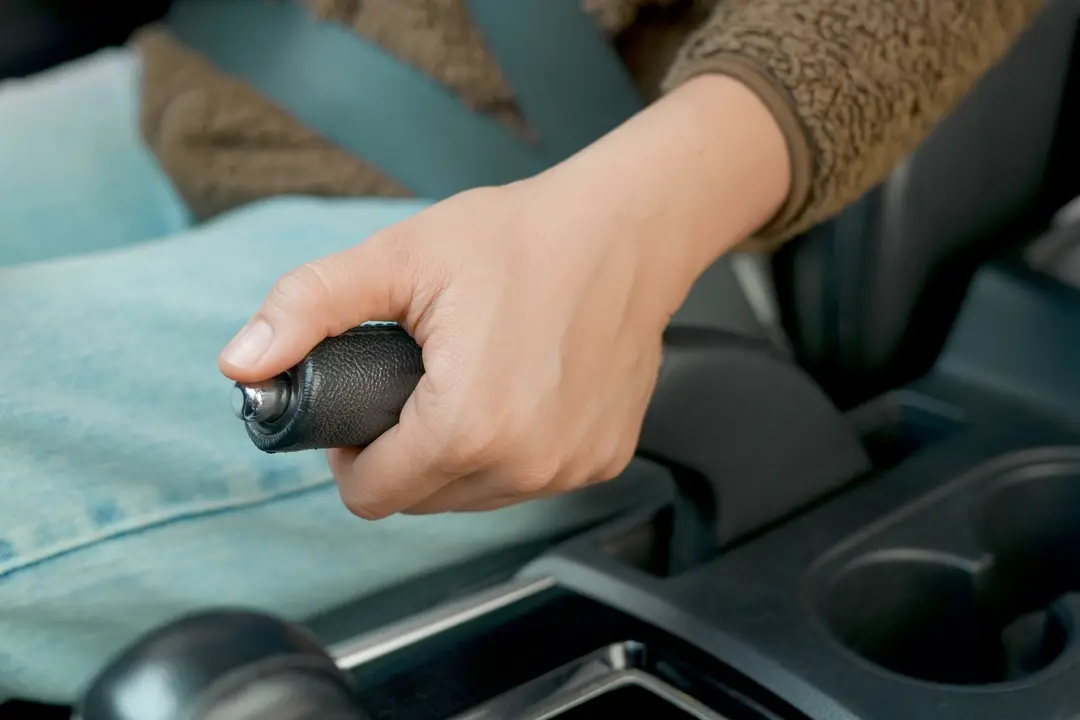
Moving off on a hill can be difficult at first because the car may roll backwards if you release the brake before you have sufficient control over the clutch and accelerator.
In a manual car, you need to learn to recognise the clutch's biting point and apply enough accelerator to move off. You can use the handbrake to help, depending on the situation and your driving instructor's guidance.
Release the clutch in a controlled manner and gently apply the accelerator. Once the car has enough pulling power to move forward, you can release the handbrake if you have used it.
Practise this first in a suitable, quiet location with guidance from your driving instructor. With enough practice, you will become more familiar with how the clutch and accelerator work together.
Changing Gears in Traffic Jams
In slow-moving traffic, you regularly need to slow down, stop, and move off again. This requires good control of the clutch and accelerator.
When traffic is moving at walking pace, you do not need to keep changing between different gears. Sometimes you can move forward slowly in first gear. When you come to a complete stop, press the clutch and use the brake to keep the car under control.
Avoid driving for unnecessarily long periods with the clutch partially engaged. This can cause additional wear. Also, look sufficiently far ahead so that you do not have to stop and move off again every time the traffic makes a small movement.
Slowing Down Before a Bend
When approaching a bend, it is sensible to adjust your speed in good time. Brake before the bend if necessary and select a gear that suits the speed at which you can safely negotiate it.
This allows you to focus more on steering and the traffic around you while taking the bend. It also helps you avoid making major adjustments to your speed or gear during the turn.
The appropriate gear depends on how sharp the bend is, your speed, and the conditions. Therefore, do not try to use the same gear for every bend.
Common Gear-Changing Mistakes
Learning to change gears takes practice. You may make mistakes during your first driving lessons, but recognising what went wrong helps you improve.
1. Releasing the Clutch Too Quickly
If you release the clutch too quickly, the car may jerk or the engine may stall. Practise recognising the biting point and releasing the clutch in a controlled manner.
2. Staying in a Low Gear for Too Long
If the engine is revving high, it may be time to shift up. Listen to the engine and pay attention to how the car responds.
3. Driving in Too High a Gear
If you are driving too slowly for the selected gear, the engine may sound strained and the car may respond less smoothly when you press the accelerator. Downshifting can help in this situation.
4. Looking at the Gear Lever Too Much
If you constantly look at the gear lever or pedals, you may lose awareness of the traffic around you. Practise using the controls during your driving lessons so you can increasingly change gears by feel. Keep your eyes on the road.
Made a mistake? Stay calm and follow your driving instructor's guidance. Try to understand what went wrong and what you can do differently next time. This will help you gradually build greater control and confidence behind the wheel.
Get on the Road with Confidence
Smooth gear changes come with practice. Learn to recognise when to shift up or down, operate the clutch carefully, and adjust your gear to the traffic situation. If the engine stalls or the car jerks, stay calm and try again. With time, changing gears will become more natural, allowing you to focus on the road and drive with greater confidence.