
Your first driving lesson is a special moment. Perhaps you've never sat behind the wheel before, and you're wondering what it will be like to drive a car. You'll need to get used to the steering wheel, pedals, mirrors, and traffic. Where do you start? And will you have to drive on public roads during your very first lesson?

Fortunately, you don't need to know everything straight away. Your first driving lesson is mainly about getting familiar with the car, your instructor, and the basics of driving. You'll learn how to adjust your seating position, how the car's controls work, and how to keep the car under control. Depending on your driving school, experience, and progress, you may even drive on public roads during your first lesson.
In this blog, you'll discover what to expect from your first driving lesson, how to prepare for it, and what happens afterwards. This will help you understand what lies ahead and perhaps make you feel a little more confident when you get into the car.
You Don't Have to Know Everything Straight Away
One common question before a first driving lesson is whether you have to do everything yourself from the start. Fortunately, the answer is no. You don't need to drive independently through busy traffic or master every driving technique at once. Your instructor will guide you step by step, helping you get used to driving at a comfortable pace.
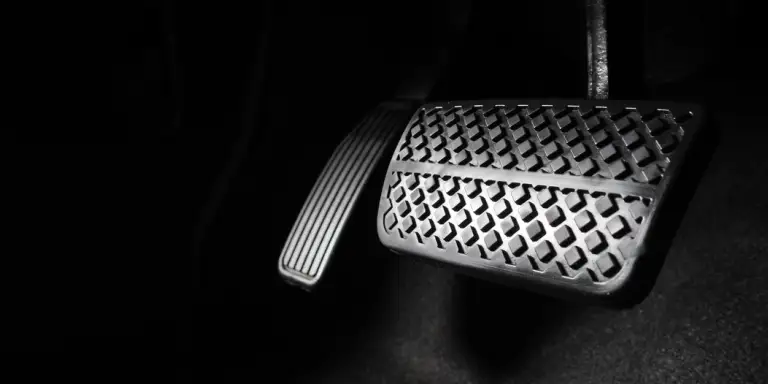
You'll usually start with the basics. You'll learn how to adjust your seat and mirrors, how to hold the steering wheel, and what the different pedals do. You may then practise steering, moving off, and braking. How quickly you move on to the next step depends on your experience and how comfortable you feel.
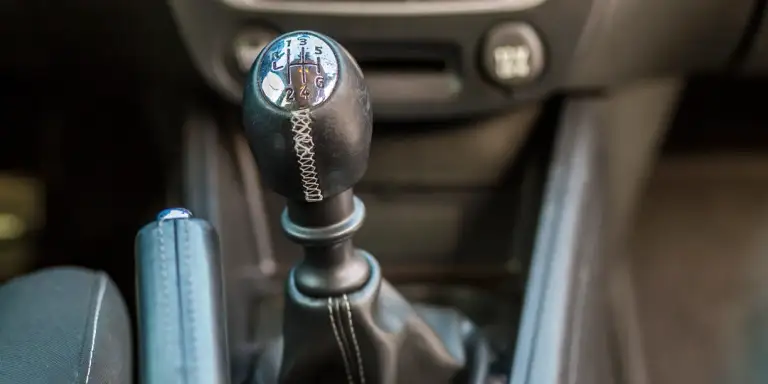
It's perfectly normal to have to think carefully about what your hands and feet are doing at first. Combining different actions also takes time. You don't need to be able to change gears, steer, observe your surroundings, and react perfectly straight away. Your instructor will help you gradually combine these skills and adapt the lesson to your level.
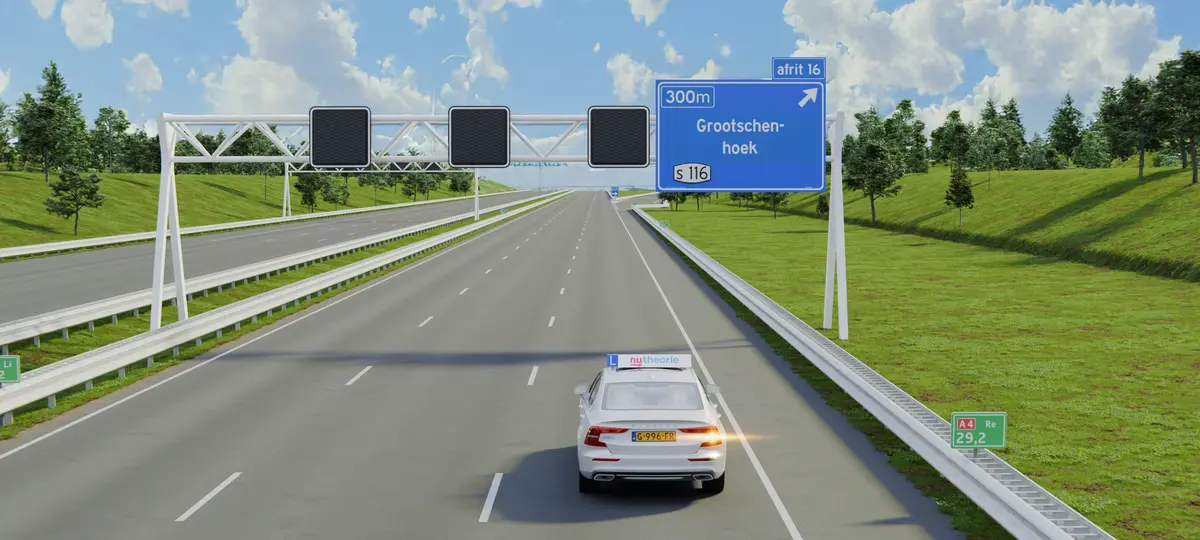
What Will You Learn During Your First Driving Lesson?
Your first driving lesson is mainly about getting acquainted with the car and becoming comfortable behind the wheel. You won't be expected to handle complicated traffic situations just yet. The focus is usually on the fundamentals of driving and understanding how the car responds to your actions.
For example, you'll become familiar with the car's controls and learn how to adopt a good driving position. You may then practise steering, moving off smoothly, and braking. Your instructor will explain what to do and give you time to practise.
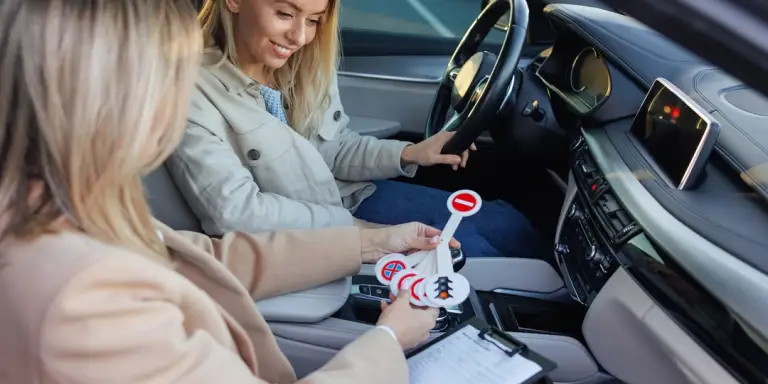
Driving school cars may have dual controls, allowing your instructor to intervene when necessary. This means the instructor has their own set of pedals to help slow down or stop the car safely. You can therefore practise under supervision while gradually gaining more control.
Will You Drive on Public Roads During Your First Lesson?
This depends on the driving school, instructor, and learner. Some learners drive on public roads during their very first lesson, while others start by practising in a quiet area. There is no fixed rule that determines exactly what a first driving lesson should look like.
If you do drive on public roads, your instructor may start on a quiet route where you have enough space to get used to the car. You'll learn not only how to steer and brake, but also how to observe your surroundings and take other road users into account.
At first, it can be difficult to do everything at once. You may need to watch the road ahead, pay attention to traffic signs, and listen to your instructor's directions at the same time. That's completely normal. As you gain more driving experience, you'll learn to process information more quickly and combine different actions more naturally.
What If You Make a Mistake During Your First Driving Lesson?
Making a mistake during your first driving lesson is completely normal. You might stall the engine, steer a little too late, or forget to check your mirror. This doesn't mean you're not capable of learning to drive. You're simply practising and developing new skills.
Try not to focus too much on avoiding every possible mistake. Listen to your instructor's explanations and try to understand what you could do differently next time. This way, you'll learn not only which action to take, but also why it matters.
If you find something difficult or don't immediately understand an instruction, don't hesitate to say so. Your instructor is there to guide you and can explain a technique again or practise it with you. By treating mistakes as learning opportunities, you'll gradually build your confidence.
How Can You Prepare for Your First Driving Lesson?
You don't need to do extensive preparation before your first driving lesson. The most important things are to arrive on time, get enough rest, and wear clothes that allow you to move comfortably. Your footwear is particularly important: choose shoes with a thin, firm sole that allows you to feel and operate the pedals properly.
It can also help to think beforehand about what makes you nervous. Are you worried about stalling the car? Does the idea of driving among other road users make you anxious? Or do you simply have no idea what to expect? Feel free to discuss with your instructor. They can take your concerns into account and explain how the lesson will be structured.
You don't need to memorise all the traffic rules before your first lesson, either. Your driving lessons are designed to teach you the knowledge and skills you need to drive safely. An open mind and a willingness to learn are a great place to start.
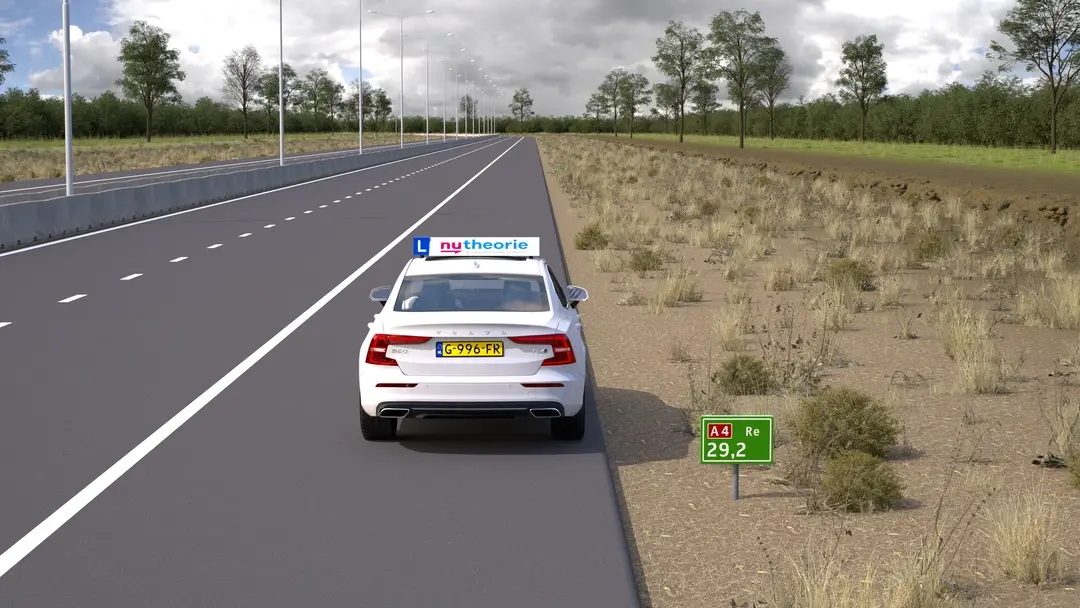
What Happens Immediately After Your First Driving Lesson?
At the end of your first driving lesson, your instructor will bring the car to a stop in a safe place. You'll then briefly discuss how the lesson went. What went well? Which actions did you find difficult? And what can you practise further during your next lesson?
This review is also a good opportunity to ask questions. Perhaps you'd like to understand why you had to react in a particular way in a certain situation, or what you can do to make a driving technique easier. Discussing your instructor's feedback will help you better understand what you've learned.
You'll often look ahead to your next lesson as well. You might continue practising steering and braking, or it may be time to focus more on observation and anticipating the actions of other road users.
After your first lesson, you'll at least have an initial impression of driving and your instructor's teaching style. You may still feel a little uncertain, but you'll know what it feels like to sit behind the wheel. That's an important first step.
How Quickly Can You Learn to Drive?
After your first driving lesson, you might wonder how long it will take before you can drive independently. There's no fixed answer. Everyone learns to drive at their own pace. Some learners quickly get a feel for operating the car, while others need more time to learn how to change gears, observe their surroundings, or assess traffic situations.
The structure and regularity of your driving lessons also play a role. At first, the focus is mainly on the basics: operating the car, observing your surroundings, and performing the correct actions. As you gain experience, you'll practise more complex situations, such as junctions, roundabouts, merging into traffic, parking, and driving in busier areas.
There's no point constantly comparing yourself with other learners. The goal of your driving lessons isn't to master certain techniques as quickly as possible. It's to develop enough knowledge, experience, and confidence to participate in traffic safely and independently.
Keep Asking Questions and Learn from Every Lesson
You shouldn't be afraid to ask questions during your driving lessons. Don't understand why you need to take a particular action at a junction? Or are you unsure what to look out for when approaching a roundabout? Just ask your instructor. Understanding why you do something makes it easier to apply that knowledge independently later.
You can also take a moment after each lesson to reflect on what you've learned. Which actions went well? What did you find difficult? And what would you like to focus on during your next lesson? This will give you a clearer picture of your progress and help you practise more effectively.
Don't expect every lesson to go smoothly. You might have a lesson where everything seems to go well, only to find that a particular technique feels difficult again the next time. That's part of the learning process. By practising regularly and applying your instructor's feedback, you'll gradually develop your driving skills.
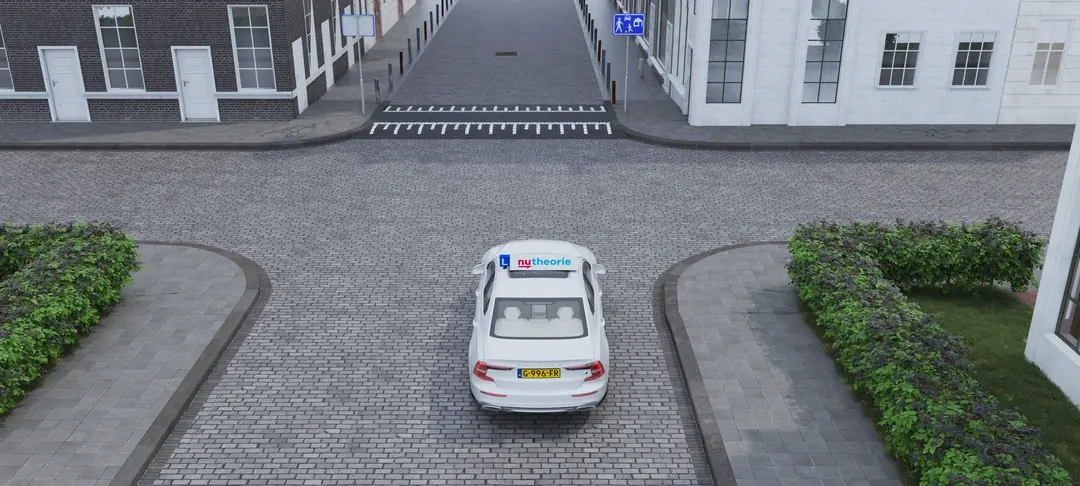
Ready for Your First Driving Lesson?
Your first driving lesson is mainly an opportunity to get familiar with the car and discover what it feels like to sit behind the wheel. You don't need to do everything perfectly, and it's okay if you don't get a technique right the first time. With your instructor's guidance, you'll gradually learn how to operate the car, what to pay attention to, and how to participate in traffic safely.
The most important thing is to give yourself time to learn. Ask questions, listen to your instructor's feedback, and don't be too hard on yourself when something feels difficult. Every driving lesson is another opportunity to gain experience and build confidence.
So take a deep breath, get into the car, and give yourself room to learn. Your first driving lesson doesn't have to be perfect. It's the beginning of your driving journey!