
Getting your driver’s license is a major milestone. For many learners, the most exciting and nerve-wracking part of the entire process is the CBR practical driving exam. You’ve studied the theory, taken driving lessons, and spent hours practicing in traffic — now it’s time to show that you can drive independently and safely.

But what exactly happens during the practical exam? What does the examiner pay attention to? And how can you best prepare yourself?
In this complete guide, you’ll read everything you need to know about the CBR practical driving exam, so you can approach exam day with more confidence.
What Is the CBR Practical Driving Exam?
The CBR practical driving exam is the official driving test conducted by the Central Office for Motor Vehicle Driver Testing (CBR) in the Netherlands. During this exam, an examiner assesses whether you can participate in traffic safely, independently, and responsibly.
The exam is not only about controlling the vehicle. The examiner mainly looks at:
- Traffic awareness
- Safe driving behavior
- Decision-making
- Independent driving
- Correct application of traffic rules
You do not need to be a perfect driver, but you must show that you can drive safely without assistance from your instructor.
How Long Does the CBR Practical Driving Exam Last?
A standard CBR practical driving exam usually lasts around 55 minutes. This includes several parts:
- Introduction and identity check
- Eye test
- Explanation of the exam
- Driving session of approximately 35 minutes
- Possible special maneuvers
- Discussion of the result
The actual driving time is usually around 35 minutes.
What Should You Bring to the Exam?
For the CBR practical driving exam, you need to bring a few important things:
- A valid identification document
- Your reservation number (usually arranged by your driving school)
- Your theory certificate if required
Make sure you arrive on time. Arriving late may mean your exam cannot take place.
The Eye Test During the Practical Exam
Before driving begins, the examiner often performs a short eye test. You must be able to read a license plate from a distance.
If you cannot see properly, you may not be allowed to start the exam. Therefore, always wear your glasses or contact lenses if you need them.
Questions About the Car
During the CBR practical driving exam, the examiner may ask a few questions about the vehicle. For example:
- Where do you check the oil?
- How do the lights work?
- Where do you refill windshield washer fluid?
- What does a warning light mean?
You do not need to be a mechanic, but basic knowledge of the vehicle is important.
What Happens During the Driving Test?
During the drive, the examiner rides with you and gives directions on where to go.
You may encounter different traffic situations, such as:
- Driving in residential areas
- Roundabouts
- Highways
- Intersections
- Merging and exiting
- Parking
- Parallel parking or turning around
The examiner continuously observes how you react to traffic situations.
What Does the Examiner Look At?
During the CBR practical driving exam, everything revolves around safe participation in traffic. The examiner evaluates several aspects, including:
Observation Skills
Good observation skills are one of the most important parts of the CBR practical driving exam. The examiner wants to see that you are constantly aware of your surroundings and notice potential dangers in time.
This means you should not only look ahead, but also regularly check your rearview mirror, side mirrors, and blind spots.
Many candidates make the mistake of checking without making it clearly visible. That is why it is important to visibly move your head during mirror and shoulder checks. This is especially important when:
- Overtaking
- Merging
- Turning
- Changing lanes
- Pulling away after parking
A proper blind spot check is essential.
The examiner also pays attention to whether you look far ahead in traffic. Looking further ahead helps you predict situations better and react more calmly to unexpected events.
Speed Control
During the CBR practical driving exam, speed is not only about following the speed limit, but mainly about adapting your speed to the situation.
Many learners think driving slowly is safer, but driving too slowly can actually be dangerous and may show insecurity. The examiner expects you to:
- Accelerate smoothly
- Keep up with traffic
- Choose the correct speed
- Brake in time when necessary
For example, on the highway you need to gain enough speed while merging. In residential areas, you must drive extra carefully because of cyclists, pedestrians, and unexpected situations.
Recognizing speed limit signs also plays a major role. Candidates often fail because they miss traffic signs or react too late to speed limit changes.
Giving Priority
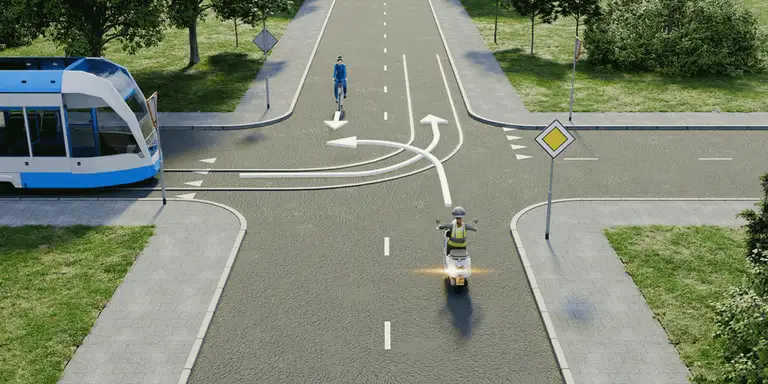
Priority situations are among the most difficult parts of the CBR practical driving exam. The examiner checks whether you understand traffic rules and can safely apply them in busy traffic.
You must quickly assess:
- Who has priority
- When you need to wait
- When you should continue driving
- How to safely cross an intersection
Hesitating or braking unexpectedly can create dangerous situations. That is why it is important to make clear and confident decisions.
Extra attention is often given to:
- Equal-priority intersections
- Roundabouts
- Pedestrian crossings
- Cyclists
- Priority roads
- Turning vehicles
The examiner does not only look at your knowledge of rules, but also at your traffic awareness and ability to anticipate situations.
Position on the Road
A good road position shows that you have control over the car and understand how traffic works. During the CBR practical driving exam, the examiner constantly checks whether you position yourself correctly.
This includes:
- Keeping right when necessary
- Choosing the correct lane
- Keeping sufficient distance
- Proper lane positioning
- Taking corners correctly
Many candidates make mistakes while positioning themselves before intersections or drive too close to parked cars. Problems also often occur on roundabouts when learners choose the wrong lane.
Your position on the road directly affects both your safety and that of other road users. That is why it is an important part of the assessment.
Independence
.jpg)
During the CBR practical driving exam, the examiner wants to see that you can participate in traffic independently without help from your driving instructor.
This means that you:
- Assess traffic situations yourself
- Make your own decisions
- Follow traffic signs
- Think ahead
- Solve problems independently
Sometimes during the exam, you may receive a navigation assignment or be asked to drive independently to a certain destination. The examiner observes how you deal with unexpected situations.
Do you make a small mistake? That is usually not a problem, as long as you continue driving safely and independently.
Calmness and Control
Nerves are normal during the CBR practical driving exam, but the examiner mainly looks at how you handle them. Calm and controlled driving shows confidence and often leads to safer decisions.
Candidates who are nervous tend to make mistakes such as:
- Braking abruptly
- Forgetting to check mirrors
- Hesitating in priority situations
- Driving too slowly
- Taking wrong turns
It is important to remember that perfect driving is not required. Small mistakes are allowed. The examiner mainly looks at the overall picture: are you safe enough to drive independently?
Therefore, stay calm if something does not go perfectly. Many candidates think they have failed after one mistake, while they still end up passing the exam.
Confidence, awareness, and calmness can make a huge difference during the practical exam.
Common Mistakes During the CBR Practical Driving Exam
Many candidates do not fail because of one major mistake, but because of several small mistakes combined.
Common mistakes include:
- Not checking mirrors enough
- Poor blind spot checks
- Driving insecurely
- Incorrect speed
- Waiting unnecessarily
- Poor road positioning
- Missing traffic signs
Stress often plays a major role in these mistakes.
What If You Fail?
Failing the CBR practical driving exam is disappointing, but it happens very often. Many people need multiple attempts.
After the exam, the examiner explains what could have been improved. Use this feedback to practice more effectively for your next attempt.
Most importantly, stay motivated and see it as a learning experience.
What Are the Chances of Passing on the First Try?
The pass rate varies per driving school and candidate. Factors that influence your chances include:
- Number of driving lessons
- Traffic experience
- Nervousness
- Quality of driving education
- Preparation
Good preparation and lots of practical experience significantly increase your chances of passing.
Conclusion
The CBR practical driving exam is an exciting but important step on your journey toward getting your driver’s license. By preparing well, practicing enough, and staying calm during the drive, you can greatly improve your chances of passing.
Do not see the exam as a trap, but as an opportunity to show that you can drive safely and independently.
With the right preparation, you will enter the car with more confidence — and hopefully drive home with your driver’s license afterward.