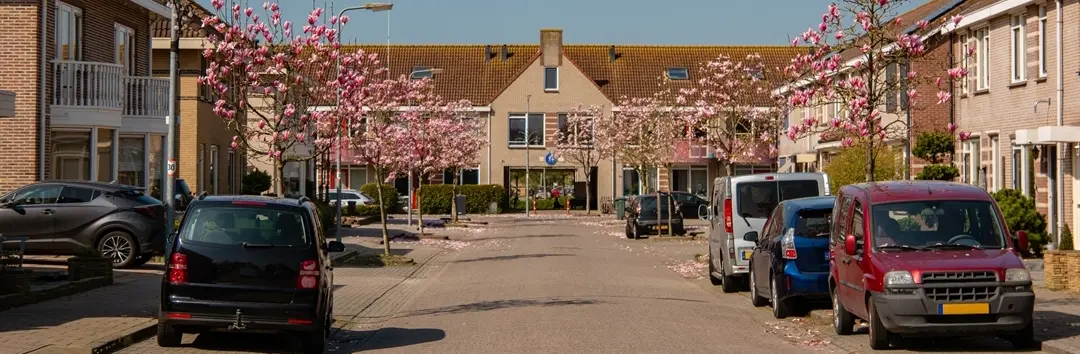

If you're preparing for the Dutch CBR theory exam, understanding woonerf priority rules is essential. A Woonerf (pronounced “VOH-nerf”) is a uniquely Dutch type of residential zone where pedestrians have priority — and it's one of the most tested concepts on the CBR theory exam. This comprehensive guide explains exactly how Dutch priority rules work in a woonerf, what special maneuvers mean, and when you must yield.

What is an erf? The dutch woonerf explained
A woonerf (literally “living yard” in Dutch) is a shared street or special residential zone that you won't find in most other countries. If you're from the UK, US, Canada, or Australia, this concept will be completely new.
Think of it as: A street designed for people first, cars second.
Woonerf Characteristics and Rules
In a woonerf, these special rules apply:
- Speed limit: Walking pace only — approximately 15 km/h
- Pedestrian priority: Pedestrians have absolute right of way and can use the entire road
- Children playing: Kids are allowed to play on the street
- Parking restrictions: Parking only in designated marked spots
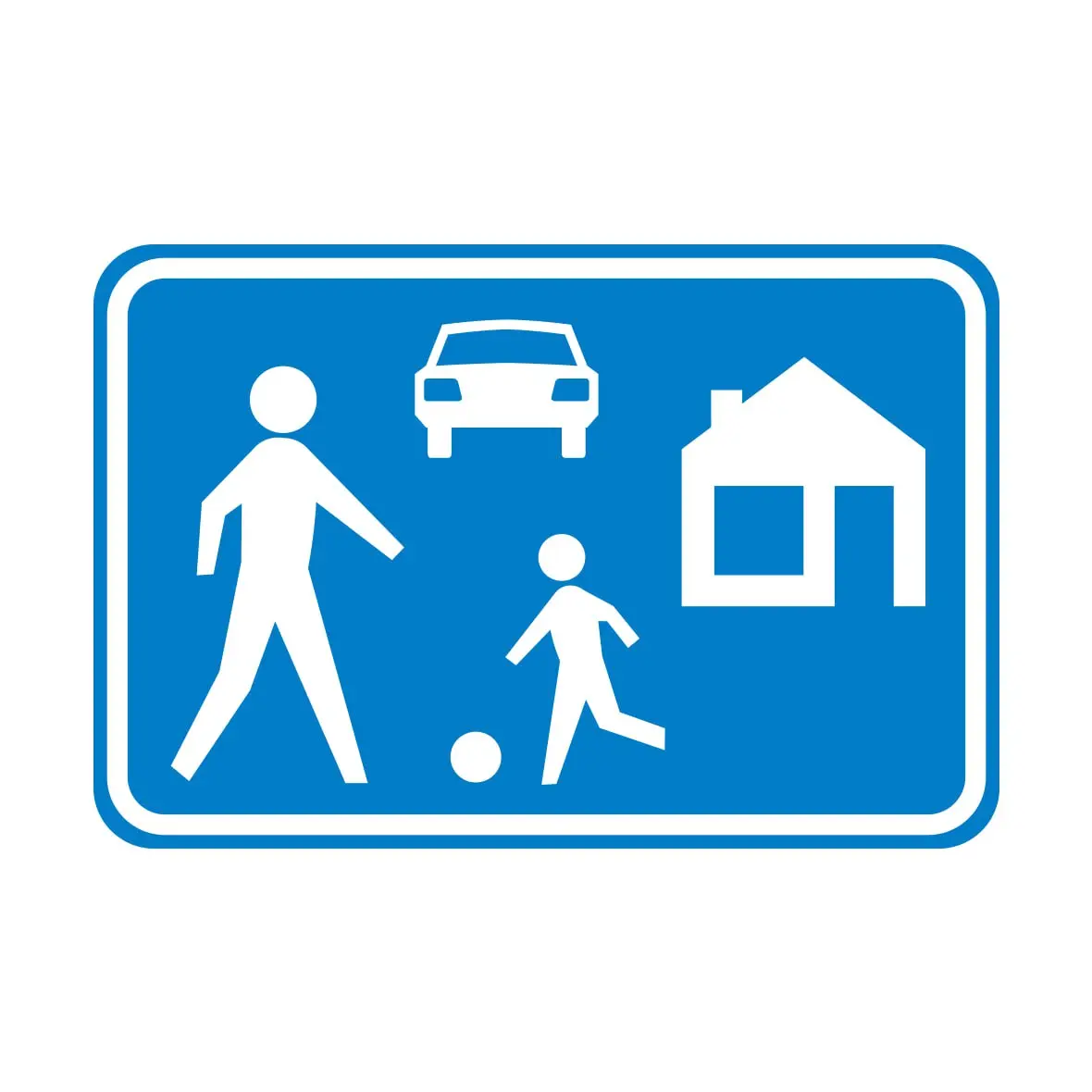
- Traffic sign: Blue rectangular sign with white house symbols and playing children
Key for internationals: You'll see the Dutch word “WOONERF” on road signs — there's no English translation on the signs themselves. You must recognize this term for your CBR exam.
Woonerf Sign vs. End of Woonerf Sign
Woonerf sign (G5): Blue sign indicating you're entering a residential zone with special rules
End of residential area sign (G6): Same sign with red diagonal line, marking where the residential zone ends.
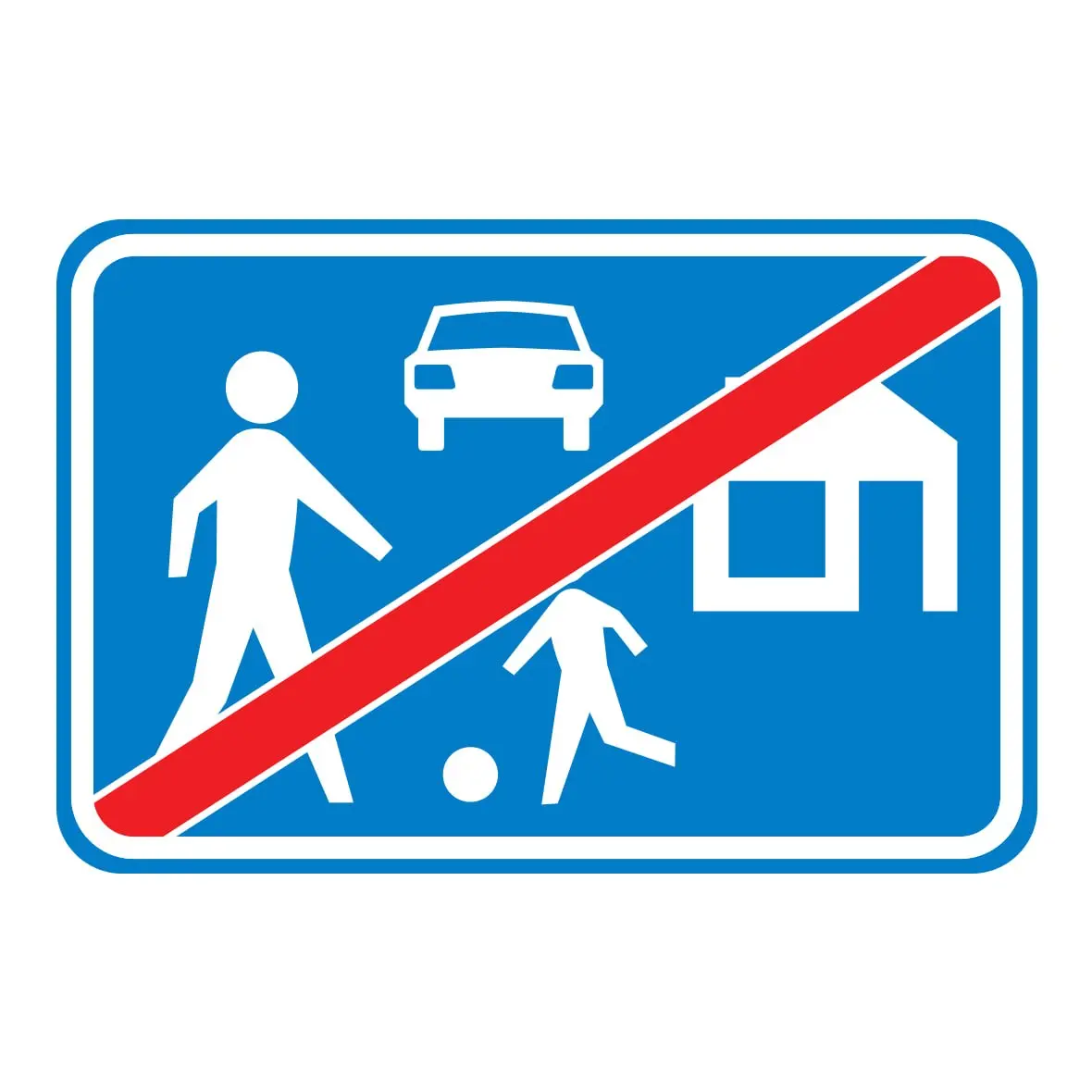
Critical for your exam: The "woonerf" sign ONLY indicates the end of speed restrictions — it says nothing about priority or right of way. Many international test-takers get this wrong.
The Big Misconception: Does Leaving a Woonerf Change Priority Rules?
Here's the mistake many international drivers make on the CBR exam:
MYTH: When you exit a woonerf, you automatically must yield to everyone.
TRUTH: Leaving a woonerf itself doesn't determine priority. What matters is whether there's a driveway or a normal intersection.
This confusion happens because in the Netherlands, driveways are often located at woonerf exits. The driveway creates the obligation to yield — not the woonerf itself.
Important terminology:
- Exit = Driveway exit (from private property to public road)
- Entrance = Driveway entrance (from public road to private property)
- Both are called “special maneuvers” in Dutch traffic law
Dutch Special Maneuvers Explained
Understanding special maneuvers is crucial for the Dutch driving test. This is a specific legal term in Dutch traffic law.
What Counts as a Special Maneuver?
You're performing a special maneuver when:
1. Reversing
2. Merging in and out
3. Turning around (U-turn)
4. Getting in or out of a vehicle
5. Parking
6. Driving off
Golden rule for CBR exam: During ANY special maneuver, you must yield to EVERYONE — cars, bikes, mopeds, and pedestrians. No exceptions.
This is one of the most important Dutch traffic rules tested on the theory exam.
Dutch Pedestrian Priority Rules: The Side Rule
The Netherlands has a unique pedestrian priority system that differs from UK, US, and most other countries:
When pedestrians HAVE priority (you must stop):
- You're approaching from their front or back
- The pedestrian is on or near a pedestrian crossing (without traffic lights)
- You're turning and the pedestrian is going straight
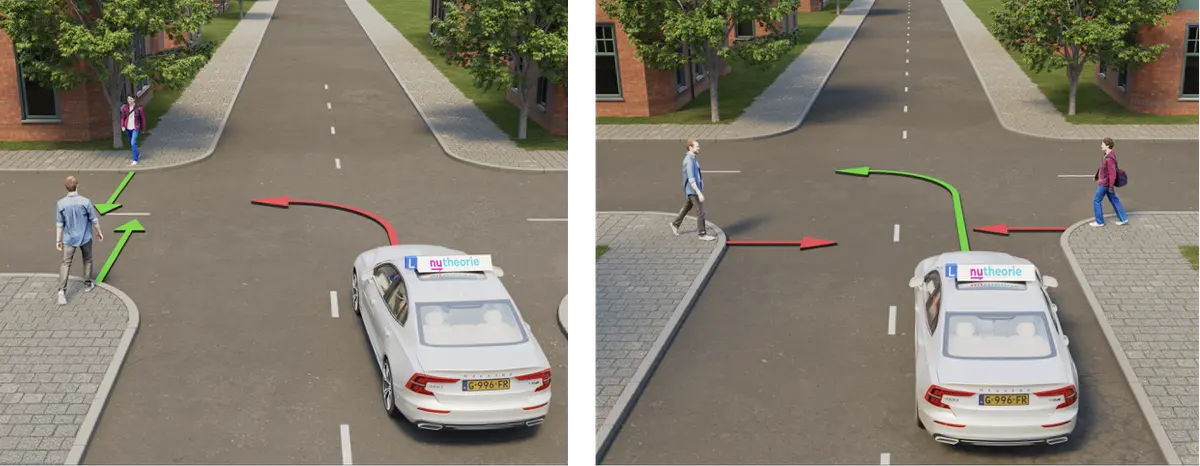
When YOU have priority (pedestrian must wait):
- You're approaching the pedestrian from the side
- The pedestrian is walking perpendicular to your direction
- Neither of you is turning
Exception: This rule does NOT apply if you're performing a special maneuver (like exiting a driveway) — then pedestrians always have priority.
Note for internationals: This is very different from UK zebra crossings or US marked crosswalks. The Dutch system is more nuanced.
Woonerf Exit Scenarios: When Do You Have Right of Way?
Let's break down the two most common woonerf scenarios with clear examples:
Scenario 1: Exiting a Woonerf Through an exit construction
Situation: You're leaving a woonerf and there's a driveway curb cut or entrance/exit marking.
What happens:
- Exiting the driveway = special maneuver
- You MUST yield to everyone (cars, cyclists, pedestrians)
- Even if a pedestrian is approaching from the side, they have priority
- The normal “side rule” doesn't apply here
Why this matters: Many CBR exam questions show this exact scenario to test if you understand special maneuvers override normal priority rules.
Visual clue: Look for a lowered curb or driveway marking — this indicates you're crossing from private to public property.
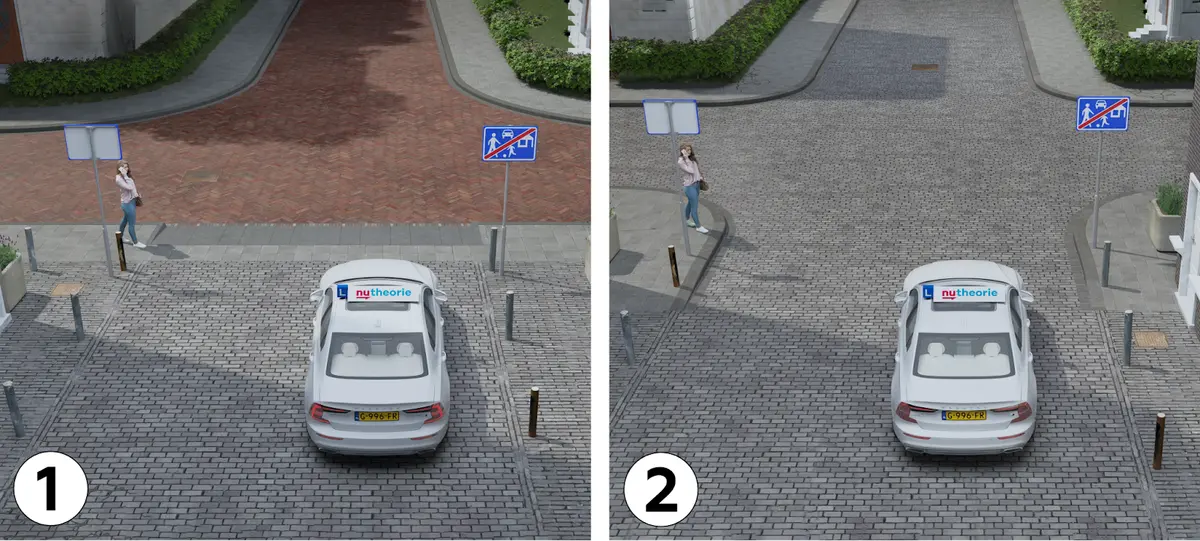
Scenario 2: Exiting a Woonerf at a Normal Intersection
Situation: You're leaving a woonerf at a regular street intersection without a driveway.
What happens:
- Apply Standard Dutch Priority Rules
- For pedestrians: side rule applies (you have priority if approaching from side)
- For vehicles: “right before left” unless signs indicate otherwise
- Shark teeth markings mean you must yield
Key difference: The end of a woonerf sign doesn't change anything about priority at a normal intersection.
For internationals: “Shark teeth” are white triangular road markings. Unlike UK “Give Way” or US “Yield” signs, these are painted on the road surface.
Right Before Left: Understanding Dutch Intersection Priority
If you're from a country with different rules, the Dutch “right before left” system might be confusing:
UK drivers: Unlike UK roundabouts (where you give way to the right), at Dutch unmarked intersections you must give way to traffic coming from your right.
US drivers: Unlike US 4-way stops (first come, first served), Dutch unmarked intersections always give priority to traffic from the right.
Basic rule: At unmarked intersections, vehicles coming from your right have priority.
Within a woonerf: Pedestrians always have priority over vehicles. Drivers must proceed at walking pace and be prepared to stop at any time.
When exiting a woonerf: You must yield to all other road users.
After leaving a woonerf: Normal intersection priority rules apply again.
Quick Reference: Woonerf Priority Rules
3 Essential Rules for Your CBR Exam:
- Leaving a woonerf = yield to all traffic — When exiting a woonerf, you must give priority to all other road users.
- Driveway exit = yield to everyone — A special maneuver means all other traffic has priority.
- Normal intersection = normal rules — Standard Dutch “right before left” and pedestrian priority rules apply.
Memory tip for internationals:
“WOONERF = WALKING PACE + PEDESTRIAN PRIORITY + YIELD WHEN EXITING.”
This will help you answer multiple CBR exam questions correctly
Prepare for the Dutch CBR Theory Exam in English
Prepare for the Dutch CBR Theory Exam in English
Are you an expat, international student, or foreign worker preparing for the Dutch driving test? Understanding these uniquely Dutch concepts like Woonerf areas, exits, and shark teeth is exactly what the CBR tests.
Our English CBR theory course is specifically designed for international drivers who need to learn Dutch traffic rules.