.webp)

For many beginner drivers, a hill start is one of the more nerve-racking manoeuvres when driving. You need to coordinate the clutch, accelerator, brake and the incline at the same time. Especially when there is a car close behind you, this can create additional pressure.

However, a hill start does not have to be difficult. With the right technique and enough practice, you can learn how to pull away from a standstill on a hill in a controlled way, without the car rolling backwards or the engine stalling.
In this blog, we explain step by step how to perform a hill start using the handbrake.
What is a hill start?
A hill start means pulling away from a standstill while on an incline. Because gravity can cause the car to roll backwards, you need to maintain sufficient control while moving off.
In a car with a manual transmission, you use three important components: the clutch, accelerator and handbrake. By coordinating these correctly, you can pull away smoothly and under control.
For example, imagine that you are waiting at a red traffic light on a hill. You are holding the car in place with the foot brake and the transmission is in neutral. Once the light turns green, you can follow these steps.

Step 1: Select first gear
Press the clutch pedal fully down and select first gear. This gear is suitable for moving off from a standstill and provides the pulling power you need to drive up the hill.
Keep the clutch pressed down while you move on to the next step.
Step 2: Use the handbrake
Apply the handbrake while keeping your foot brake pressed. Check that the car remains stationary and then release the foot brake.
The handbrake will now keep the car in place. This gives you both feet to operate the clutch and accelerator without having to worry about the car immediately rolling backwards.
Step 3: Find the clutch biting point
Slowly release the clutch. You will notice a change in how the car behaves. The engine speed may change slightly and the car may begin to pull gently.
This is the clutch biting point. At this point, the engine is beginning to transfer power to the wheels.
Now gently apply some accelerator. How much accelerator you need depends on the car and how steep the hill is. Rather than focusing only on a specific engine speed, try to feel and listen to what the car is doing.
Step 4: Release the handbrake
Once you have found the biting point and are applying enough accelerator, you can release the handbrake.
Keep your feet in roughly the same position and lower the handbrake smoothly. The clutch will now allow the car to start moving forwards.
It is normal for the car to move slightly at this point. The important thing is to stay calm and avoid releasing the clutch suddenly.
Step 5: Move off smoothly
Once the car starts moving forwards, gradually apply a little more accelerator while continuing to release the clutch.
Release the clutch pedal fully in a controlled manner when appropriate. Try not to rush. Smooth movements with your feet will help you drive up the hill comfortably and reduce the chance of stalling or moving off abruptly.
At the same time, keep looking ahead and remain aware of other road users.
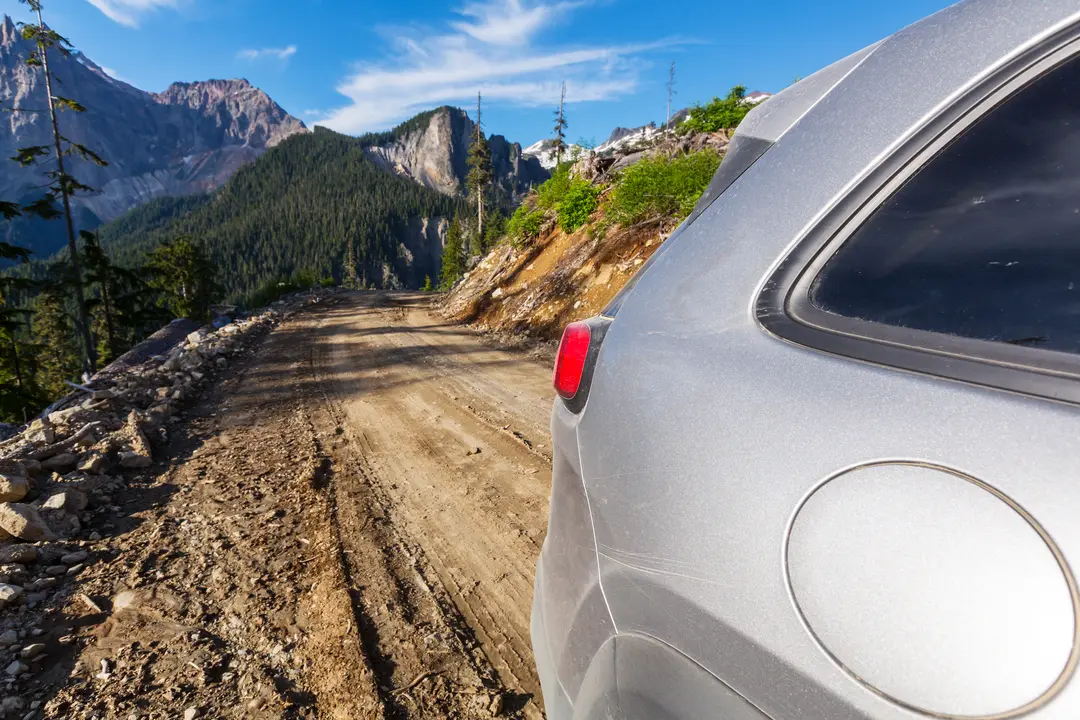
What if the car starts rolling backwards?
Rolling backwards slightly does not automatically mean that something has gone wrong. When performing a hill start using the handbrake, the car should remain under control until you are ready to move off.
If the car unexpectedly starts rolling backwards, stay calm. Press the clutch and brake again and start the procedure over. Do not panic and try to apply more accelerator while releasing the clutch quickly. This can actually increase the chance of stalling the engine.
Common mistakes when performing a hill start
A hill start can become difficult when you try to do too many things at once. Some common mistakes include:
Releasing the clutch too quickly
If you release the clutch suddenly, the engine may stall or the car may move off jerkily.
Using too little accelerator
A steep hill requires more power to move the car forwards. Make sure you use enough accelerator, but avoid unnecessarily high engine speeds.
Using too much accelerator
More accelerator does not automatically mean a better hill start. It can cause the car to move forwards too suddenly and make it harder to operate the clutch smoothly.
Waiting too long before releasing the handbrake
Once the clutch is at the biting point and you are applying enough accelerator, you can release the handbrake smoothly. There is no need to keep the car stationary with the clutch partially engaged for longer than necessary.
Panicking when there is a car behind you
Having another car close behind can create extra pressure, but try not to let it rush you. A controlled hill start is more important than moving off as quickly as possible.
.webp)
How can you practise a hill start?
You develop a feel for the clutch mainly through practice. Find a quiet and safe place where you can practise without heavy traffic or pressure from other road users.
Start with a gentle incline. First, practise finding the clutch biting point. Once you feel comfortable with this, you can practise the complete hill-start procedure using the handbrake.
Over time, you will no longer need to consciously think about every movement. Your feet will naturally learn how far to release the clutch and how much accelerator the car needs.
Hill starts during the driving test
During the driving test, a hill can form part of a normal traffic situation. The aim is not to perform the manoeuvre as quickly as possible. The examiner is primarily looking at how well you control the car and whether you can participate safely in traffic.
Therefore, stay calm, observe your surroundings and make sure you remain in control of the car. A slightly less smooth hill start does not automatically mean that you will fail your driving test.
Practice is key
The perfect hill start ultimately comes down to control and feel. By using the clutch, accelerator and handbrake at the right moments, you can move off calmly and safely even on an incline.
The most important thing is to practise the technique step by step. As you gain more experience, you will recognise the clutch biting point more quickly and will not have to consciously think about every movement. A good understanding of the rules you learn for your car theory exam can also give you a stronger foundation for becoming a confident and safe driver.
A hill start that initially seemed stressful can eventually become just another normal part of driving.