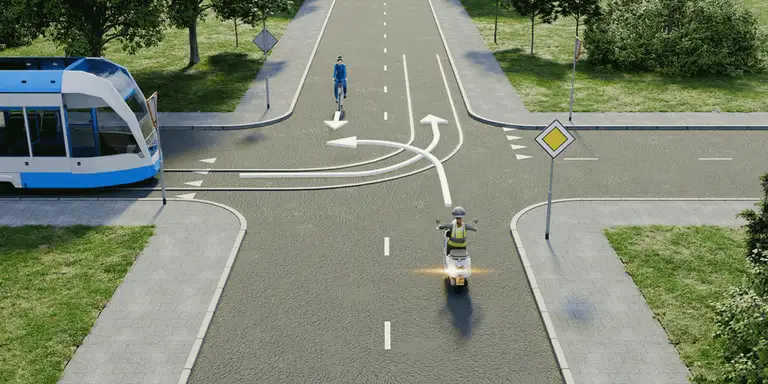

In traffic, you’ll encounter different types of intersections, but essentially there are only two: equal intersections and priority intersections. In this blog, we’ll focus entirely on the priority intersection. What is it, how do you recognize it, and what rules apply? You’ll find out below.

What is a priority intersection?
A priority intersection is an unequal intersection. This means that priority is not determined by the standard “give way to the right” rule, but by traffic signs, road markings, or traffic lights.
Traffic lights are usually self-explanatory, so in this article we’ll focus on the signs and markings you may encounter.
Which signs belong to a priority intersection?
There are four key traffic signs you should know:
- Give Way sign (inverted triangle)
- Stop sign
- Priority intersection warning sign
- Priority road sign (yellow diamond)
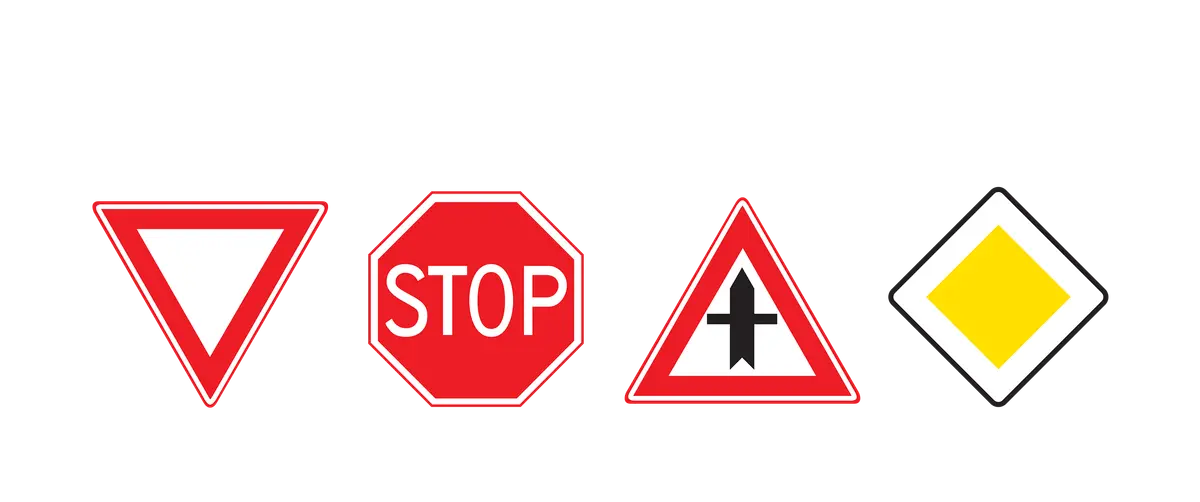
These signs apply only to drivers (not pedestrians). If you see one of these signs, you’re dealing with a priority situation.
Giving priority: how does it work?
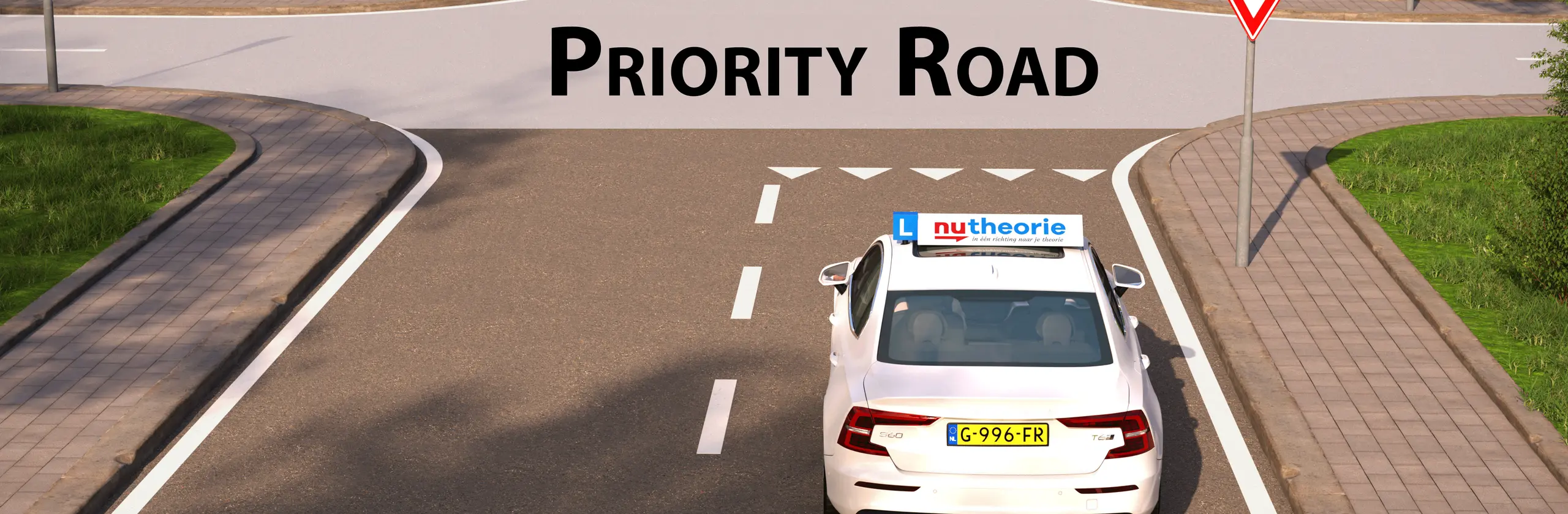
Give Way sign + shark teeth
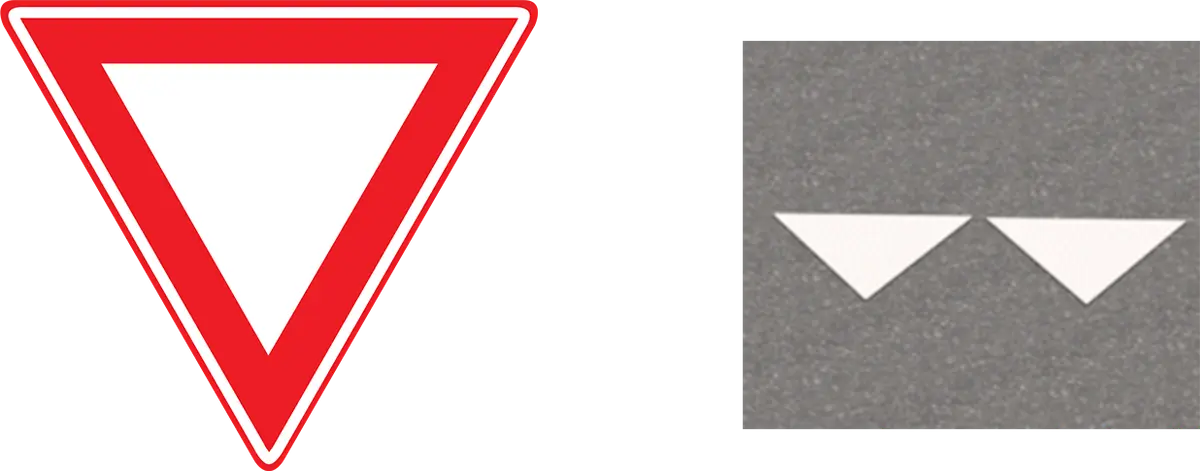
With the Give Way sign, you will always see shark teeth markings on the road. Both the sign and the markings form a “V”, which is a useful reminder:
V = Give Way.
- You must give priority to drivers coming from both the left and the right
- If no one is coming, you may continue driving
Stop sign
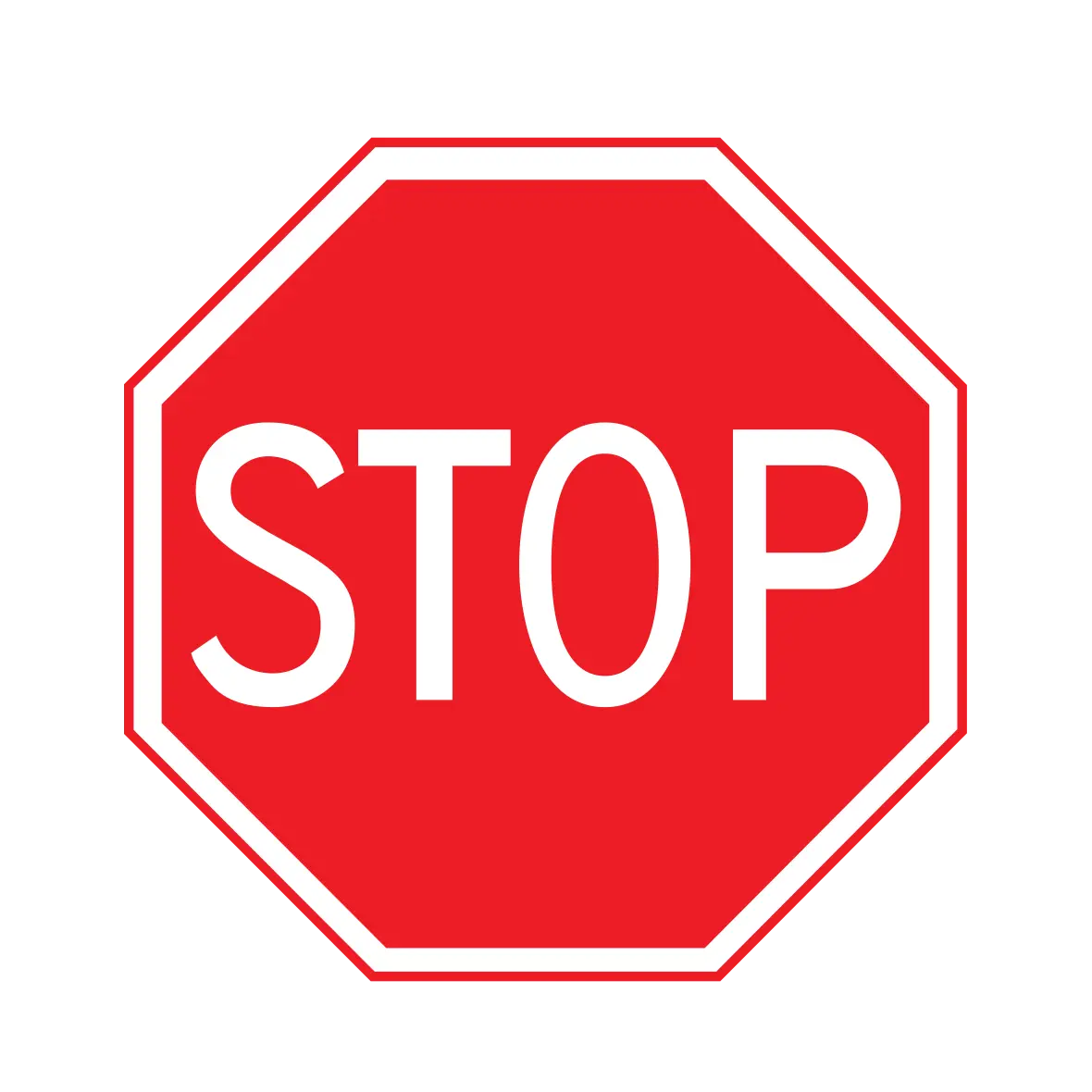
The Stop sign works similarly, but with one important difference:
- You must come to a complete stop
- Then give priority to drivers from the left and right
- Even if no one is coming, stopping is mandatory
Getting priority: what do the signs mean?
Priority intersection
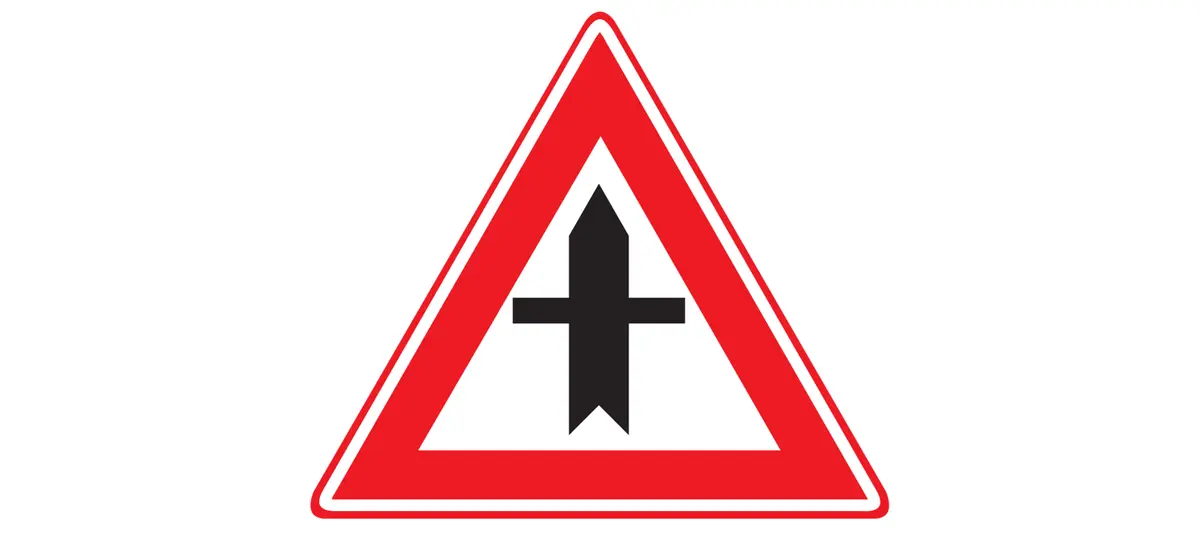
This sign indicates that you have priority at the next intersection.
- You are driving on the “thick line”
- Traffic on the side roads (thin lines) must give way to you
Priority road
.png)
This sign means you have priority on the entire road, until the sign is canceled.
- All drivers from the left and right must give way to you
- This applies over a longer stretch, not just one intersection
Helpful tip: look at other road users
A key insight that helps many people during the theory exam:
If you have priority, other drivers must have a Give Way or Stop sign.
If you see shark teeth or a Stop sign on another road, you automatically know that you have priority. This makes traffic situations much easier to understand.
Common exam question
Which sign indicates that you are approaching a priority intersection?
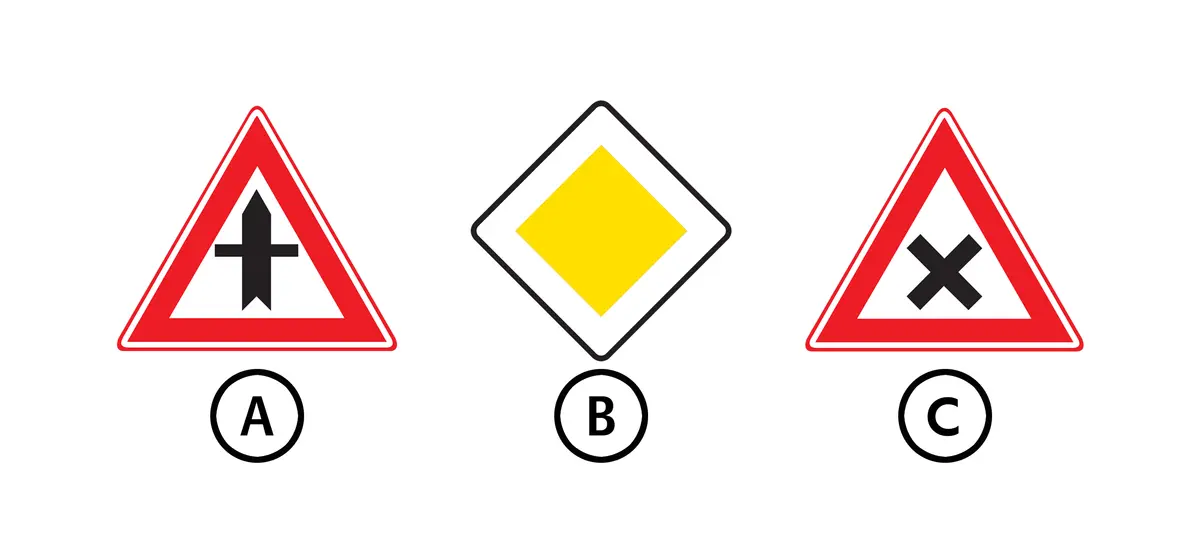
- The correct answer is: the priority intersection warning sign
- Other options may include:
- Priority road → indicates priority over a longer road
- Dangerous intersection → does not indicate priority
Ready for your theory exam?
Want to be fully prepared for your theory exam?
Sign up for a one-day theory course or an online course. During the course, you can ask all your questions, practice with exam-style questions, and learn the key tips that make the difference between passing and failing.
At Nutheorie, we make sure you don’t just pass your exam—you truly understand the rules of the road.