
When learning traffic rules, many people focus mainly on traffic signs and traffic lights. However, road markings are just as important for understanding how traffic flows and how drivers should behave. One marking that often causes confusion among learner drivers is known as block markings.

Block markings are more than simple shapes painted on the road. They are designed to guide traffic and subtly influence how drivers position themselves. By clearly indicating where roads split or where vehicles should merge, these markings help prevent dangerous situations and keep traffic moving smoothly. Understanding how they work is important not only for safe driving, but also for successfully passing your theory exam.
Where Do You Encounter Block Markings?
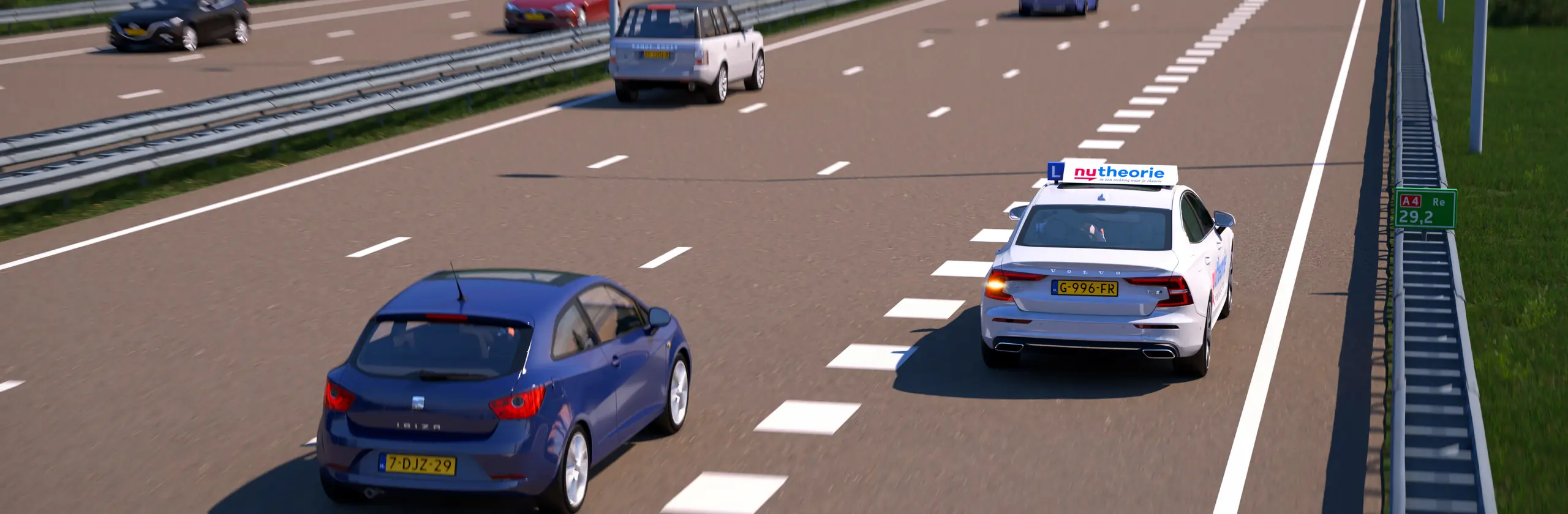
Block markings are typically used in places where traffic needs to separate or merge. They appear as rectangular dashed markings that form a visual zone between traffic lanes. These markings help drivers understand that the road is about to split and that they need to choose their lane carefully.
You will most often see block markings in the following situations:
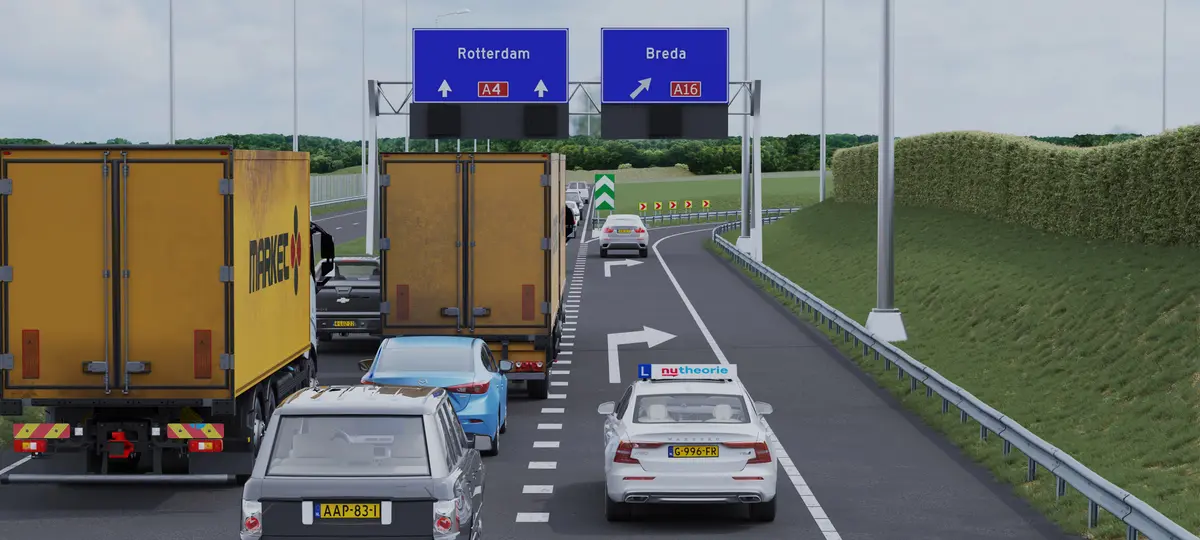
- Acceleration lanes (invoegstroken) where vehicles join a motorway
- Deceleration lanes (uitvoegstroken) where vehicles leave the motorway
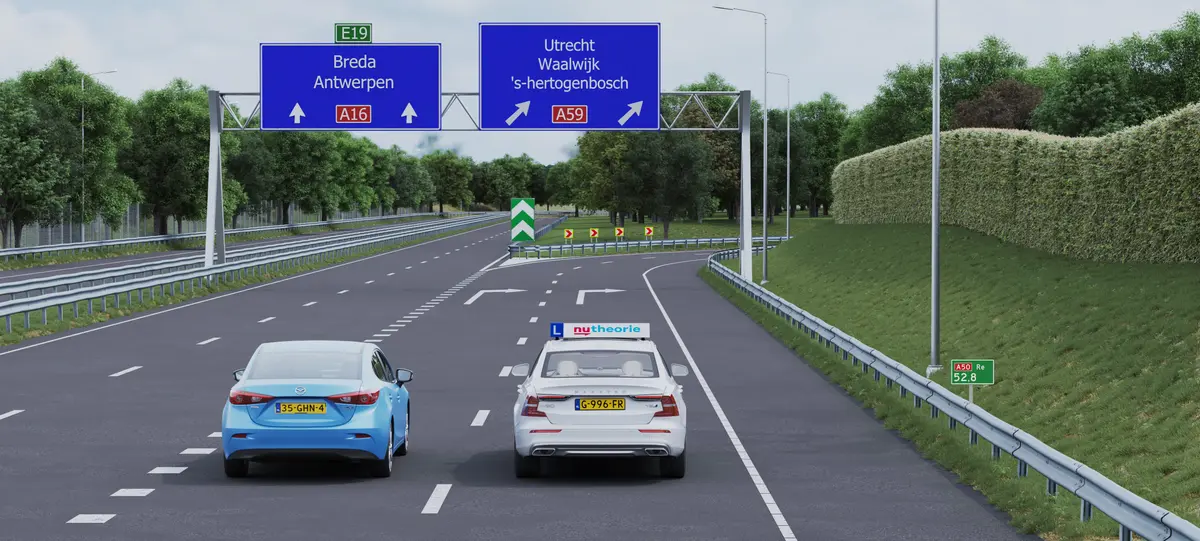
- Motorway splits where the road separates into different directions
- Sorting lanes near intersections where drivers must choose a direction
In these situations, the side of the block marking you drive on determines where you will go. Choosing the wrong lane can lead you in a completely different direction than intended. For example, on a motorway split you might accidentally end up heading toward another city if you are positioned incorrectly.
For this reason, it is important to pay attention to road signs and markings well in advance so you can move into the correct lane before reaching the split.
Overtaking Near Block Markings
In the Netherlands, the general rule is simple: drivers keep to the right and overtake on the left. This rule ensures a predictable and safe overtaking and traffic flow on roads and motorways.
However, block markings create an important exception to this rule.
If there is block marking between you and another vehicle, overtaking on the right side is allowed. This is because traffic is already separating into different directions. Drivers are not simply passing each other in the same lane, but moving into different traffic streams.
This rule often appears in theory exam questions because many learner drivers assume overtaking on the right is always forbidden. Recognizing when block markings create an exception can therefore help you avoid mistakes during the exam.
Changing Lanes Across Block Markings
When you drive across a block marking, you are effectively changing directions. In Dutch traffic law, changing lanes is considered a special maneuver, also known as a bijzondere verrichting.
Whenever you perform a special maneuver, you must give way to all other road users. This means you are responsible for ensuring that the maneuver can be performed safely without forcing other drivers to slow down or change their behavior.
Before crossing a block marking, you should always:
- Check your mirrors carefully
- Look over your shoulder to check your blind spot
- Use your indicator to show your intention
- Make sure you do not hinder vehicles already in the lane
Drivers who are already driving in the lane you want to enter always have priority. This rule applies regardless of whether you are merging, changing lanes, or crossing a block marking.
What Happens If Two Drivers Perform a Special Maneuver?
Sometimes traffic situations can seem confusing, especially when two drivers are both performing a special maneuver at the same time. A common example is when one vehicle is merging onto a road while another vehicle is leaving the road via an exit lane.
A helpful way to understand this situation is to think about an elevator. When the doors open, people inside step out before new people step in. This simple rule keeps everything organized and prevents people from blocking each other.
Traffic works in a similar way. When one vehicle is exiting and another vehicle is merging, the exiting vehicle has priority. In other words:
Exiting takes priority over merging.
For example, if you want to merge onto a road while a truck is moving toward the exit lane, you must first allow the truck to leave the road. Once the truck has exited, you can safely continue your merge.
Why Understanding Block Markings Matters
Although block markings may seem like a small detail, they play an important role in road safety. Misunderstanding them can lead to several common mistakes, including:
- Incorrect overtaking behavior
- Unsafe lane changes
- Confusion at motorway splits
- Mistakes during theory exam questions
By learning how to recognize these markings and understanding the rules connected to them, you improve both your driving awareness and your chances of passing the theory exam.
Conclusion
Block markings play an important role in guiding traffic and helping drivers make safe decisions on the road. They indicate where traffic lanes split or merge and signal that drivers may need to change lanes or choose a direction. Because crossing a block marking is considered a special maneuver, drivers must always be careful and give way to other road users.
Understanding the rules around block markings also helps clarify situations where overtaking on the right is allowed and who has priority when vehicles are merging or exiting. By recognizing these markings and knowing how to respond correctly, you reduce the risk of dangerous situations and become a more confident driver.
Want to Be Fully Prepared for Your Theory Exam?
Preparing for the theory exam can feel overwhelming because there are many rules and exceptions to remember. With the right guidance and clear explanations, however, these rules become much easier to understand.
A structured theory course can help you learn traffic rules step by step and practice with realistic traffic scenarios. This helps you recognize situations like block markings more quickly and understand how to respond correctly.
You can choose from:
- A one-day theory course if you want to prepare quickly
- An online theory course if you prefer learning at your own pace
Both options are designed to help you understand the rules clearly and approach your theory exam with confidence. Start preparing today and take the first step toward passing your theory exam and getting your driver’s license.


.jpg)