
The overtaking rules in the Netherlands are a frequent source of confusion for drivers, motorcyclists, and moped riders alike. We drive on the right and overtake on the left — that sounds straightforward. However, many traffic violations and dangerous situations occur because people assume overtaking is always allowed.

In this article, we explain the most important overtaking rules, highlight common misconceptions, and give practical tips to help you overtake safely and legally.
What does overtaking actually mean?
Overtaking means passing another road user who is traveling in the same direction by moving ahead of them. This usually involves:
- changing lanes, or
- moving to the left side of the road
Overtaking is different from passing stationary vehicles or filtering through traffic, which may fall under different traffic rules.
The golden rule of overtaking
The most important principle in all overtaking rules is visibility.
If you do NOT have a clear and complete view of the road ahead, you are NOT allowed to overtake.
Good visibility means:
- you can see far enough ahead
- you can assess oncoming traffic
- you can safely return to your lane after overtaking
If any of these conditions are not met, overtaking is prohibited.
Overtaking rules at intersections
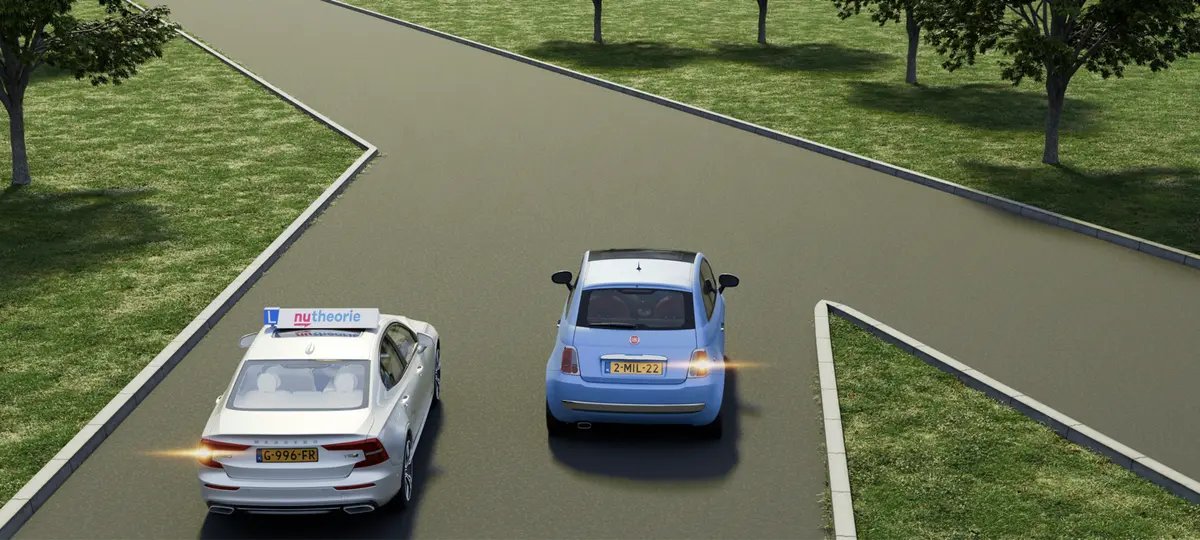
Are you allowed to overtake at an intersection?
The answer is: No.
At intersections, traffic may come from multiple directions. When you overtake another vehicle, you often lose sight of:
- vehicles approaching from the right
- cyclists or pedestrians crossing
Overtaking at intersections is never allowed, even if the road appears quiet.
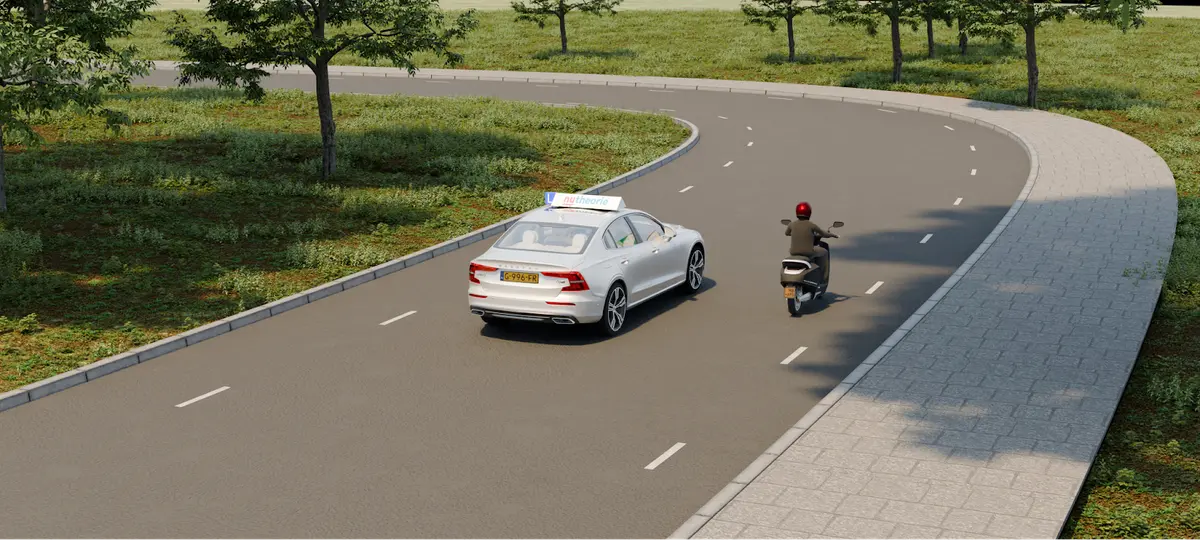
Overtaking rules in bends
Bends significantly reduce your line of sight.
Overtaking in a bend is always prohibited, because you cannot see:
- oncoming traffic
- obstacles ahead
- how the bend continues
You may only overtake again when:
- you have fully exited the bend
- the road ahead is straight
- visibility is sufficient
Misconception: overtaking in a bend on the motorway
Many drivers believe overtaking in a bend is never allowed, but this is not always true.
Overtaking rules on the motorway
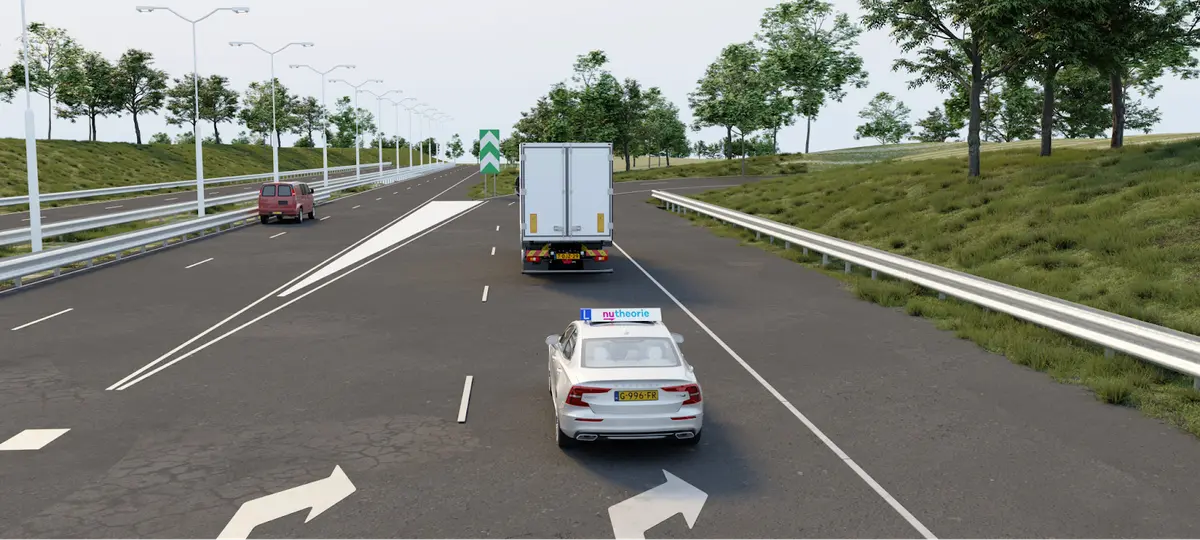
On a motorway:
- traffic flows in one direction only
- there is no oncoming traffic
Overtaking in a bend on the motorway is allowed, provided that:
- you overtake on the left
- traffic conditions allow it
- you do not exceed the speed limit
Extra caution with lorries:
Trucks have large blind spots. Avoid staying:
- directly behind them
- alongside them for too long
Change lanes early and overtake decisively.
Overtaking rules for different road users
Cars and motorcycles
When overtaking, drivers must follow these basic rules:
- Must overtake on the left
- Must maintain a safe lateral distance
- Must not force other vehicles to brake or swerve
By following these rules, overtaking can be done safely without endangering other road users.
Cyclists
For cyclists, specific rules apply to keep everyone safe:
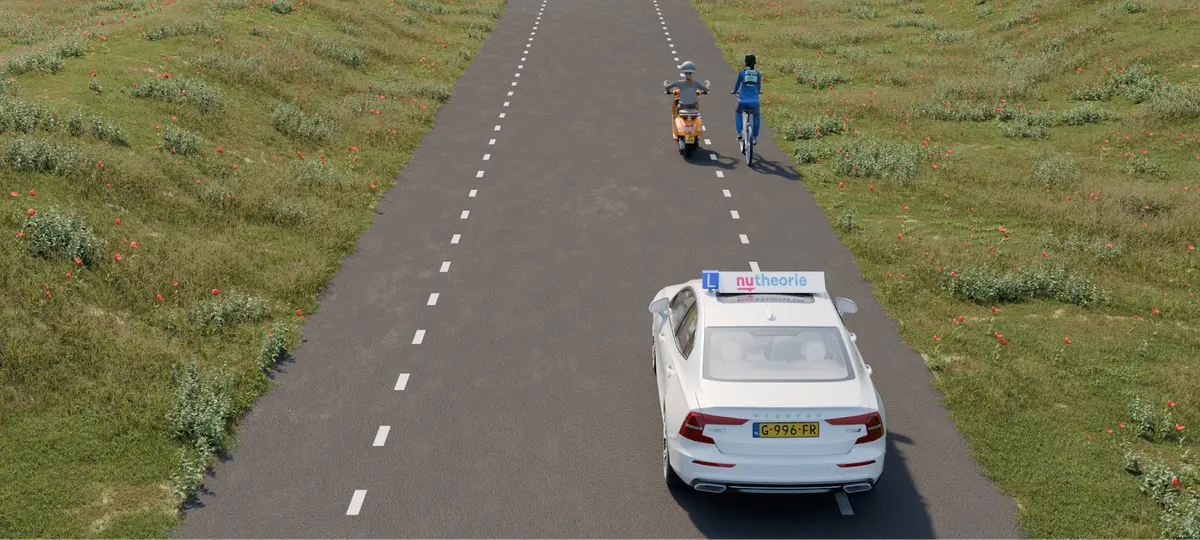
- cyclists must overtake other cyclists on the left, but may overtake drivers of other vehicles on the right
- cyclists may not endanger pedestrians or other cyclists
Different road users have different speeds, which makes correct judgment essential.
Are you allowed to overtake someone who is already overtaking?
Many drivers are unsure about this situation, but traffic rules are strict.
If a road user is already overtaking another vehicle:
- they need space to complete the maneuver
- their attention is focused on returning safely to their lane
Overtaking someone who is already overtaking is prohibited and highly dangerous.
Overtaking rules at pedestrian crossings
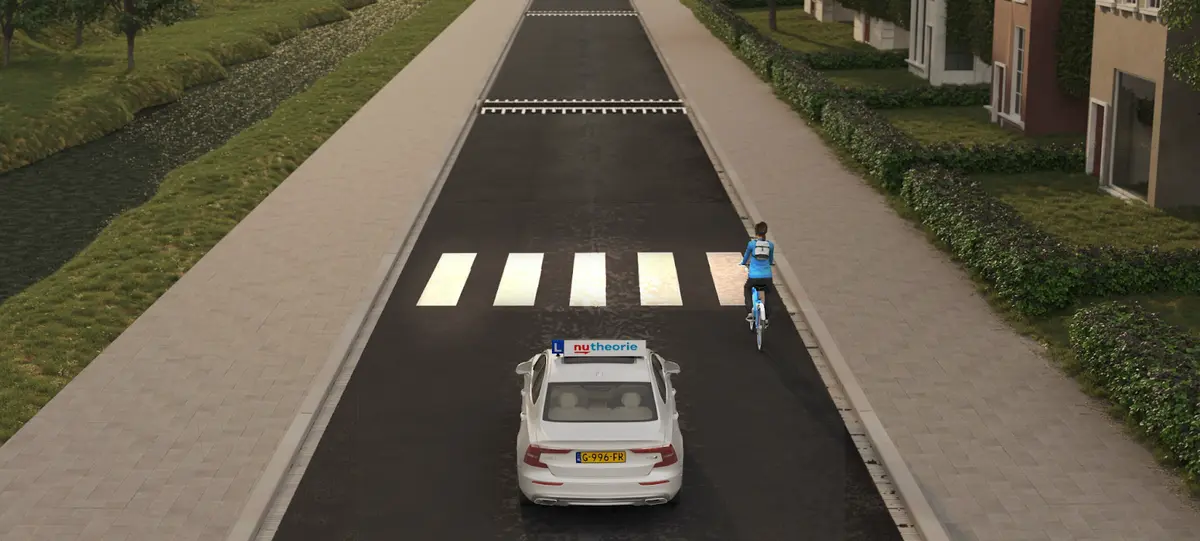
Pedestrian crossings (zebra crossings) require special attention.
Overtaking at a pedestrian crossing is never allowed, even if:
- no pedestrians are currently visible
People may step onto the crossing unexpectedly, and overtaking blocks your view of them.
Overtaking rules in poor weather conditions
Fog
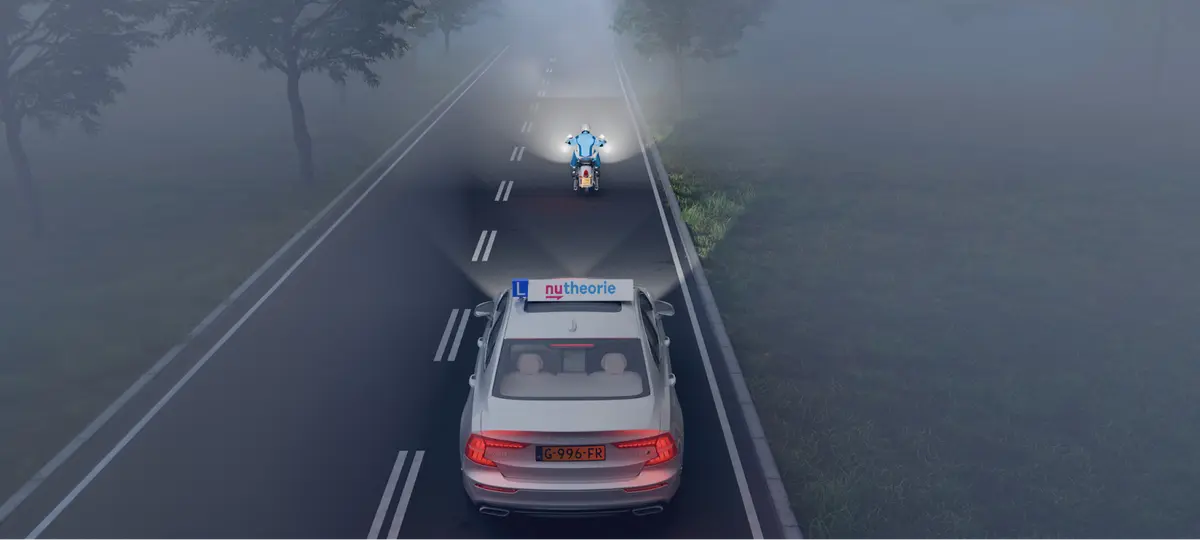
Overtaking in fog is not allowed because visibility is severely reduced. In foggy conditions, it is difficult to accurately judge the distance and speed of other vehicles, especially oncoming traffic. This makes overtaking extremely dangerous. When visibility is limited by fog, drivers must maintain their position in traffic and avoid overtaking until conditions improve.
Heavy rain or snow
While not always explicitly forbidden, overtaking is strongly discouraged when:
- braking distances increase
- road markings are less visible
- other drivers’ reactions are harder to predict
Remember: if visibility is insufficient, overtaking is automatically prohibited.
Road markings and overtaking rules
Always pay attention to road markings:
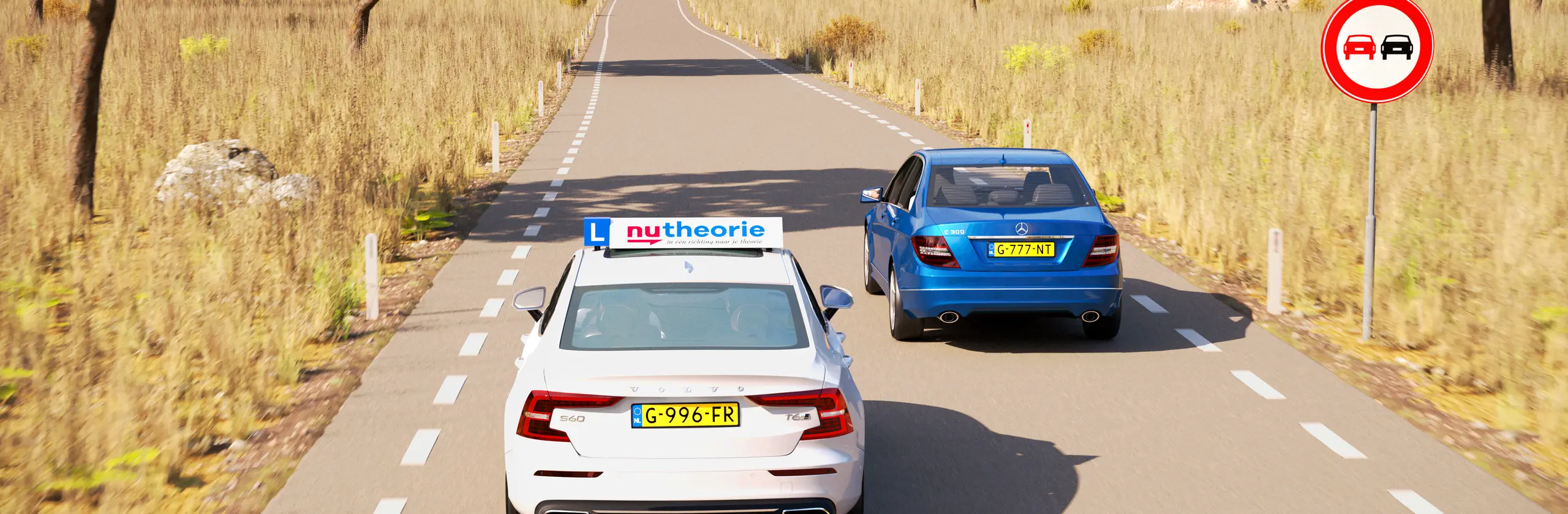
- Solid line: overtaking is prohibited
- Broken line: overtaking may be allowed if conditions are safe
- Double solid lines: never overtake
Road markings overrule assumptions about visibility.
Common mistakes drivers make
Some frequent errors include:
- overtaking “just to save time”
- misjudging the speed of oncoming traffic
- overtaking near crossings or intersections
- staying too long in a truck’s blind spot
Most accidents during overtaking are caused by impatience or overconfidence.
Conclusion
The overtaking rules in the Netherlands are designed to keep everyone safe. In short, if you do not have sufficient visibility, you must not overtake. Overtaking is never allowed at intersections, in bends (except on motorways), or at pedestrian crossings, and it is also prohibited in fog or other situations with poor visibility.
You should never overtake someone who is already overtaking another road user, and you must always obey road markings. By understanding and following these overtaking rules, you reduce the risk of accidents and help create safer roads for everyone.


.jpg)