
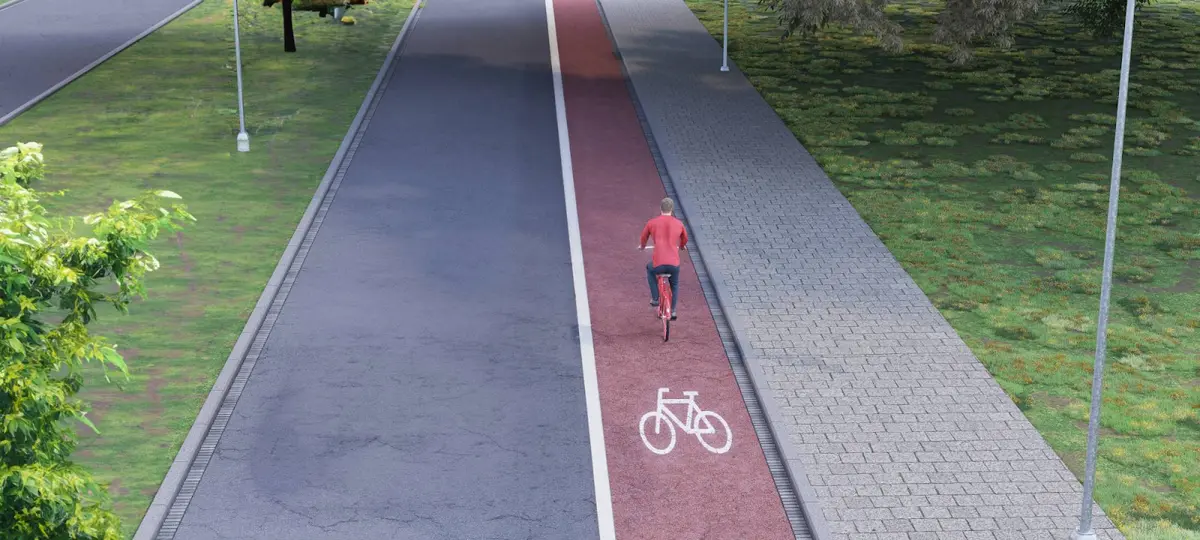
The bicycle path is that narrow, often red strip at the side of the road. It is specifically intended for slow-moving traffic such as cyclists and snorfietsers (low-speed mopeds). The idea is simple: everyone who uses it should be able to move safely and calmly alongside car traffic without getting in each other’s way. But who is allowed to use the bicycle path and what rules apply? In this article I’ll make sure you learn everything there is to know about the bicycle path.

Who is allowed to ride on the bicycle path?
Usually you’ll see a picture of a normal bicycle on the bicycle path. That means cyclists must ride there. But did you know that snorfietsen (blue license plate) are also required to ride there? Snorfietsen fall under the bicycle symbol. So if a snorfietser sees a bicycle symbol, that rule applies to them as well.
Mopeds usually do not ride on the bicycle path
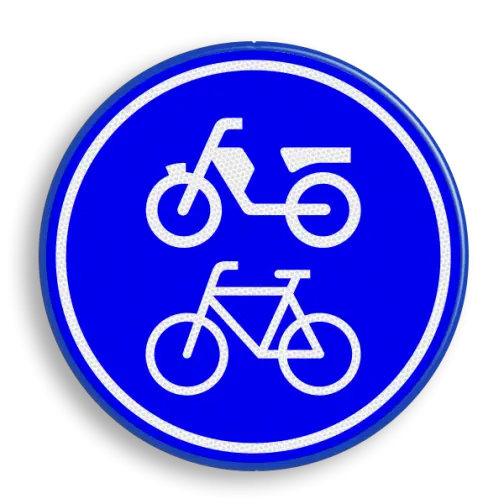
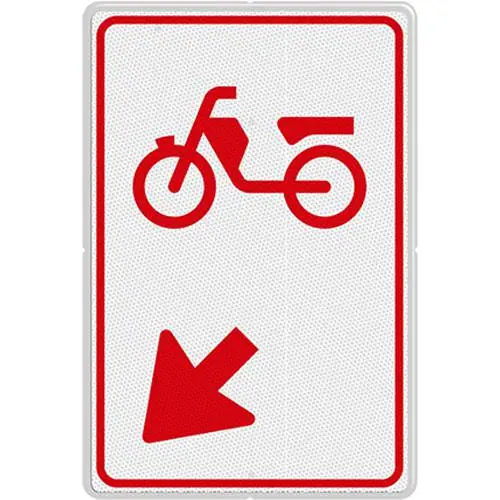
A moped (yellow license plate) may not automatically ride on the bicycle path. Bicycles and snorfietsen travel at about 25 km/h, while a moped can go up to 45 km/h. That’s why a moped has a separate symbol (see the sign).
In most cases, a moped must ride on the roadway. But if you see the blue sign with the moped symbol at the bicycle path, then a moped is required to use the bicycle path.
Speed pedelec
A speed pedelec follows the same rules as a moped. A speed pedelec usually rides on the roadway. But if you see the sign with the moped symbol, then the speed pedelec — just like the moped — is required to use the bicycle path.
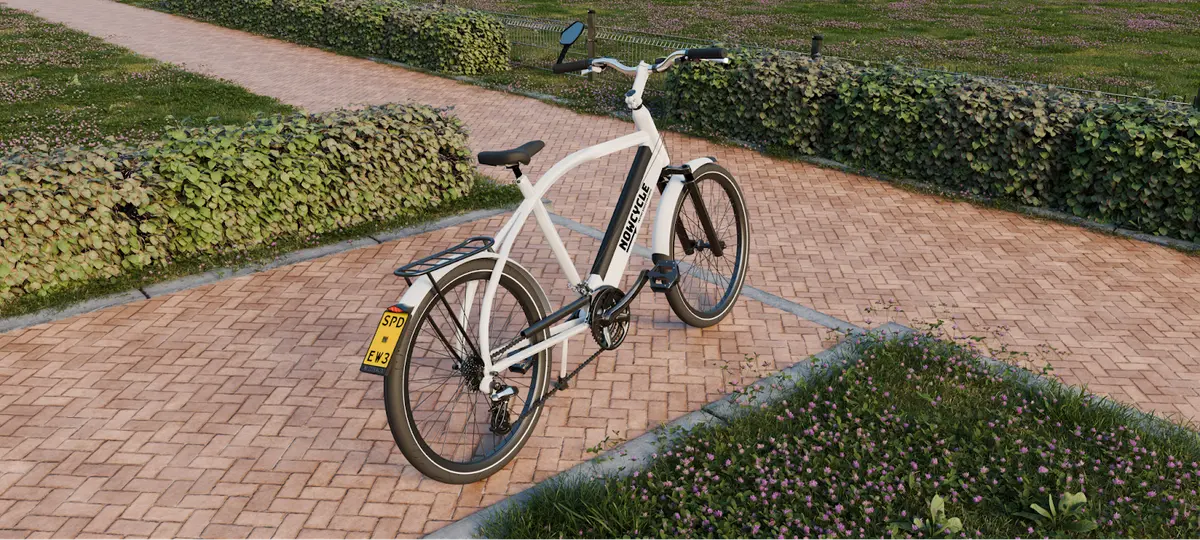
The Brommobiel
You might be wondering: what about a brommobiel? A brommobiel looks a bit like a small car.
A brommobiel falls into the motor vehicle category, just like a car. Because it is a motor vehicle, it may never use the bicycle path. A brommobiel must always use the roadway, just like cars. The maximum speed of a brommobiel is 45 km/h.

Mopeds & speed pedelecs on the roadway
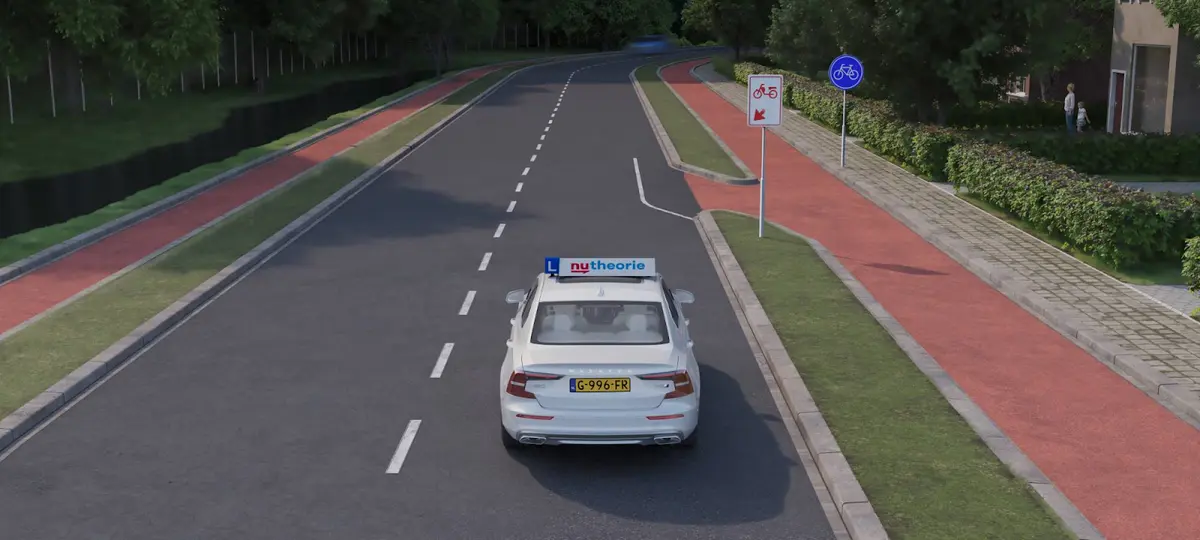
Mopeds and speed pedelecs usually ride on the roadway and only sometimes on the bicycle path. As a motorist you must be prepared for this.
At the white sign shown below, mopeds and speed pedelecs must leave the bicycle path and join the roadway. As a driver, try to make space so they can merge easily. The round blue sign indicates that cyclists and snorfietsers must remain on the bicycle path.
Maximum speeds on the bicycle path
Speed rules also apply on the bicycle path. Every vehicle type has its own maximum speed — these rules exist for a reason. They help keep the bicycle path safe for everyone.
- Snorfiets (blue license plate): Maximum 25 km/h.
A snorfiets always rides on the bicycle path and may never exceed 25 km/h. - Moped (yellow license plate):
- Within built-up areas: Maximum 30 km/h
- Outside built-up areas: Maximum 40 km/h
If you are allowed to ride a moped on the bicycle path, stick to these speeds. (45 km/h belongs on the roadway, not the bicycle path.)
- Within built-up areas: Maximum 30 km/h
- Speed pedelec:
A speed pedelec looks a bit like an electric bike but is much faster. It is allowed 30 km/h within built-up areas and 40 km/h outside built-up areas, the same as a moped.
In short: the faster your vehicle, the less often you may use the bicycle path. This keeps the path safe and predictable for everyone.
What’s the difference between a “fietspad” and… a “fietspad”? 🤔
Yes — there is a difference. There are two kinds of signs:
- A sign that literally says “fietspad” (the word “bicycle path”)

- A round blue sign with a bicycle symbol
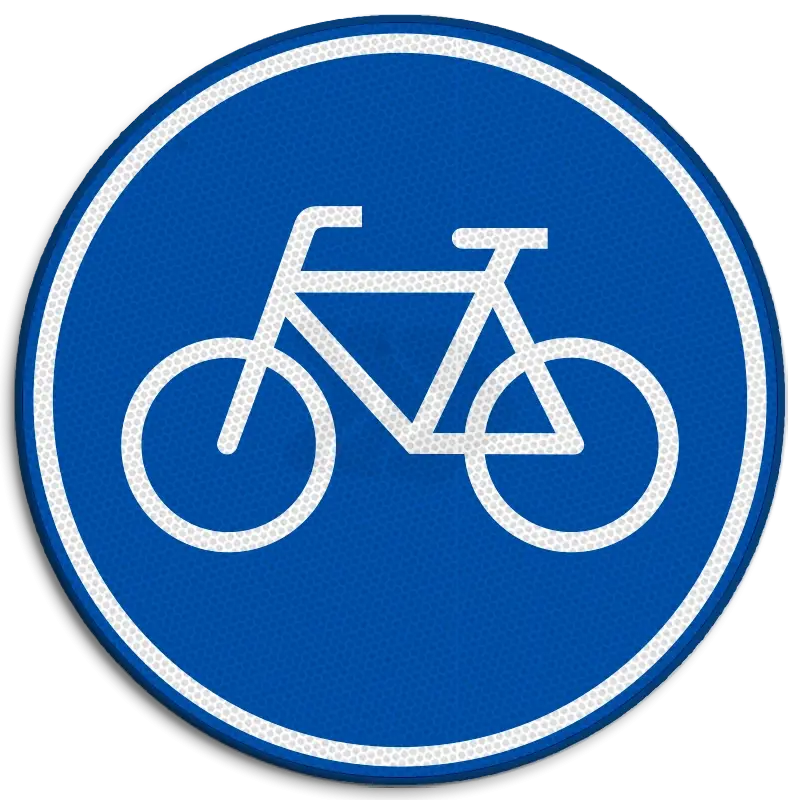
The sign with only the text “fietspad” means it is a non-mandatory bicycle path. The round blue sign with the bicycle symbol means it is a mandatory bicycle path.
What’s the difference in practice?
- Non-mandatory bicycle path:
Cyclists and snorfietsers may ride there but they are not required to — they may also use the roadway (though staying on the bicycle path is usually the safer option).
- Mandatory bicycle path:
Cyclists and snorfietsers must ride on the bicycle path. The roadway is off-limits to them.
Uitzonderingen op het Fietspad
The bicycle path may seem simple, but there’s quite a bit to it: who may ride there, what types of bicycle paths exist, and how fast you may go. Learning these rules thoroughly makes the theory exam much easier.
Want to be absolutely sure you understand everything and are ready for your theory exam? Take our car, scooter, or motorcycle theory course and learn everything step by step so you can confidently hit the road!
Watch out for… (exception)
You now know that when you see a bicycle symbol on the road or on a traffic sign, it means only cyclists and snorfietsers may ride there — not mopeds.
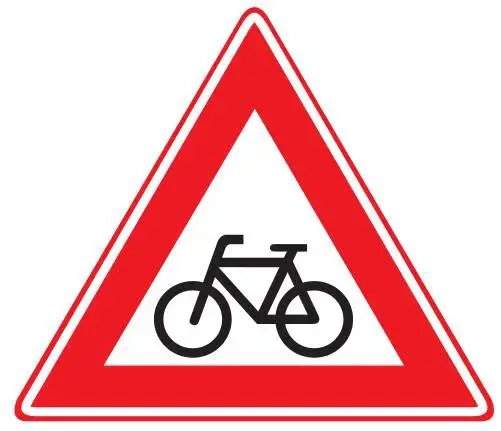
But beware — the sign below can be confusing. It is a red triangle, which always means “warning.” You might think it only warns for cyclists and snorfietsers, but that’s not entirely true. This sign warns you to watch out for cyclists, snorfietsers, AND mopeds — an important exception to remember for the exam.
Conclusie
Het fietspad lijkt misschien eenvoudig, maar in de praktijk gelden er verschillende regels voor fietsers, snorfietsers, bromfietsers en speed pedelecs. Daarnaast is het belangrijk dat je de verschillende verkeersborden kunt herkennen en weet wanneer een voertuig op het fietspad moet rijden of juist de rijbaan moet gebruiken.
Door deze regels goed te begrijpen, voorkom je verwarring in het verkeer én vergroot je je kans op slagen voor het theorie-examen. Zorg er daarom voor dat je de verkeersborden, voertuigcategorieën en maximumsnelheden goed kent. Met die kennis ga je een stuk zelfverzekerder het examen in.