.webp)

Traffic signs help keep traffic safe and organised. Some signs warn you about danger, while others indicate which direction you should follow. Prohibition signs have a different purpose: they tell you what you are not allowed to do in a particular place.

When driving, you will encounter various prohibition signs. For example, there are signs indicating that you are not allowed to park, overtake or turn in a particular direction. It is therefore important to recognise these signs quickly and understand exactly what they mean.
This is also important for your theory test. You should not only know the name of a traffic sign, but, more importantly, understand what the sign requires you to do in a particular traffic situation.
In this article, we explain how to recognise prohibition signs, discuss some common examples and explain which differences you need to know.
What Are Prohibition Signs?
Prohibition signs indicate that a particular action or traffic movement is not allowed. Most prohibition signs are circular and have a red border. The symbol in the middle shows exactly what is prohibited.
For example:
- no entry;
- no parking;
- no stopping;
- no overtaking;
- a prohibition on turning in a particular direction.
Although many prohibition signs can be recognised by their red border, it is important to always look at the entire sign and its symbol. The meaning can vary significantly.
An additional sign underneath the main sign can also provide extra information. For example, it may indicate which vehicles the prohibition applies to, over what distance it applies or during which times it is in effect.
How Do You Recognise a Prohibition Sign?
A useful first step is to look at the shape and colours. If you see a circular traffic sign with a red border, there is a good chance that it indicates a prohibition.
But recognising the colour and shape alone is not enough. Next, look at the symbol in the middle. This tells you what you are not allowed to do.
For your theory test, it is therefore better not to learn prohibition signs based on their names alone. Try to answer the following question for each sign:
“What am I not allowed to do here?”
If you can answer that immediately, you are not only recognising the sign on paper, but also understanding what it means in practice.
No Entry
.png)
One of the best-known prohibition signs is ‘No Entry’. You can recognise this sign by its circular shape, red border and white horizontal bar in the middle.
If you see this sign, you are not allowed to enter the road from your direction of travel.
The sign is often used on one-way roads. Traffic approaching from the opposite direction may be allowed to enter the road, while you are not allowed to enter it from your side.
Not the Same as a One-Way Road
A common mistake is confusing ‘No Entry’ with a sign indicating a one-way road.
A one-way road means that traffic uses the road in one particular direction. The ‘No Entry’ sign, on the other hand, tells you that you are not allowed to enter the road from your direction.
Therefore, always pay close attention to the direction from which you are approaching the sign. The meaning of a traffic sign is connected to your position within the traffic situation.
No Parking
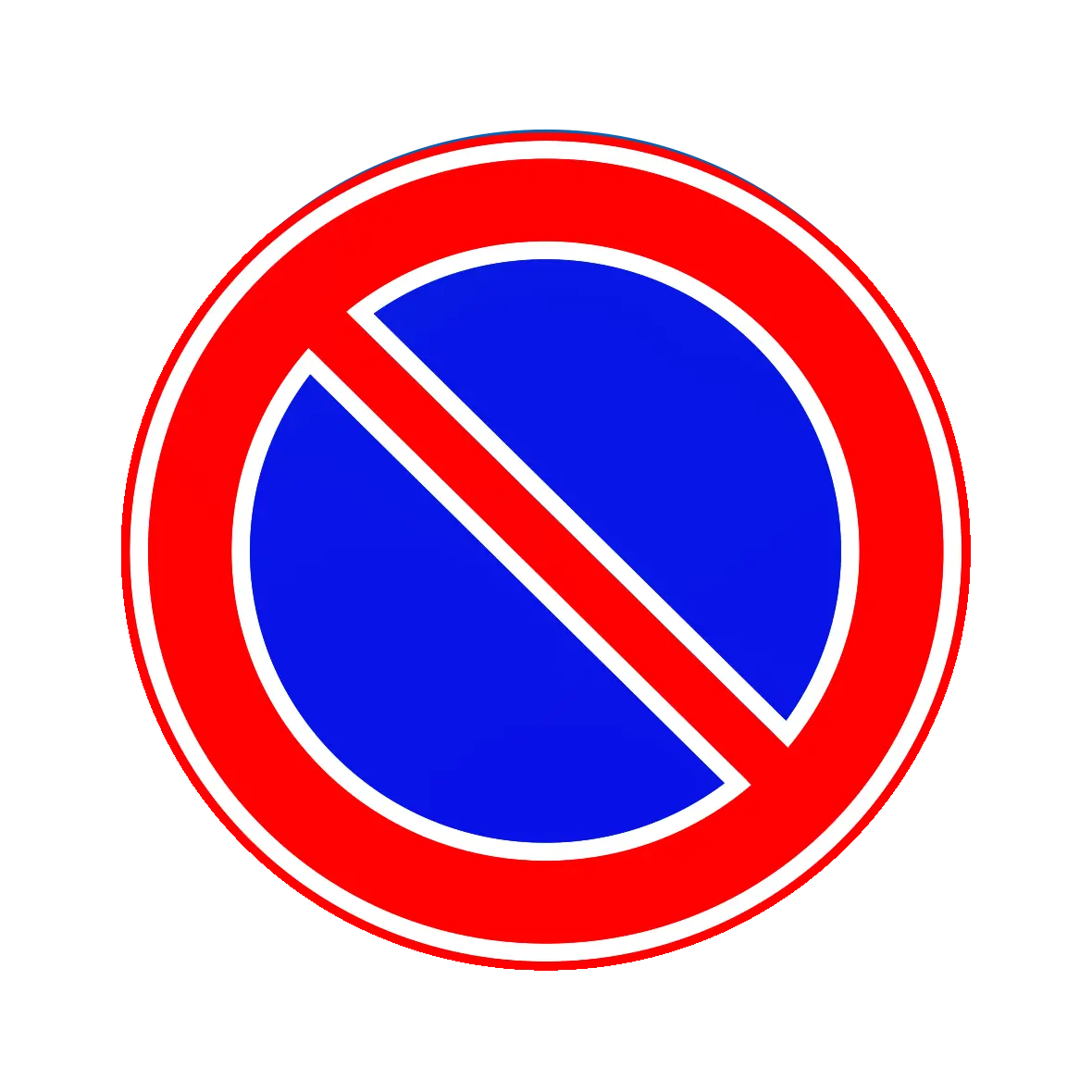
Another common prohibition sign is ‘No Parking’. You can recognise it as a blue circular sign with a red border and a red diagonal line.
This sign means that you are not allowed to park in that location.
Here, it is important to understand the difference between parking and stopping. Where a no-parking restriction applies, it may still be permitted under certain conditions to stop briefly, for example to allow someone to get in or out of the vehicle or to load or unload goods immediately.
So a no-parking sign does not necessarily mean that you are never allowed to stop.
Parking or Stopping?
This distinction is important for your theory test. When you encounter a traffic situation, ask yourself what you are actually doing.
Are you stopping briefly to let someone get in or out? Or are you leaving your vehicle there while, for example, you go somewhere?
That difference partly determines whether you are parking.
No Stopping
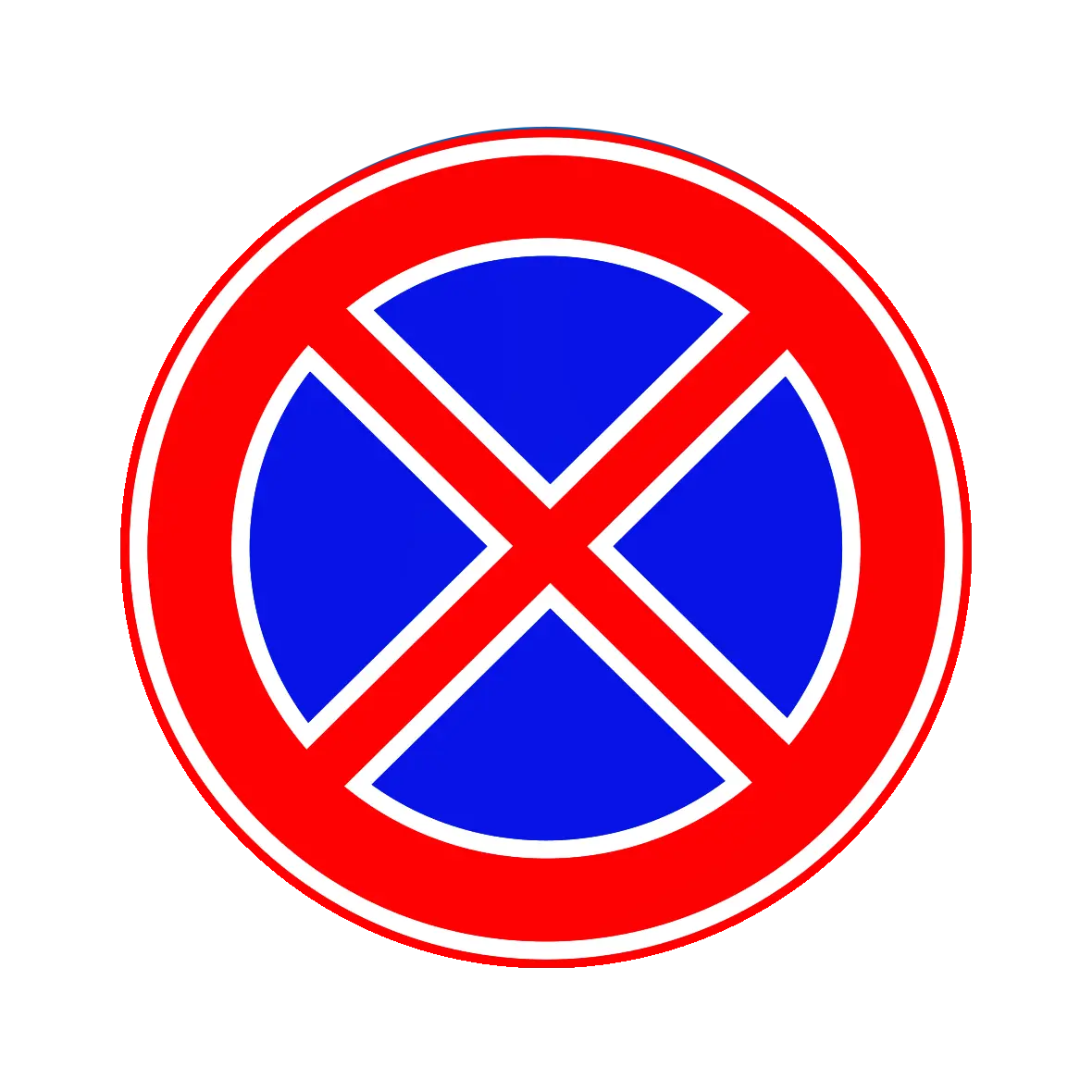
The ‘No Stopping’ restriction goes further than a no-parking restriction. You can recognise this sign as a blue circular sign with a red border and a red cross.
Where this prohibition applies, you are not allowed to stop. This means that you cannot park there, but you also cannot simply stop for a moment.
Of course, there are situations in which you have to stop because of traffic. For example, you may need to stop at a red traffic light or in a traffic jam. That is different from choosing to stop in that location yourself.
You can easily remember the difference between the two signs:
one red line = no parking
a red cross = no stopping
Because the signs look similar, this is an important distinction to practise.
No Overtaking
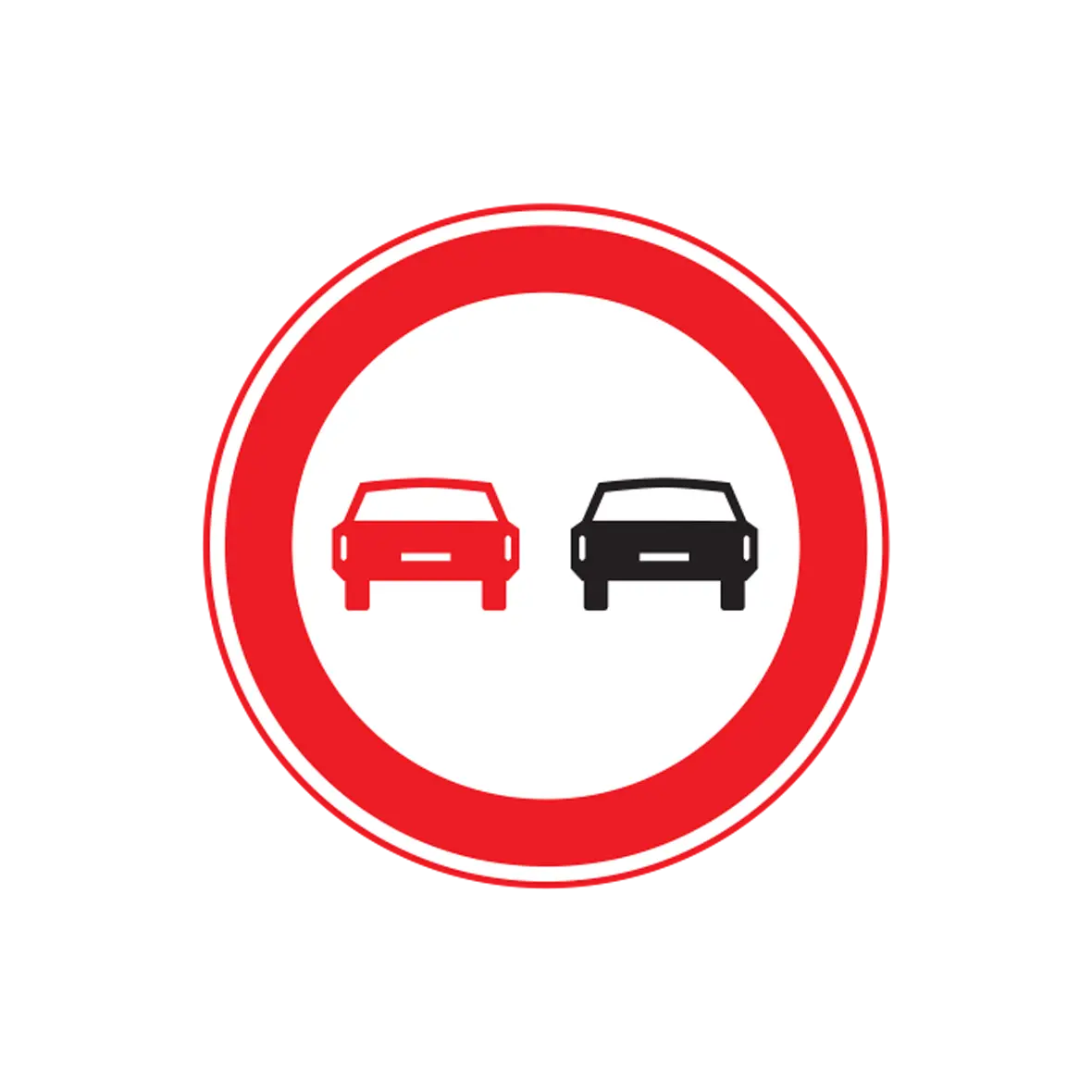
The ‘No Overtaking’ sign indicates that you are not allowed to overtake other motor vehicles there.
This type of prohibition is used in places where overtaking could create additional risks because of the traffic situation or limited visibility, for example.
If you see this sign, you may not overtake other motor vehicles for as long as the prohibition applies. You must therefore remain behind the vehicle in front until the prohibition ends or you reach a situation where it no longer applies.
Here too, it is important not only to recognise the sign, but also to understand what it means for your driving behaviour.
Other Prohibition Signs
In addition to these familiar examples, there are many other prohibition signs. When driving or taking your theory test, you may also encounter signs that prohibit a particular direction.
For example, a sign may indicate that you are not allowed to turn right. The sign does not mean that you cannot continue driving at all; it means that you cannot choose that particular direction at the intersection.
There are also prohibition signs that apply to specific types of vehicles or road users. That is why it is important not only to know the general meaning of prohibition signs, but also to learn to recognise the different symbols.
What Should You Look Out for With Prohibition Signs?
When you encounter a prohibition sign, you can ask yourself a few simple questions:
What is prohibited here?
Look at the symbol and determine which action or traffic movement is not allowed.
Who does the prohibition apply to?
Check whether the sign applies to you and pay attention to any additional signs.
Where does the prohibition apply?
Pay attention to where the prohibition begins and whether there is information about its distance or where it ends.
Are there any exceptions or additional information?
An additional sign can provide more specific information about the meaning of the traffic sign.
By getting into the habit of asking yourself these questions, you will learn to apply traffic signs in different traffic situations rather than simply memorising them.
Learning Prohibition Signs for Your Theory Test
Prohibition signs may seem simple at first glance. However, a small difference in colour, symbol or shape can result in a completely different meaning.
That is why, when studying, it is useful not only to memorise the names of the signs. Above all, try to understand what you are and are not allowed to do as a driver when you encounter a particular sign.
During your theory test, a traffic sign may also be part of a larger traffic situation. You then need to do more than recognise the sign; you also need to know how to respond to it.
The better you understand the meaning of traffic signs, the easier it becomes to apply them in different situations.
Recognising Prohibition Signs Correctly
Prohibition signs clearly tell you which action or traffic movement is not allowed. The red border is an important visual clue, but the symbol ultimately determines what is prohibited.
So do not only learn the familiar signs such as No Entry, No Parking, No Stopping and No Overtaking. Make sure you can also recognise the less familiar prohibition signs.
Good preparation ultimately means more than memorising traffic signs. You need to understand what they mean and how you should respond to them as a driver.