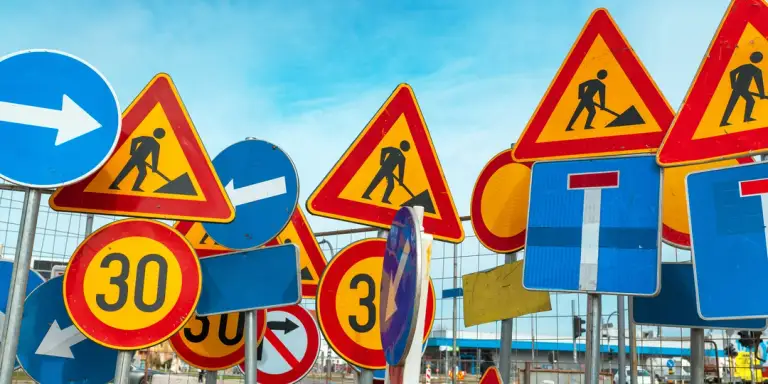

50 km/h in built-up areas, 80 km/h outside built-up areas and 130 km/h on motorways. It’s that simple, right? Not quite. In the Netherlands, there are different speed limits depending on the type of road, the time of day, traffic signs and even the type of vehicle you are driving.

Because some rules seem so familiar, drivers often make mistakes with them. A road outside a built-up area, for example, does not automatically mean you can drive at 80 km/h. And being on a motorway does not automatically mean you can drive at 130 km/h.
In this article, we explain the speed limits you need to know and the common mistakes you may encounter both while driving and during your driving theory exam.
The Most Important Speed Limits in the Netherlands
For a passenger car without a trailer, the following general speed limits apply:
- Inside built-up areas: a maximum of 50 km/h, unless otherwise indicated.
- Outside built-up areas: generally 80 km/h, unless otherwise indicated.
- On a road designated as an autoweg: a maximum of 100 km/h, unless otherwise indicated.
- On a motorway: a maximum of 130 km/h, although a lower limit applies on many motorways during the day.
These general rules are useful as a starting point. In practice, you should always pay close attention to traffic signs and the road situation. A posted speed limit can be lower than the general speed limit.
Mistake 1: Thinking You Can Always Drive at 50 km/h in a Built-Up Area
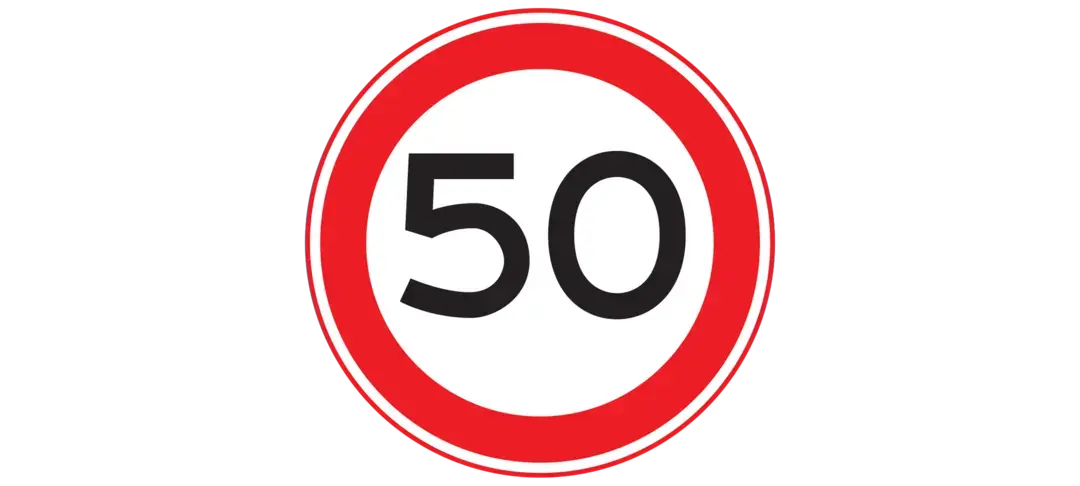
Many drivers learn: built-up area = 50 km/h. This is a useful basic rule, but it does not mean you can drive at 50 km/h everywhere within a built-up area.
For example, you may enter a 30 km/h zone. Once you enter such a zone, the indicated maximum speed of 30 km/h applies. These zones are common in residential areas and around schools.
A different speed limit can also be posted on a road within a built-up area. So do not just look at the sign marking the beginning of the built-up area. Also pay attention to any speed-limit signs that appear afterwards.
Be Careful When Leaving a 30 km/h Zone
A common mistake is assuming that you can automatically return to 50 km/h as soon as the road becomes wider or the surroundings appear less busy.
A 30 km/h zone only ends when this is indicated by the appropriate sign.
Mistake 2: Thinking It Is Always 80 km/h Outside Built-Up Areas
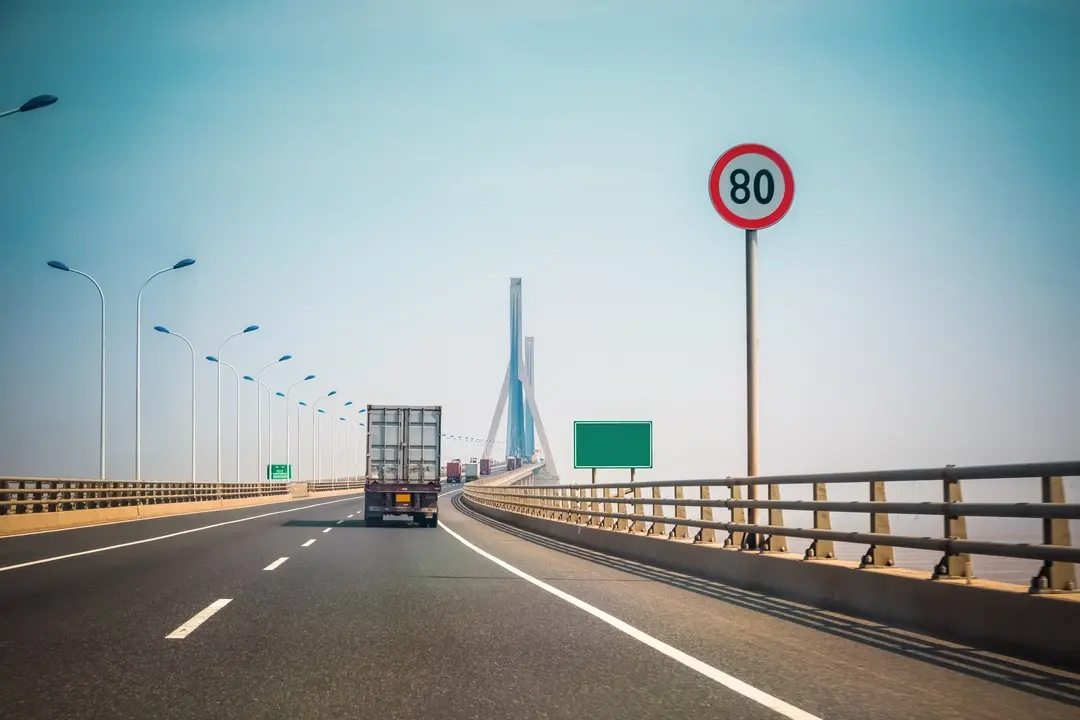
This is another common misconception.
Outside built-up areas, the maximum speed for cars is often 80 km/h, but there are also roads where the limit is 60 km/h or 100 km/h.
Certain roads outside built-up areas have a 60 km/h limit. Other roads allow you to drive at 100 km/h, including certain autowegen and N-roads.
So do not simply assume that leaving a built-up area means you can drive at 80 km/h. Look at the traffic signs and the characteristics of the road.
Mistake 3: Ignoring Road Markings
On some roads, the road markings can help you identify the usual speed limit.
Outside built-up areas, for example:
- Double white centre lines with green between them: 100 km/h.
- Double white centre lines without green between them: 80 km/h.
- No centre line: officially 60 km/h, unless traffic signs indicate otherwise.
However, road markings are a guide. Traffic signs take priority. If a sign indicates a lower speed limit, you must follow the speed shown on the sign.
This is also the kind of detail that can cause confusion during the theory exam. Do not just look at the road markings; always check whether there are traffic signs as well.
Mistake 4: Thinking You Can Drive at 130 km/h on the Motorway During the Day
This is probably one of the most well-known speed-limit mistakes.
The general maximum speed on Dutch motorways is 130 km/h. However, on almost all motorways, a maximum speed of 100 km/h applies between 06:00 and 19:00.
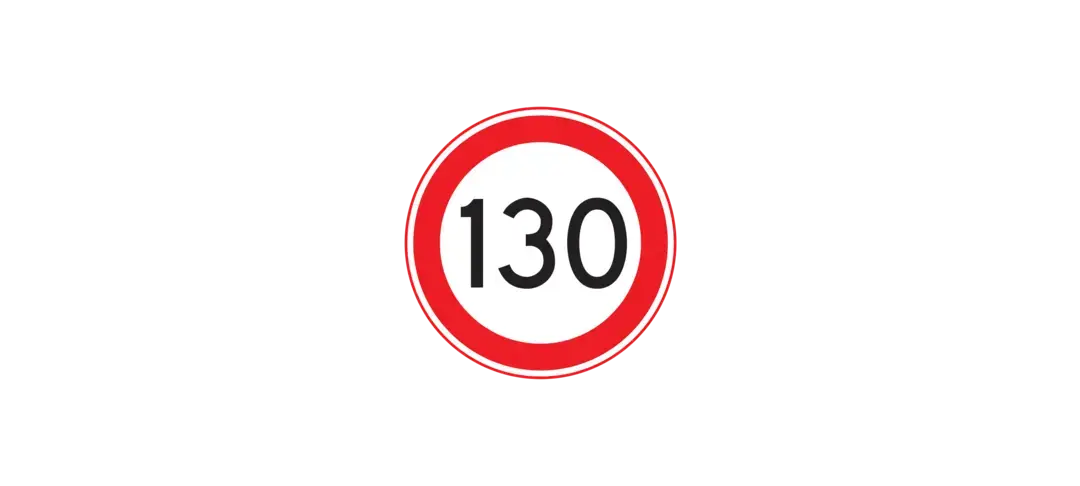
That means you cannot simply drive at 130 km/h during the day because you are on a motorway.
Between 19:00 and 06:00, a higher maximum speed may apply on certain motorways, such as 120 or 130 km/h. However, some motorway sections continue to have a lower limit. The signs along the road determine the speed limit that applies at that moment.
Why Do You Need to Pay Close Attention to the Signs?
The maximum speed can differ from one motorway section to another. In addition, electronic matrix signs can temporarily indicate a different speed, for example because of congestion, an accident, roadworks or poor weather conditions.
If a matrix sign shows a lower speed limit than the standard speed indicated along the road, you must follow the lower speed shown on the matrix sign.
Mistake 5: Confusing an Advisory Speed with a Maximum Speed
Not every speed sign means that you are legally required to stay below that speed.
A maximum speed tells you the highest speed you are legally allowed to drive. An advisory speed recommends a speed that is considered appropriate under the circumstances.
This distinction is important.
For example, if you see an advisory speed of 70 km/h, this does not automatically mean that 70 km/h is the legal maximum speed. It may simply be recommended because of a bend or another road situation.
A maximum-speed sign, on the other hand, indicates a legal speed limit.
Mistake 6: Thinking 100 km/h on an Autoweg Is the Same as 100 km/h on a Motorway
An autoweg and a motorway are not the same thing.
An autoweg is identified by a blue traffic sign showing a white car. The general maximum speed on an autoweg is 100 km/h, unless another limit is indicated.
A motorway has its own motorway sign. Its general maximum speed is 130 km/h, although, as explained above, 100 km/h applies during the day on many motorway sections.
For your theory exam, it is therefore important not only to recognise the speed itself, but also to understand what type of road you are driving on.
Mistake 7: Forgetting That a Trailer Can Change the Speed Limit
Are you driving with a car and trailer or caravan? Different maximum speeds may apply.
For a car towing a trailer or caravan with a maximum authorised mass of less than 3,500 kg, the maximum speed on an autoweg or motorway is 90 km/h. If the trailer or caravan has a maximum authorised mass above 3,500 kg, the maximum speed on an autoweg or motorway is 80 km/h.
Inside and outside built-up areas, the general limits for these combinations are generally the same as for cars, unless traffic signs indicate otherwise.
This is a good example of why you should not only learn the standard rules for passenger cars. The vehicle you are driving can affect the maximum permitted speed.
Mistake 8: Only Looking at Your Speedometer
You can see exactly 80 km/h on your dashboard and still be driving too fast.
The speed allowed on the road is not determined by what your speedometer shows. It is determined by the applicable traffic rules and signs.
The speed limit can also change during your journey. Think about temporary speed restrictions at roadworks or a lower speed displayed on a matrix sign.
A good driver therefore regularly checks the traffic signs and adjusts their speed accordingly.
Mistake 9: Forgetting That 15 km/h Applies on an Erf
An erf has a completely different speed rule.
On an erf, the maximum speed is 15 km/h. Pedestrians can also use the entire public space on an erf, so drivers need to pay particular attention to pedestrians, children playing and other vulnerable road users.
So it is not the case that you can automatically drive at 30 or 50 km/h simply because you are in a residential environment. Learn to recognise the traffic sign that indicates an erf.
Mistake 10: Thinking the Maximum Speed Is Always the Right Speed
A maximum speed is a limit, not a target.
If the maximum speed is 80 km/h, that does not mean you should always drive at exactly 80 km/h regardless of the circumstances. In bad weather, poor visibility, heavy traffic, icy conditions or other difficult situations, you may need to drive more slowly.
You should always adjust your speed to the circumstances.
This is important not only for safe driving but also for your theory exam. Questions are not always about remembering a number. You may also need to judge whether a particular speed is safe and appropriate in a given situation.
Which Speed Limits Should You Know for Your Theory Exam?
For the Dutch theory exam, it is useful to know these basic rules:
50 km/h: the general maximum speed inside built-up areas.
30 km/h: among other situations, in 30 km/h zones and on roads where this speed is indicated by a sign.
15 km/h: on an erf.
60 km/h: on certain roads outside built-up areas where this speed is indicated.
80 km/h: the general maximum speed outside built-up areas and on many provincial roads.
100 km/h: the general maximum speed on autowegen and on many N-roads designed for 100 km/h.
130 km/h: the general maximum speed on motorways, although 100 km/h applies on many motorways between 06:00 and 19:00.
You should also know that traffic signs can indicate a different maximum speed and that temporary matrix signs can impose a lower speed limit.
How to Avoid Mistakes With Speed Limits
The most important tip is simple: do not just memorise the numbers. Learn when each rule applies.
While driving, ask yourself:
- Am I inside or outside a built-up area?
- Am I in a 30 or 60 km/h zone?
- Am I on an autoweg or motorway?
- Is there a speed-limit sign?
- Is there a matrix sign?
- Is there a temporary speed restriction?
- Am I towing a trailer?
- Do the road and weather conditions mean I need to reduce my speed?
Once you learn to ask yourself these questions automatically, it becomes much easier to determine the correct speed.
Conclusion: The Correct Speed Is More Than Just a Number
Dutch speed limits may seem straightforward at first, but there are quite a few exceptions and situations that drivers can easily confuse.
The biggest mistake is learning a rule without considering the situation. Being inside a built-up area does not automatically mean 50 km/h, being outside a built-up area does not automatically mean 80 km/h, and being on a motorway does not automatically mean 130 km/h.
Always consider the type of road, traffic signs, electronic matrix signs and the circumstances. For your theory exam, it also helps to do more than memorise speed limits. Practise situations where you have to determine which maximum speed applies at that particular moment.

.jpg)