.jpg)

Dutch traffic includes many different types of vehicles, each with its own traffic rules, speed limits, and position on the road. From the compact brommobiel to the increasingly popular speed pedelec, understanding the regulations can sometimes feel confusing. Yet knowing these rules is essential for both your own safety and the safety of other road users.

In this guide, we explain the differences between the moped, snorfiets, speed pedelec, and brommobiel. You will learn where each vehicle is allowed to drive, what speed limits apply inside and outside built-up areas, and how special traffic zones such as 30 km/h zones and woonerven affect these vehicles.
The Moped: The Yellow License Plate on the Road
The moped, recognized by its yellow license plate, is a very common vehicle in the Netherlands. This category includes traditional mopeds as well as scooters with a maximum design speed of 45 km/h.
Speed Limits for Mopeds
The maximum speed of a moped depends on where you are riding.
Inside Built-Up Areas
- On the roadway: maximum 45 km/h
- On a bicycle/moped lane: maximum 30 km/h
Outside Built-Up Areas
- On the roadway: maximum 45 km/h
- On a bicycle/moped lane: maximum 40 km/h
Mopeds are generally required to use the bicycle/moped lane whenever one is available. If there is no designated lane, the rider must use the roadway.
It is important to remember that mopeds are not allowed on:
- Motorways
- Autowegen (expressways)
In some cities, such as Amsterdam, local rules may require mopeds to ride on the roadway instead of the bicycle lane to improve traffic flow and increase cyclist safety.
The Snorfiets: The Blue License Plate
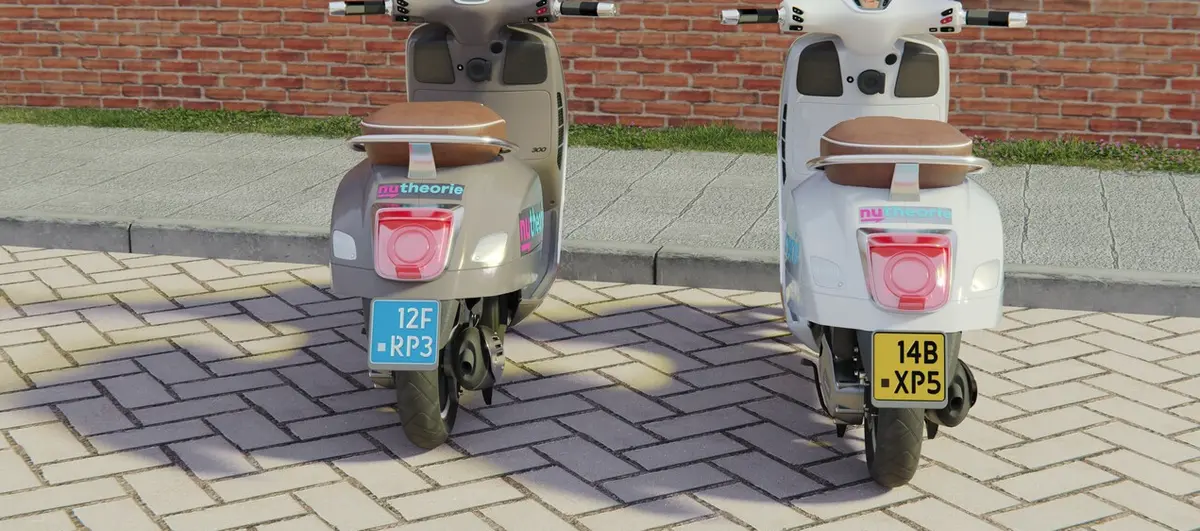
The snorfiets, identified by its blue license plate, is designed for lower speeds than a moped. A snorfiets may not exceed 25 km/h.
Unlike mopeds, the speed limit for a snorfiets stays the same regardless of location.
Maximum Speed
- Everywhere: maximum 25 km/h
Traditionally, snorfietsen use the bicycle lane. However, several Dutch cities now require snorfiets riders to use the roadway instead. This rule was introduced because crowded cycle lanes created unsafe situations for cyclists and pedestrians.
Helmet Requirement
Wearing a helmet is mandatory for snorfiets riders throughout the Netherlands.
The Speed Pedelec: The Fast Electric Bicycle
.jpg)
The speed pedelec is a fast electric bicycle that provides pedal assistance up to 45 km/h. Although it looks similar to a regular e-bike, Dutch law classifies it as a moped.
This means speed pedelec riders must follow the same rules as moped riders.
Requirements for a Speed Pedelec
- Yellow license plate
- Mandatory helmet
- Insurance required
- Driving license required
Speed Limits
Inside Built-Up Areas
- On the roadway: maximum 45 km/h
- On the bicycle/moped lane: maximum 30 km/h
Outside Built-Up Areas
- On the roadway: maximum 45 km/h
- On the bicycle/moped lane: maximum 40 km/h
Just like mopeds, speed pedelecs are not allowed on motorways or autowegen.
Special Traffic Zones
In addition to the standard traffic rules, there are special traffic zones with lower speed limits that apply to all vehicles.
30 km/h Zones
A 30 km/h zone is designed to improve safety in residential or busy urban areas.
Within these zones:
- Mopeds may not exceed 30 km/h
- Speed pedelecs may not exceed 30 km/h
- Brommobielen may not exceed 30 km/h
- Snorfietsen continue to follow their own maximum speed of 25 km/h
Even if a vehicle is capable of driving faster, the posted speed limit always applies.
Woonerven (Residential Yards)
A woonerf is a specially designed residential area where pedestrians and children have priority. Drivers must adapt their behavior accordingly.
Maximum Speed in a Woonerf
- All motor vehicles: maximum 15 km/h
This applies to:
- Mopeds
- Snorfietsen
- Speed pedelecs
- Brommobielen
Drivers and riders must proceed carefully and always yield to pedestrians.
The Brommobiel: A Separate Vehicle Category
The brommobiel, often called a “45 km/h car,” occupies a unique position in Dutch traffic law. Although it resembles a small car, it is legally classified as a light motor vehicle with a maximum speed of 45 km/h.
A brommobiel is:
- Not a scooter
- Not a mobility scooter
- Not a regular passenger car
Traffic Rules for Brommobielen
Maximum Speed
- Maximum 45 km/h inside and outside built-up areas
- Lower limits apply in 30 km/h zones and woonerven
Position on the Road
A brommobiel must always drive on the roadway.
It is forbidden to drive a brommobiel on:
- Bicycle lanes
- Bicycle/moped lanes
Road Access
Brommobielen are allowed on many 80 km/h roads unless prohibited by traffic sign C9, which bans slow-moving vehicles.
However, brommobielen are never allowed on:
- Motorways
- Autowegen
Applicable Traffic Rules
Drivers of brommobielen must follow the traffic rules that apply to passenger cars and motorcycles.
Overview of Speed Limits and Road Position
| Vehicle | Built-Up Area (Roadway) | Built-Up Area (Bike/Moped Lane) | Outside Built-Up Area (Roadway) | Outside Built-Up Area (Bike/Moped Lane) |
|---|---|---|---|---|
| Moped | 45 km/h | 30 km/h | 45 km/h | 40 km/h |
| Snorfiets | 25 km/h | 25 km/h | 25 km/h | 25 km/h |
| Speed Pedelec | 45 km/h | 30 km/h | 45 km/h | 40 km/h |
| Brommobiel | 45 km/h | Not allowed | 45 km/h | Not allowed |
Please note: Some Dutch cities require mopeds and snorfietsen to use the roadway instead of the bicycle lane.
Conclusion
Understanding the traffic rules for mopeds, snorfietsen, speed pedelecs, and brommobielen is essential for safe participation in Dutch traffic. While these vehicles may appear similar, the rules regarding maximum speed and road position vary considerably.
The brommobiel follows many of the same rules as passenger cars, while mopeds, snorfietsen, and speed pedelecs each have their own specific regulations. Special traffic areas such as 30 km/h zones and woonerven introduce additional restrictions that all road users must respect.
By knowing and following these rules, you contribute to safer roads, better traffic flow, and a more enjoyable driving experience for everyone in the Netherlands.