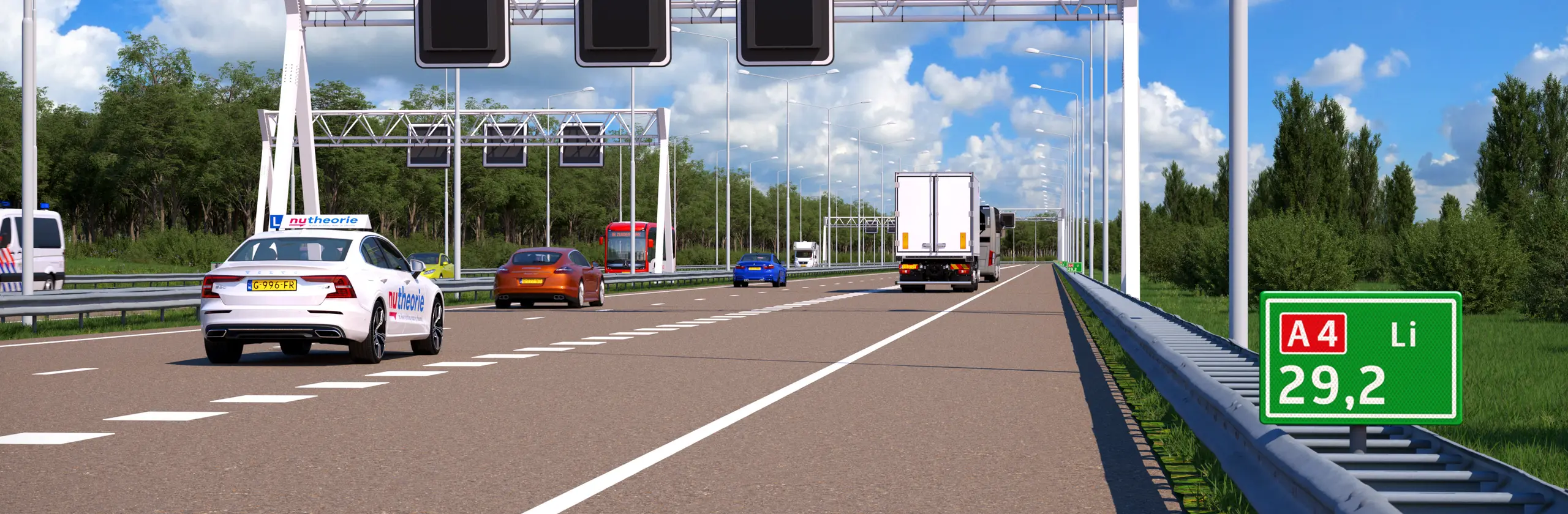

Anyone who regularly drives on Dutch motorways will see them almost every day: electronic road signs above the road. Sometimes they show a lower speed limit, sometimes a red cross or an arrow. They can also provide information about a traffic jam or an upcoming traffic situation.

These digital road signs are an important part of modern traffic management. But what exactly do the different symbols mean? And when do you actually need to respond to them as a driver?
In this article, we explain what electronic road signs are, which signals you may encounter and what you should do as a driver.
What Are Electronic Road Signs?
Electronic road signs are also known as matrix signs or dynamic road signs. They are usually positioned above or next to the lanes and can change their message according to the current traffic situation.
Unlike traditional road signs, the information displayed on an electronic sign is not permanently fixed. A traffic control centre can adjust the signals, for example, when an accident occurs, a lane is closed or a sudden traffic jam develops.
Matrix signs can display speed limits, arrows and red crosses, among other things. The signals can be adjusted based on traffic measurements or set manually by a traffic control centre.
Why Are Electronic Road Signs Needed?
Traffic conditions on the road can change in a short period of time. An accident, sudden traffic jam, roadworks or bad weather can cause the normal traffic situation to change.
Electronic road signs make it possible to warn drivers quickly and adapt traffic management to current conditions. This can help prevent dangerous situations and keep traffic flowing more smoothly.
You may encounter electronic traffic signals in situations such as:
- a sudden traffic jam;
- an accident or breakdown;
- roadworks;
- poor weather, such as fog or icy conditions;
- a closed lane;
- a traffic situation where a lower speed is necessary.
For drivers, this means that you should not only pay attention to permanent road signs. The signals displayed above the road can also provide important traffic information.
The Most Important Signals on Electronic Road Signs
Electronic road signs can display different symbols and speed limits. A red cross, an arrow and a displayed maximum speed are particularly important to recognise.
A Red Cross
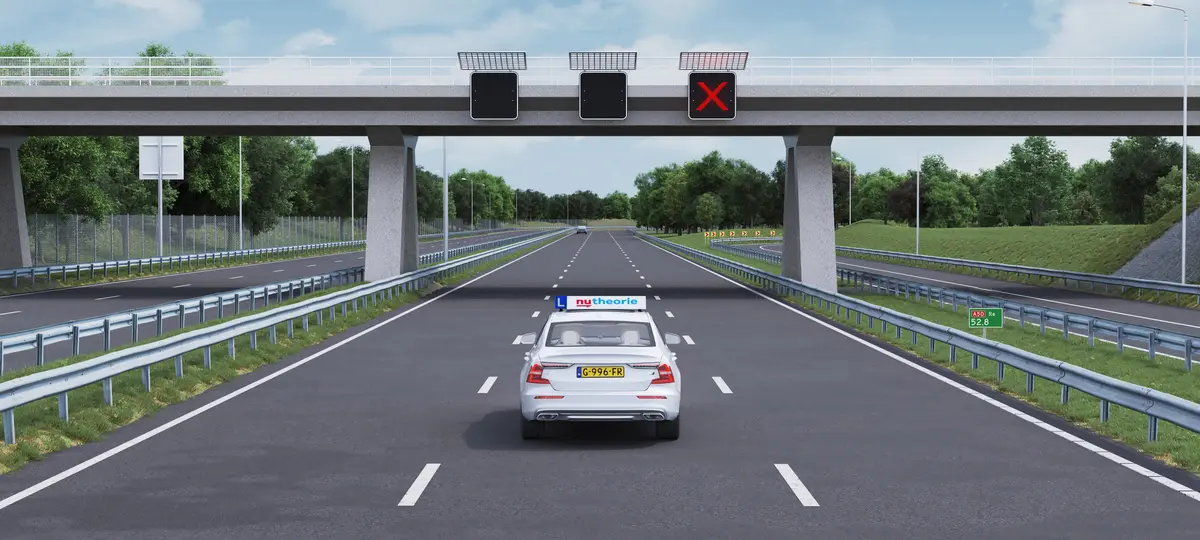
A red cross above a lane means that you are not allowed to use that lane.
This can happen because of an accident, roadworks, an obstacle on the road or another dangerous situation. If you see a red cross above your lane while driving, you should move to another available lane as soon and safely as possible.
Do not continue driving in a lane with a red cross until you reach the obstacle or closure.
A red cross is not a recommendation. It is a traffic signal that you must follow.
An Arrow
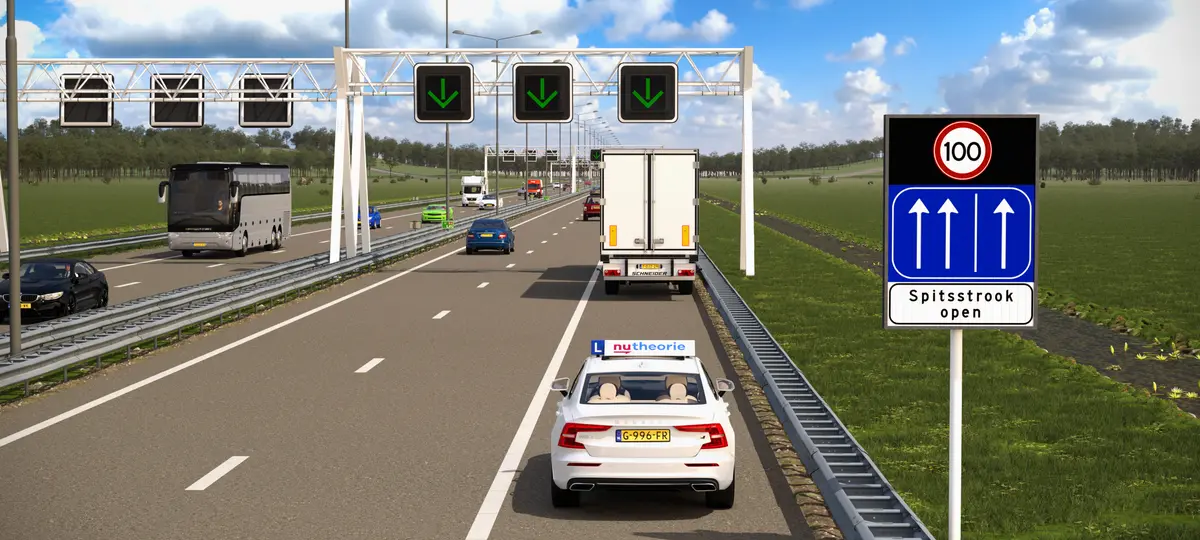
Electronic road signs can also display an arrow. This can indicate that you need to change lanes, for example because the lane will be closed further ahead.
If you see an arrow indicating that you need to move over, start looking for a suitable opportunity to change lanes in good time. Take other traffic into account and make sure you can merge safely.
When a lane is closed, the signal may change from an arrow to a red cross. Therefore, continue paying close attention to the signs above the road.
70, 80 or 100 km/h
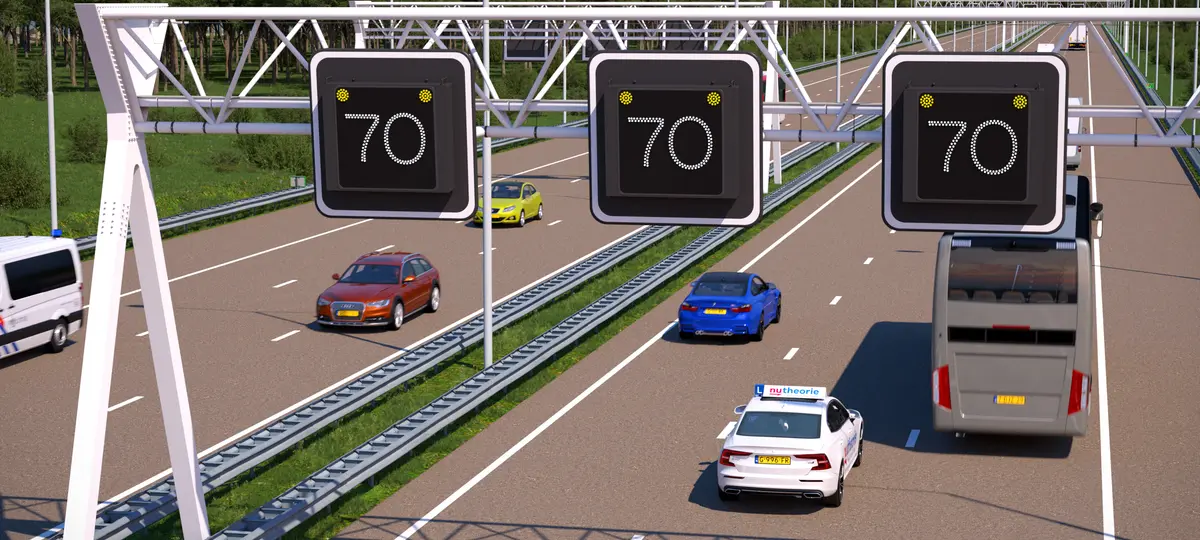
A speed displayed on an electronic road sign is a maximum speed limit. It is not an optional recommended speed.
For example, if a matrix sign displays 70 km/h, you may drive at a maximum of 70 km/h at that moment. Even if the speed is lower than the normal maximum speed for that section of road, you must follow the displayed speed limit.
The speed limit may be increased again when the traffic situation changes.
How Do Electronic Road Signs Know When to Change?
Behind electronic traffic signals is an extensive traffic management system. Traffic data is continuously collected and used to monitor the current situation on the road.
For example, measurements can provide information about the number of vehicles and their speeds. When the data shows that traffic is moving slowly or has come to a standstill, the traffic signals can be adjusted.
Information about situations such as the following can also play a role:
- traffic volume;
- average speed;
- traffic jams;
- accidents;
- roadworks;
- traffic cameras;
- current traffic reports.
Based on this information, traffic control centres can determine which signals are needed on the road. This allows drivers to be warned earlier about changing traffic conditions.
Matrix Signs and Dynamic Route Information
Not every digital road sign has the same function.
In addition to matrix signs, there are DRIPs: Dynamic Route Information Panels. These are larger digital information panels that can provide drivers with information about traffic jams, journey times and alternative routes.
For example, a DRIP can show that a particular destination can be reached more quickly via one route than another. This gives drivers information that can help them choose their route.
The difference between the two is important. A matrix sign above a lane can display a traffic measure, such as a maximum speed limit or a red cross. A DRIP is mainly intended to provide traffic information and help drivers make route choices.
What Do Electronic Road Signs Mean for You as a Driver?
Digital traffic information mainly requires attention and adaptability. The signals can change during your journey, for example because the traffic situation further ahead has changed.
While driving, pay close attention to the following points.
1. Look at the Signals Above the Lanes
Regularly check whether your lane is open. A red cross means that you are not allowed to use the lane. An arrow may indicate that you need to change lanes.
2. Follow the Displayed Maximum Speed
If you see a lower speed limit on a matrix sign, reduce your speed in good time. The displayed speed applies as the maximum speed limit at that moment.
3. Pay Attention to the Traffic Situation Ahead
A lower speed limit or a red cross often means that something is happening further ahead. Therefore, do not only look at the sign itself, but also pay attention to the traffic situation in front of you.
4. Stay Alert When the Signals Change
Electronic road signs can be adjusted while you are driving. A speed limit can change or a lane can be closed. Therefore, continue paying attention to the current signals.
Electronic Road Signs and Your Navigation System
Modern cars and navigation systems increasingly provide information about traffic jams, roadworks and other traffic situations. However, this does not mean that you can ignore the electronic road signs above the road.
The signals on the road are based on the current traffic situation and can be important for road safety. For example, if you see a red cross above a lane while your navigation system is still directing you that way, you must follow the traffic signal.
Use your navigation system as a helpful tool, but always continue paying attention to road signs and signals.
From Road Signs to an Intelligent Traffic Network
Electronic road signs are now more than simply digital versions of traditional road signs. They are part of a larger system in which traffic data is collected, processed and used to provide drivers with information at the right time.
Vehicles and navigation systems can also receive increasingly more real-time traffic information. This is creating an increasingly connected traffic network in which roadside equipment, traffic control centres, vehicles and navigation systems work together.
For drivers, this mainly means that traffic information is becoming more dynamic. The situation you saw a few minutes ago may have already changed. Continuing to pay attention and adapting your driving to the current situation therefore remains important.
Conclusion
Electronic road signs help provide drivers with quick information about changes on the road. They can display a lower maximum speed, close a lane or warn drivers about a changing traffic situation.
The most important signals to recognise are a red cross, an arrow and a displayed maximum speed. A red cross means that you are not allowed to use the relevant lane. An arrow may indicate that you need to change lanes, while a displayed speed is a maximum speed that you must follow.
Understanding the different signals and staying alert to changes can help you drive more safely and confidently. Ultimately, digital traffic information is there to help drivers adapt to what is happening on the road at that moment.