There are countless different road signs in the Netherlands. Some signs provide information, others warn you about danger, and others tell you what you may or may not do. But how do you recognize road signs that indicate an obligation? And what exactly do the different signs mean?

In this blog, we explain which road signs you need to know as a driver and what they mean. We will mainly look at the shape and symbol of each sign, so you can more easily recognize the different traffic rules.
How Do You Recognize a Mandatory Road Sign?
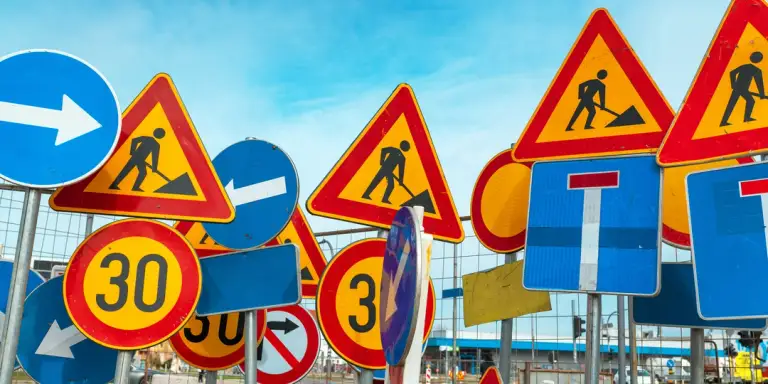
Road signs come in different shapes. For example, there are triangular, circular, and rectangular signs. The shape and appearance of a road sign often give you a first indication of what it means.
Circular road signs generally indicate an instruction or prohibition. An instruction tells you what you are required to do, while a prohibition tells you what you are not allowed to do.
Mandatory signs often have a blue circular background with a white symbol. The symbol shows which action or direction is required. Prohibitory signs can usually be recognized by their circular shape with a red border. They indicate what is not permitted.
It is therefore important to look not only at the color or shape of a road sign, but also at the symbol displayed on it.
Maximum Speed
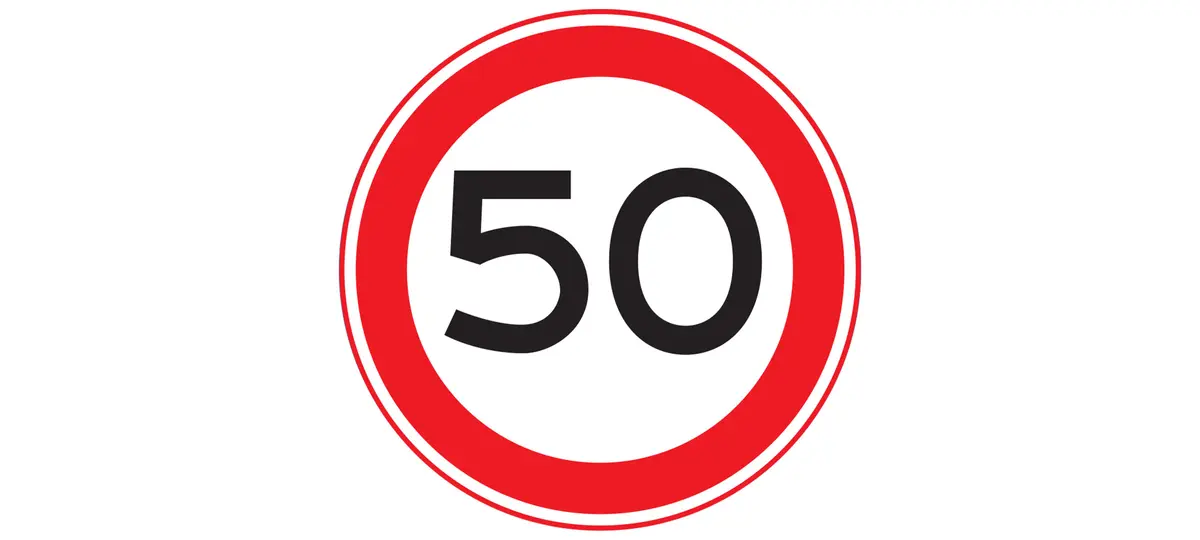
One road sign you should always pay close attention to as a driver is the maximum speed sign. You can recognize this sign by its circular shape, red border, and the number in the center.
If the sign shows 50, for example, you may drive at a maximum speed of 50 kilometers per hour from that point onward. The maximum speed applies from the location of the sign and remains in effect until it is changed or cancelled.
A maximum speed of 50 kilometers per hour is, for example, common within built-up areas. However, remember that the stated speed is a maximum, not a speed you must always drive at. In bad weather, heavy traffic, poor visibility, or another unsafe situation, you may need to drive more slowly.
So, if you see a circular road sign with a red border and the number 50, you know that you may not drive faster than 50 kilometers per hour.
Mandatory Direction of Travel
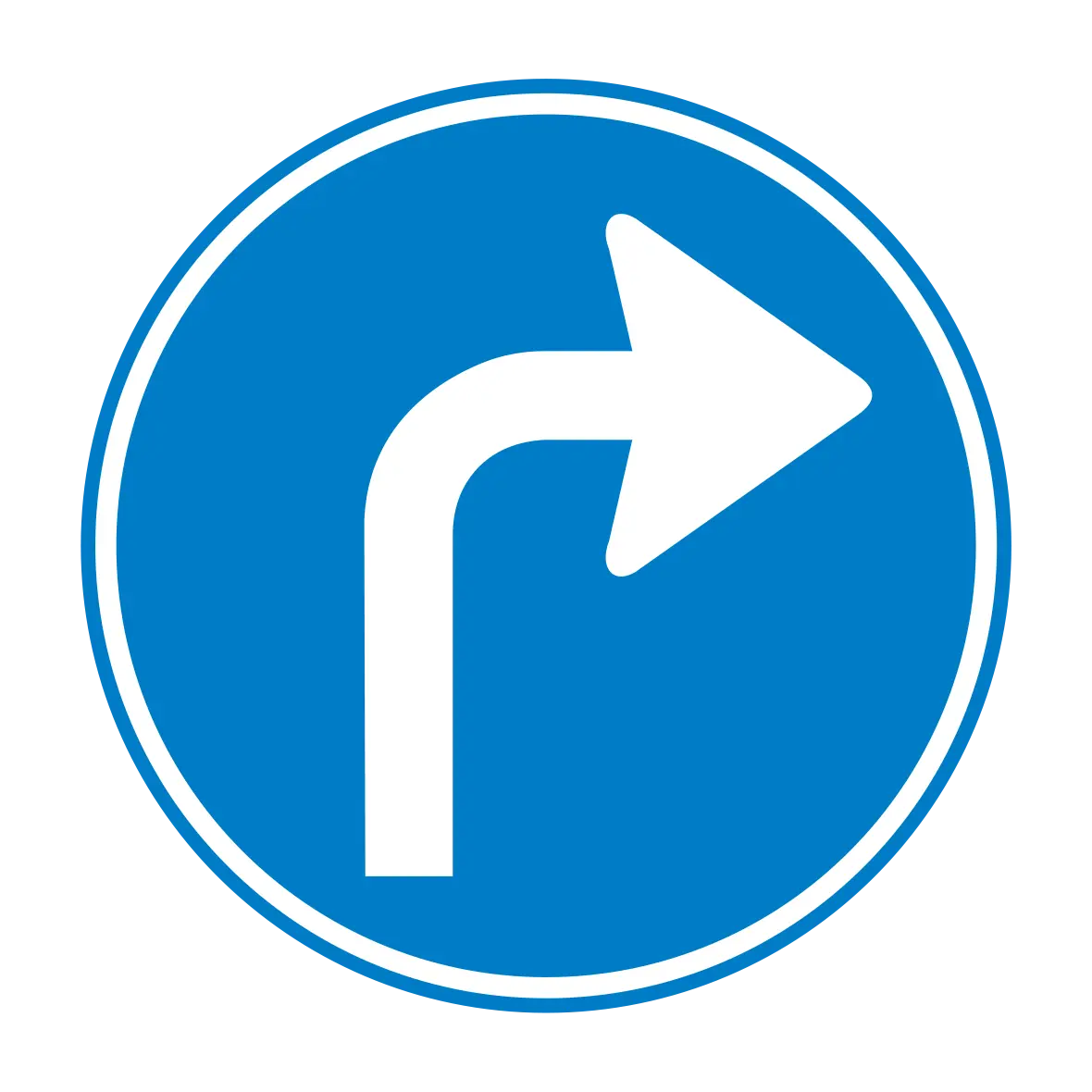
Another important mandatory sign is the mandatory direction of travel sign. You can recognize this sign by its blue circular shape with a white arrow.
The direction of the arrow tells you which way you must drive. The arrow may indicate that you must continue straight ahead, turn left, or turn right. You cannot simply choose a different direction at that point.
Pay close attention to the direction of the arrow and make sure you notice the sign in time. A mandatory direction of travel can be particularly important at intersections, roadworks, or locations where traffic is temporarily being redirected.
In short: if you see a blue circular sign with a white arrow, you must follow the indicated direction.
Prohibitory Signs with a Red Border
Not all circular road signs indicate a mandatory action. There are also many prohibitory signs. These can usually be recognized by their circular shape and red border.
The symbol in the center of the sign tells you exactly what is prohibited. Therefore, it is not enough to simply look at the red border: you also need to understand what the symbol means.
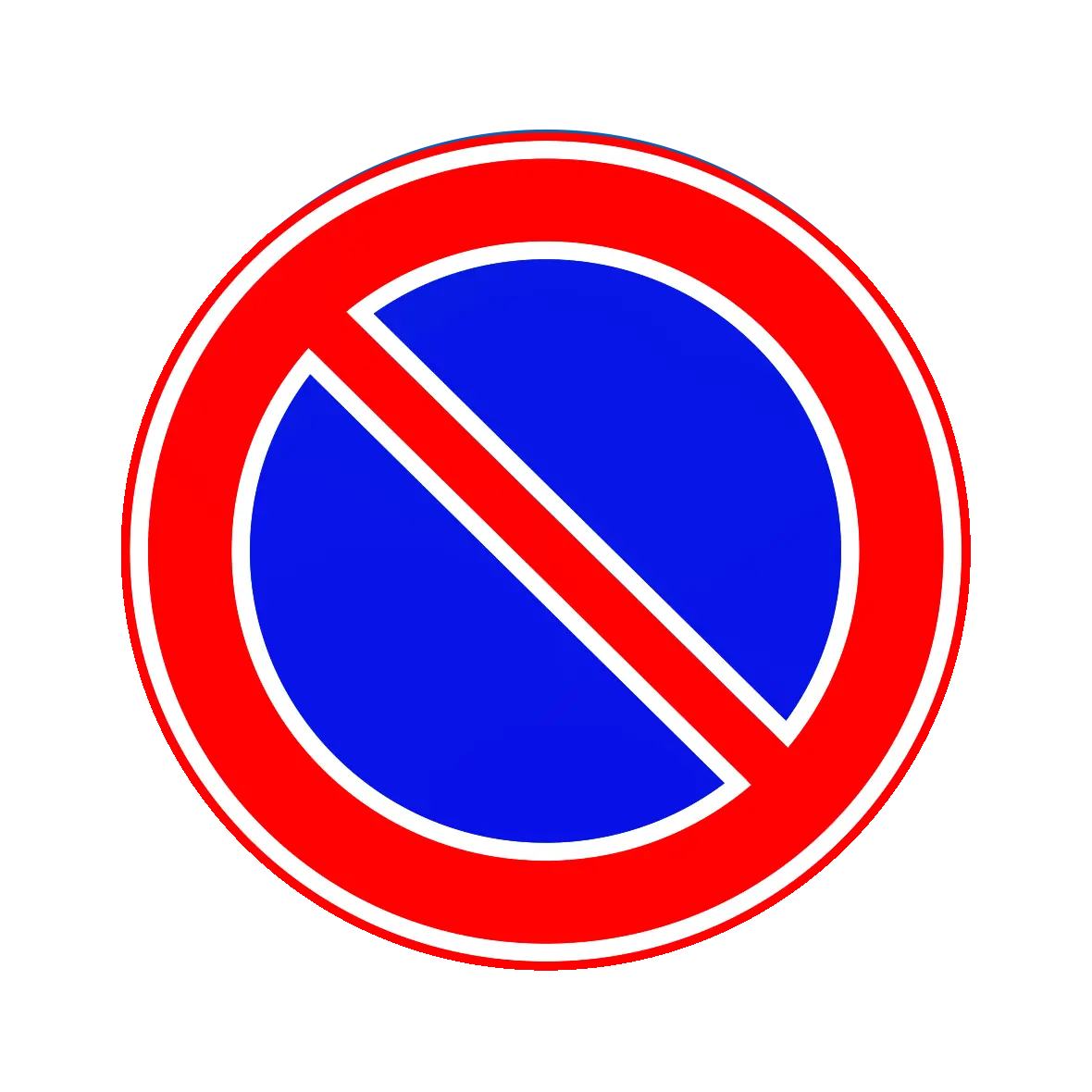
A well-known example is the no-parking sign. This sign means that you are not allowed to park there. A no-parking sign is not the same as a no-stopping sign. Under certain circumstances, you may briefly stop where parking is prohibited, for example to let someone get in or out of the vehicle.
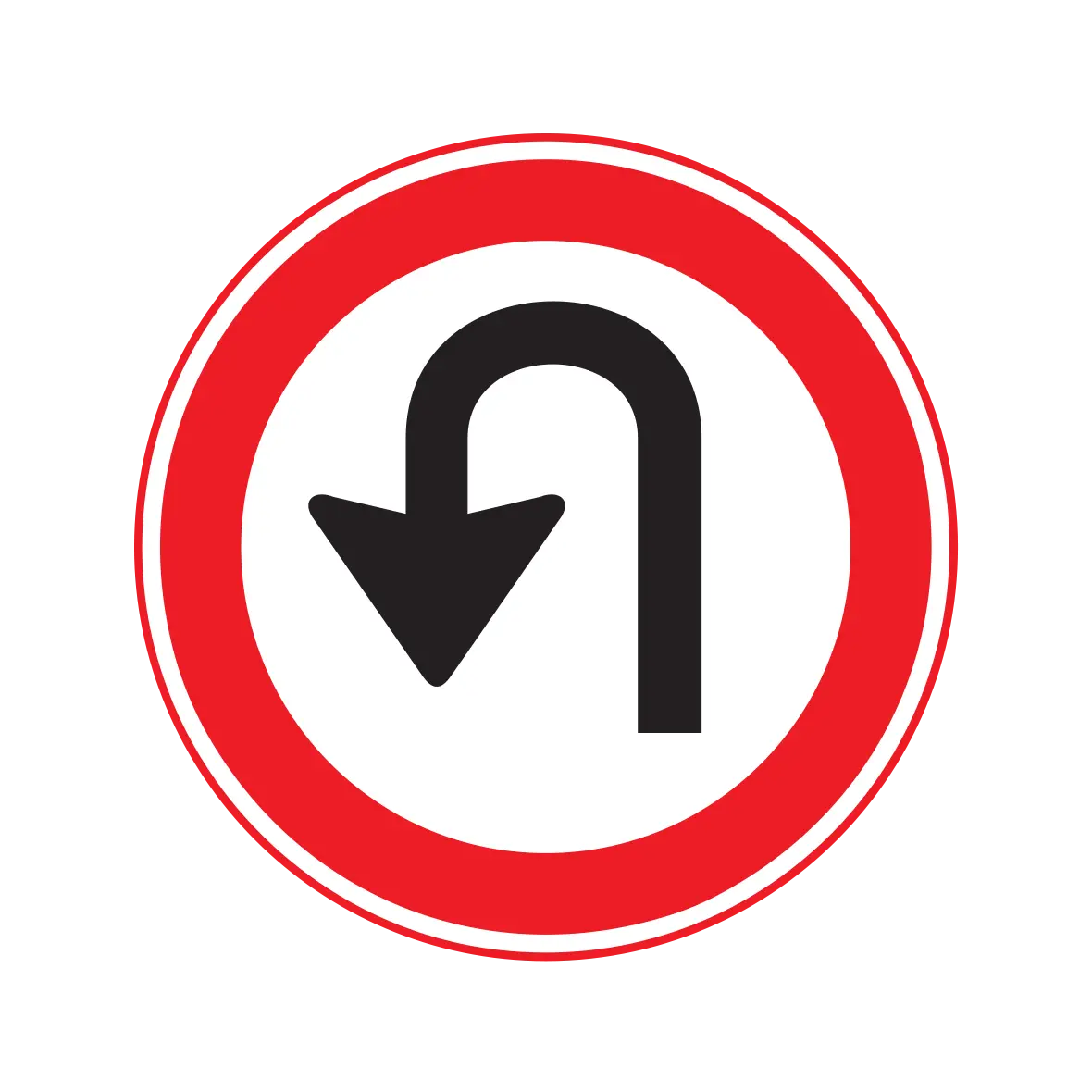
Another example is the no U-turn sign. This sign indicates that you are not allowed to make a U-turn at that location. You therefore cannot turn your vehicle around and continue in the opposite direction.
Prohibitory signs can apply to different actions and vehicles. Therefore, always pay close attention to the symbol and any additional road signs.
Mandatory Cycle/Moped Path
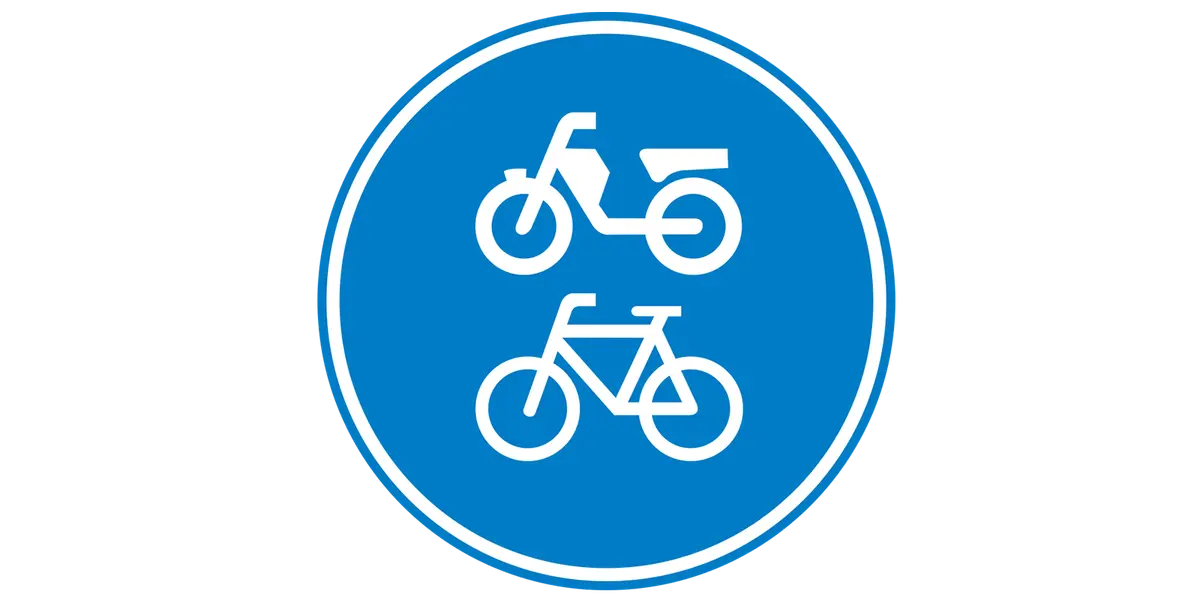
Another important mandatory sign is the mandatory cycle/moped path sign. You can recognize this sign by its blue circular shape with white symbols of a bicycle and moped.
The sign indicates that cyclists and moped riders must use the designated cycle/moped path. If you are cycling or riding a moped, you cannot simply continue on the regular road when a mandatory cycle/moped path is present.
The sign helps separate different road users from one another. Cyclists and moped riders are given their own space on the road, which can make traffic more organized.
Also pay attention to the end of the mandatory cycle/moped path. From that point onward, the obligation no longer applies, and you must follow the traffic situation that applies next.
If you see a blue circular sign with a white bicycle and moped, cyclists and moped riders must use the designated path.
Mandatory Bus Lane
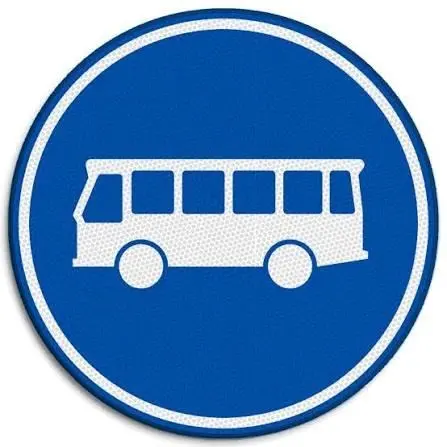
The mandatory bus lane is also recognizable by a blue circular road sign. The sign displays a white image of a bus.
This sign indicates that the relevant section of the road is intended for buses. Other drivers may not simply use this lane. Whether other vehicles are allowed to use it can depend on additional road signs or the specific layout of the road.
A bus lane gives buses their own space on the road. This can be particularly useful on busy roads, allowing public transport to move through traffic more easily.
Therefore, pay close attention to the symbol and any additional signs. A road sign may indicate which vehicles are allowed to use a particular road or lane.
Why Is It Important to Know Mandatory and Prohibitory Signs?
Road signs do more than tell you what to do at a particular location. They also help make traffic predictable and safe. If you know the shapes, colors, and symbols of the most important road signs, you can understand more quickly which traffic rule applies at any given moment.
Above all, remember the difference between an instruction and a prohibition. A blue circular sign with a white symbol generally tells you what you must do, while a circular sign with a red border tells you what you are not allowed to do.
Also make sure you look at the complete sign and any additional road signs. This helps you understand not only that a rule applies, but also exactly to whom and in which situation it applies.