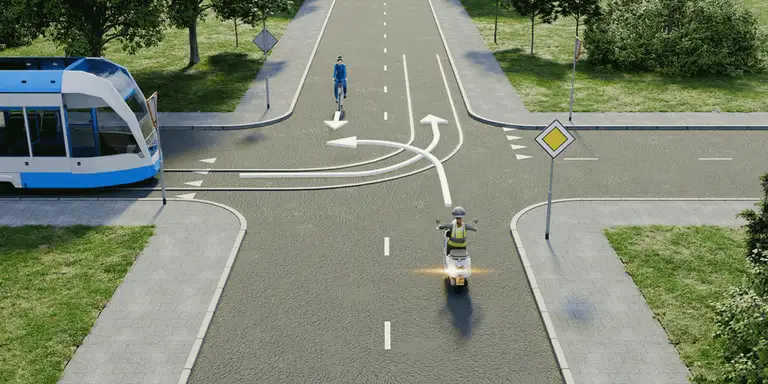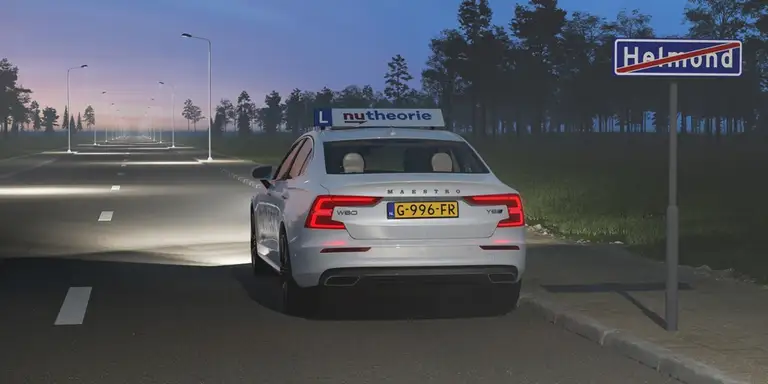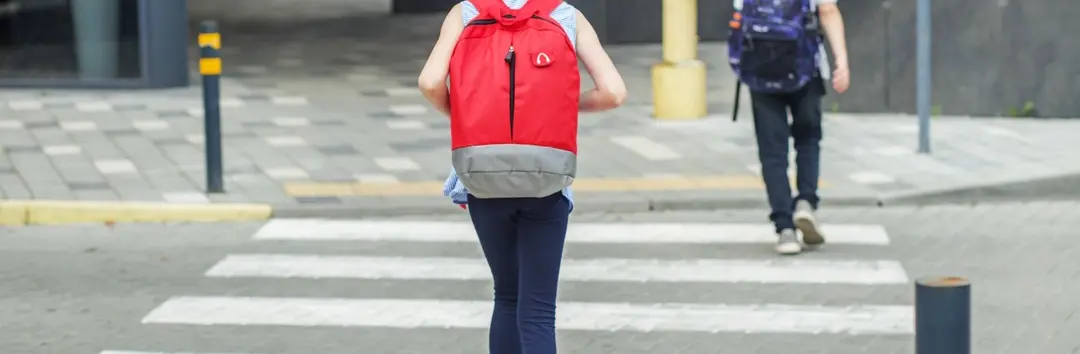

A school zone is not a separate legal category in Dutch traffic law. The signs on the spot decide what applies, usually a 30 kilometre per hour zone and a warning sign for children. If a school crossing guard shows the stop sign, you are legally required to stop.

What a school zone means in the Netherlands
In some countries a school zone is its own legal category with a dedicated speed limit and fixed hours. The Netherlands works differently.
Here the area around a school is laid out by the municipality using ordinary traffic measures. That means a lower speed zone, speed humps, a crossing and warning signs.
So always read the signs that are actually there. They decide what is required, not the word schoolzone painted on a board.
How fast can you drive near a Dutch school?
There is no separate speed limit for school zones. You drive the speed shown on the signs, which is usually 30 kilometres per hour.
A zone sign applies to the whole area until you pass the end of zone sign. There does not have to be a new sign in every street.
You stay responsible even below the limit. At the start and end of the school day, 30 can still be too fast for the situation.
The children warning sign
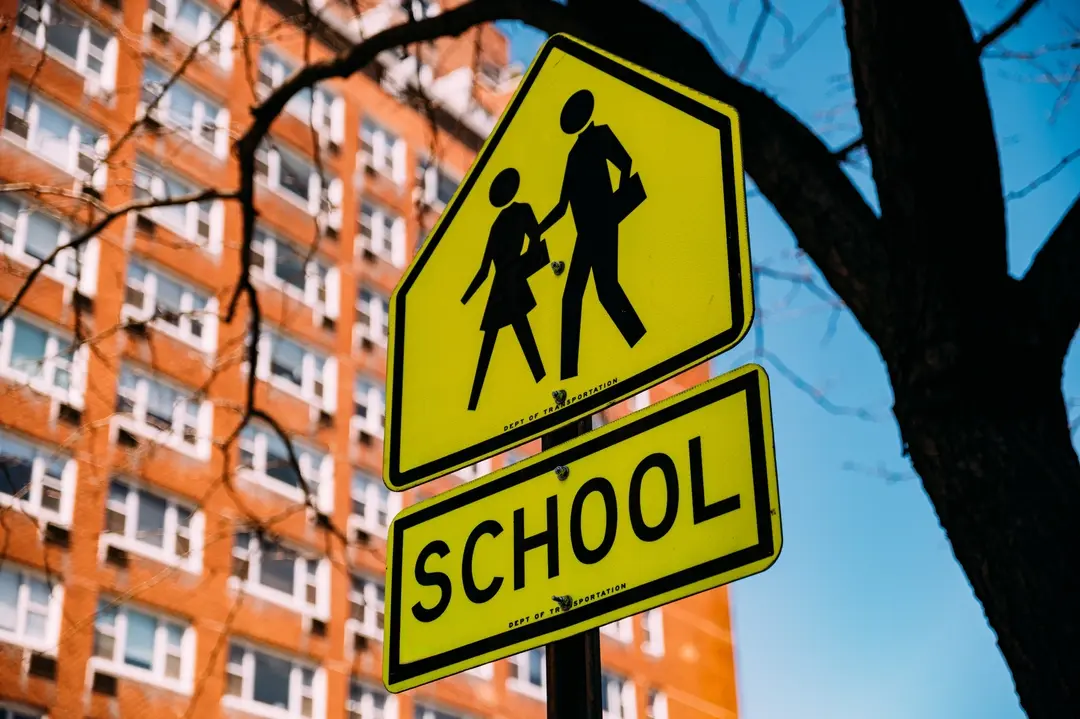
Sign J21 is the official Dutch warning sign for children. It is a white triangle with a red border showing two running children.
The sign does not set a speed limit. It warns you that children may cross, so you reduce speed and pay extra attention.
You see it near schools, nurseries and playgrounds. It often carries a supplementary plate with an advisory speed.
School zone signs with no legal force
Plenty of signs around schools are not in the RVV at all. Think of yellow text boards saying schoolzone or watch out for playing children.
Schools, neighbourhoods and municipalities may put these up themselves. They carry no legal weight and you cannot be fined under them.
That does not make them pointless, since they do catch your eye. But the rule that counts comes from the speed sign or zone sign next to them.
The school crossing guard: stopping is compulsory
A verkeersbrigadier, known informally as a klaar-over, helps children cross at a fixed spot and a fixed time. You recognise them by the orange coat or vest and the handheld stop sign.
When the stop sign is shown, you must stop. That is not courtesy but an obligation under article 82, paragraph 3, of the RVV 1990.
A crossing guard may only make you stop. Other instructions, such as waving you on or directing you, may only come from a verkeersregelaar, a traffic controller.
Many guards are volunteers and some are pupils of the school itself. They are appointed by the mayor and trained under police supervision.
Crossings near the school
At a zebra crossing you give way to pedestrians who are crossing or clearly about to cross. The same applies to people using a mobility vehicle.
Never pull out around a car that has stopped at a crossing. You cannot see who is walking out from behind it.
You stay responsible without a crossing too. If you see a child hesitating at the kerb, assume they might step out at any moment.
Stopping and parking around the school
You may not stop on a pedestrian crossing or within five metres of it. That is exactly where many parents pull up, and exactly where the danger starts.
A car parked close to a crossing blocks the view. A child is small and disappears behind a parked van.
Use the kiss and ride lane if the school has one. Always let children out on the pavement side, never on the traffic side.

Why children behave differently from adults
- They cannot judge speed and distance well yet
- They are small, so parked cars hide them easily
- They run after a ball or a friend without looking
- They assume you see them because they see you
- They cross by the shortest route, not the safest one
So do not count on a child following the rules. Ease off, cover the brake and keep your speed down until you are out of the area.
To practise situations like this before your exam, see the theory course in one day or read how the CBR practical exam works.
Conclusion
A school zone does not have a separate legal status in the Netherlands. Therefore, it is mainly traffic signs and other traffic measures that determine which rules apply. Often, this involves a maximum speed of 30 kilometers per hour, warning signs for children, and additional measures such as speed bumps or pedestrian crossings.
As a driver, it is important not only to pay attention to the speed limit, but especially to take into account the behavior of children and other road users. Adjust your speed to the situation, keep a good view of your surroundings, and always stop when a traffic guard shows their stop sign. In this way, you help create a safe school environment for everyone.