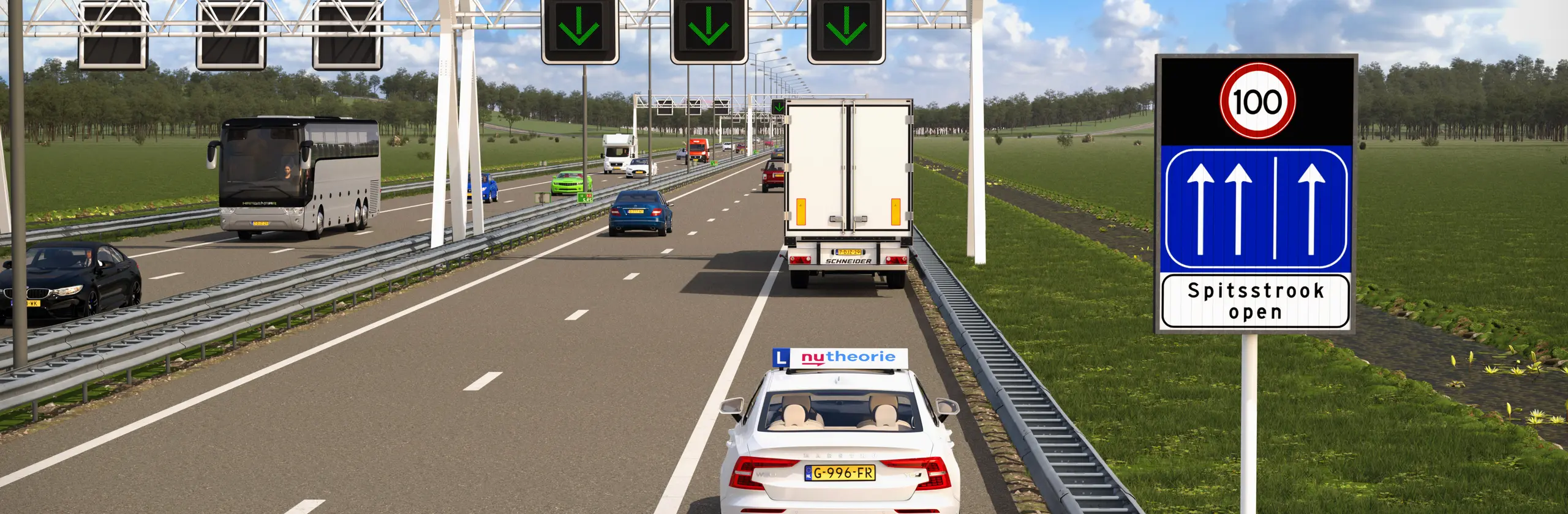

Reversible lanes are designed to make better use of existing road space by changing the direction of traffic when needed. They can be especially useful during busy periods, when traffic flows heavily in one direction during the morning and in the opposite direction later in the day.

For drivers, however, a reversible lane can be confusing if you are not familiar with how it works. The direction of travel can change, and drivers must pay close attention to lane-control signals and other traffic signs.
In this article, we explain what reversible lanes are, how they work and what you should do when driving on one.
What Is a Reversible Lane?
A reversible lane is a traffic lane where the direction of traffic can change depending on traffic conditions.
On a normal road, a lane usually has a fixed direction. A reversible lane is different: it can be opened to traffic in one direction at certain times and then switched to the opposite direction when traffic patterns change.
For example, imagine a road with three lanes. During the morning rush hour, most traffic may be travelling towards a city centre. Two lanes can therefore be made available in that direction. Later in the day, when commuters are travelling home, the arrangement can be reversed.
This allows road authorities to increase capacity where it is needed without constructing additional lanes.
How Do Reversible Lanes Work?
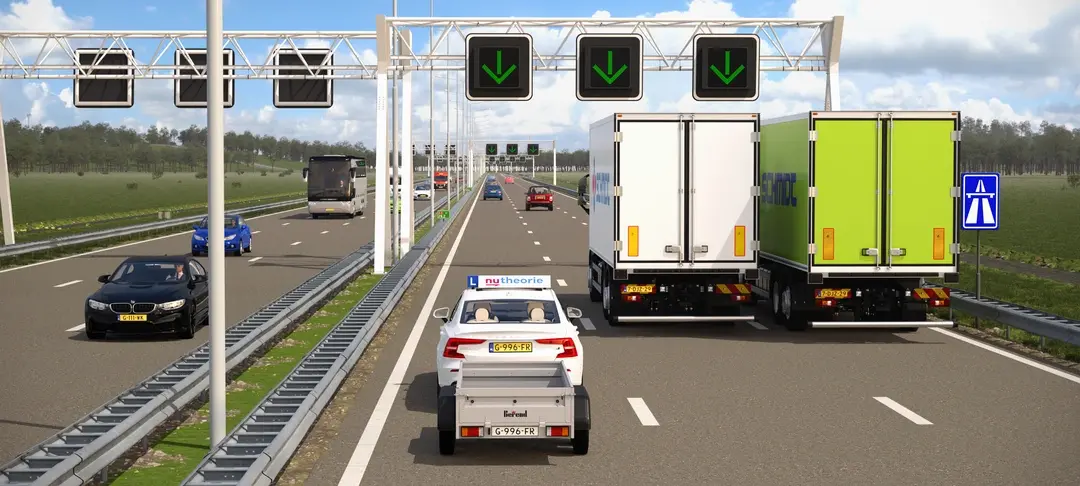
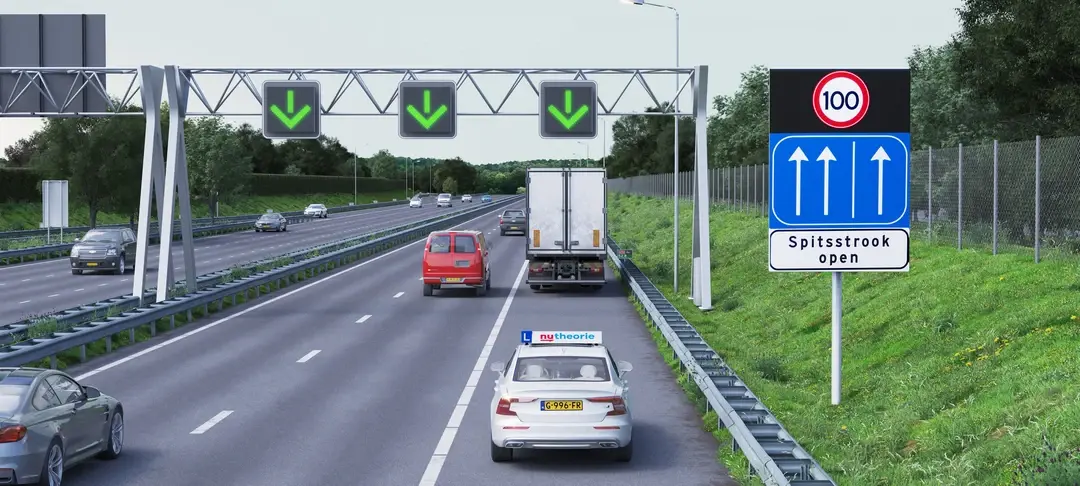
Reversible lanes are controlled using lane-control signals and traffic signs. These tell drivers whether a lane is open, closed or about to change.
You should never assume that a reversible lane is available simply because it looks like an ordinary lane. Always check the signals above or alongside the lane before entering it.
Common signals include:
Green Arrow
A green arrow indicates that the lane is open for traffic in the direction shown. You may use the lane, provided that you follow the other applicable traffic rules.
Red Cross
.webp)
A red cross means that the lane is closed. Do not drive in a lane displaying a red cross.
This is particularly important with reversible lanes because the lane may be used by traffic travelling in the opposite direction at another time.
Yellow or Changing Signal
A yellow or changing signal can indicate that the lane status is about to change. If you are already using the lane, you should follow the instructions given by the signs and leave the lane safely when required.
The exact meaning of signals can depend on the road and the traffic-control system, so always follow the signs and signals actually displayed.
Why Are Reversible Lanes Used?
The main advantage of reversible lanes is that they allow road capacity to be adapted to traffic demand.
Traffic is rarely distributed equally in both directions. During the morning, many people travel towards cities for work or school. In the afternoon and evening, the dominant traffic flow can reverse.
Instead of leaving a lane underused in one direction, road authorities can change its direction to provide additional capacity where it is most needed.
This can help:
- Reduce congestion during peak hours
- Make better use of existing road infrastructure
- Improve traffic flow
- Increase capacity without widening the entire road
Where Can You Find Reversible Lanes?
Reversible lanes are not found on every road. They are generally used on roads where traffic flows change significantly throughout the day.
They can be found in different countries and are particularly useful on busy roads leading into and out of major cities.
In the Netherlands, the concept is known as a wisselstrook. These lanes are relatively uncommon compared with ordinary traffic lanes, but the principle is important for drivers to understand.
How to Use a Reversible Lane Safely
The most important rule is simple: follow the signals and signs controlling the lane.
Before entering a reversible lane, check the lane-control signals carefully. Make sure the lane is open to traffic travelling in your direction.
Once you are in the lane, continue paying attention to the signals. Do not assume that the situation will remain unchanged for the entire journey.
You should also:
- Keep your attention on the road and lane-control signals.
- Follow the indicated direction of travel.
- Never enter a lane displaying a red cross.
- Leave the lane safely if you are instructed to do so.
- Avoid sudden lane changes when the lane configuration changes.
- Maintain a safe following distance from the vehicle ahead.
- Follow any additional road signs and markings.
What Happens When the Direction Changes?
A reversible lane cannot simply switch direction while vehicles are travelling through it without a controlled procedure.
Traffic-control systems are used to manage the change. The lane is closed to traffic travelling in one direction before it becomes available to traffic travelling in the other direction.
If you are driving in or approaching a reversible lane when its status is changing, follow the displayed signals and instructions. Do not try to continue using the lane simply because you entered it when it was open.
This is one reason why paying attention to lane-control signals is so important.
.webp)
Reversible Lanes vs. Normal Lanes
The main difference between a normal lane and a reversible lane is the direction in which traffic is permitted to travel.
A normal lane generally has a permanent direction. A reversible lane can be allocated to different directions at different times.
This means that the driver has an additional responsibility: you must not only look at the road markings but also pay attention to the current traffic-control signals.
Common Mistakes to Avoid
Reversible lanes can create dangerous situations when drivers misunderstand the signals.
One common mistake is assuming that an empty lane is available. An empty lane may be closed to traffic, so always check the lane-control signal before entering.
Another mistake is focusing only on the vehicle in front. The driver ahead could make a mistake, so you should always check the signals yourself.
Finally, do not make a sudden manoeuvre because you realise that the lane is changing. If you need to leave the lane, do so safely and follow the applicable signs and markings.
Reversible Lanes and Your Driving Theory
If you are preparing for your driving theory exam, it is useful to understand the basic principle behind reversible lanes.
Remember:
A reversible lane can change its direction of travel depending on traffic conditions.
The most important thing is to pay attention to the lane-control signals and traffic signs. Never enter or remain in a lane when the displayed signal prohibits you from using it.
Understanding the system is more useful than simply memorising the term. When you encounter a reversible lane in real traffic, you need to recognise what the signals mean and respond safely.
Conclusion
Reversible lanes are an efficient way of adapting road capacity to changing traffic flows. By allowing a lane to operate in different directions at different times, they can help manage congestion without requiring an entirely new road.
For drivers, the key is to stay alert. Always check the lane-control signals, follow the indicated direction and never enter a lane that is closed to you.
If you understand how reversible lanes work and pay attention to the signs, they are much less confusing and can be used safely.


.jpg)