

Lane, carriageway, or the entire road—you’ll come across these terms everywhere. But what exactly is the difference? Understanding the difference between a lane and a carriageway is essential, both for your theory test and for safe driving in real life.

In this article, we explain it clearly and simply, so you always know where to drive and why.
The basic rule: always keep to the right
When driving in the Netherlands, one key rule applies: always keep as far right as possible.
Whether you’re driving in urban areas, outside built-up areas, or in a residential zone—keeping right is always the starting point.
This rule also applies on motorways. You use the right lane for driving and the left lane only for overtaking. Once you’ve passed another vehicle, you must return to the right lane as soon as possible. Staying unnecessarily in the left lane is prohibited and can result in a fine.
The difference between a lane and a carriageway explained
To fully understand the difference, let’s look at how a road is structured:
- Lane: a single marked strip of road where vehicles drive
- Carriageway: all lanes together that go in the same direction
- The entire road: the carriageway plus additional parts, such as the hard shoulder
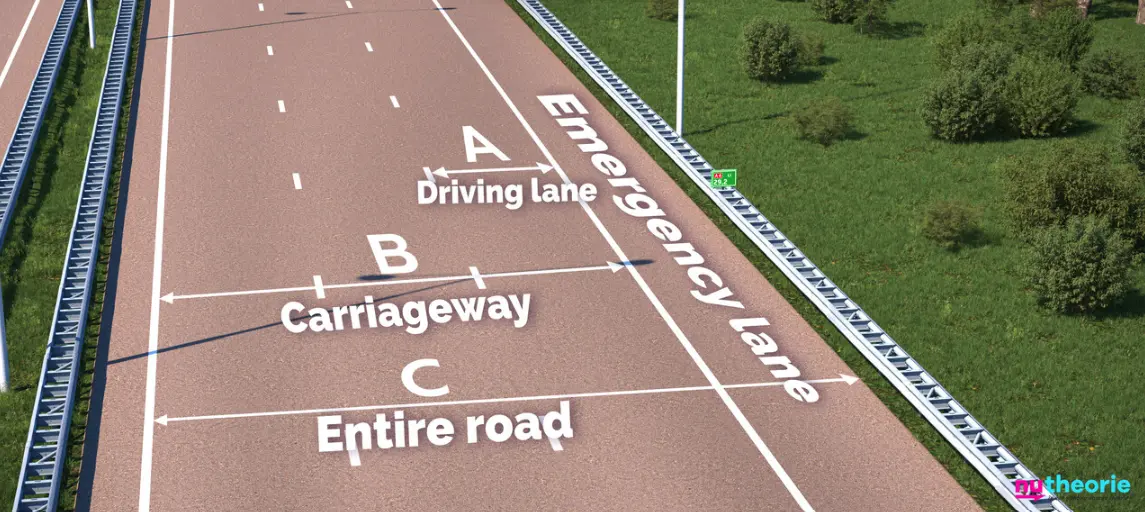
The hard shoulder
The hard shoulder is located to the right of the solid line. You are not allowed to drive on it, except in case of a breakdown or emergency.
What is a rush-hour lane?
Sometimes, the hard shoulder temporarily becomes an extra lane. This is called a rush-hour lane.
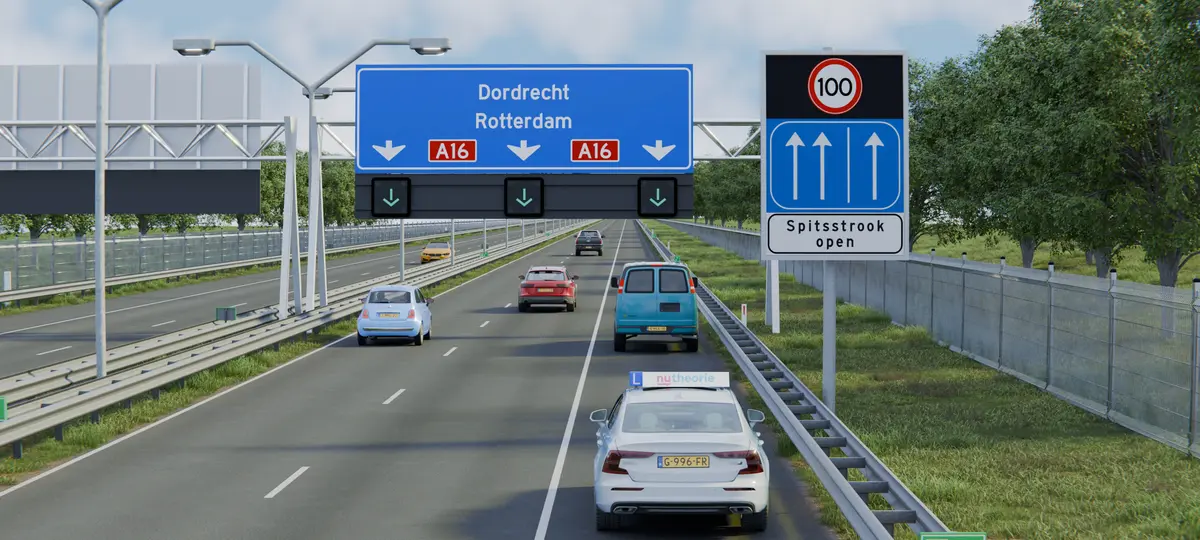
During busy periods, this lane may be opened to improve traffic flow. Above the road, you’ll see electronic signs (matrix signs):
- A green arrow above the hard shoulder
→ means it is open and you may use it - No arrow or a red cross
→ means it remains a hard shoulder and you cannot drive on it
Important: when the rush-hour lane is open, it becomes the far-right lane. Since the rule is to keep right, you are required to use it.
Multiple lanes at traffic lights
At intersections with traffic lights and multiple lanes, the rule still applies: choose the rightmost lane for your direction.
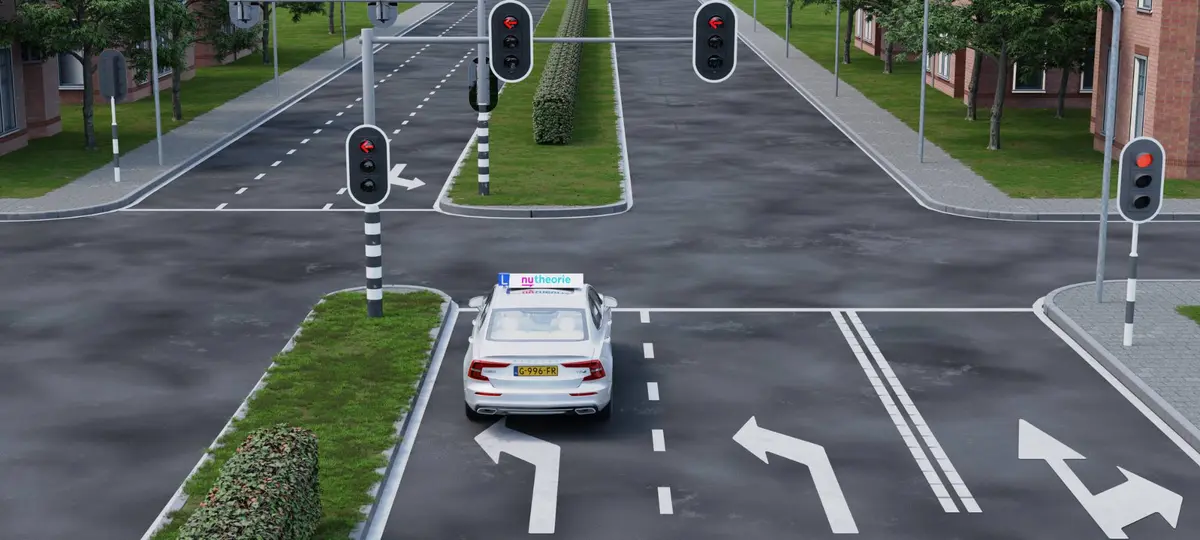
Even if there are multiple lanes going left or straight ahead, you should always pick the rightmost lane that leads in your intended direction.
Watch out for combined directions
Sometimes, one lane allows multiple directions (for example, straight ahead and left). In that case, you still choose the rightmost lane that matches your route.

Exception: roundabouts
The “keep right” rule applies almost everywhere, but roundabouts are an exception.
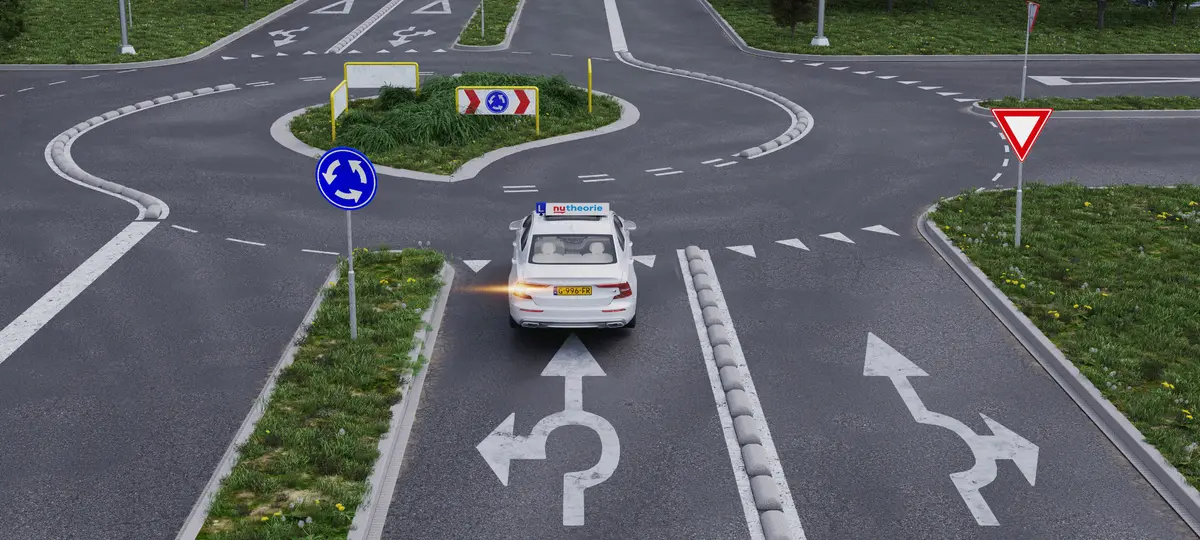
At multi-lane roundabouts, arrows on the road indicate which lane to use:
- Turning right or going straight → usually the right lane
- Turning left or making a U-turn → usually the left lane
It’s important to check in advance and position yourself in the correct lane before entering the roundabout. This helps you avoid dangerous situations and keeps traffic flowing smoothly.
Ready for your theory test?
The difference between a lane and a carriageway may seem simple, but details like this can make all the difference on your theory test.
Make sure you practice regularly and learn to recognize these situations instantly. That way, you’ll score easy points and go into your exam with confidence.


.jpg)