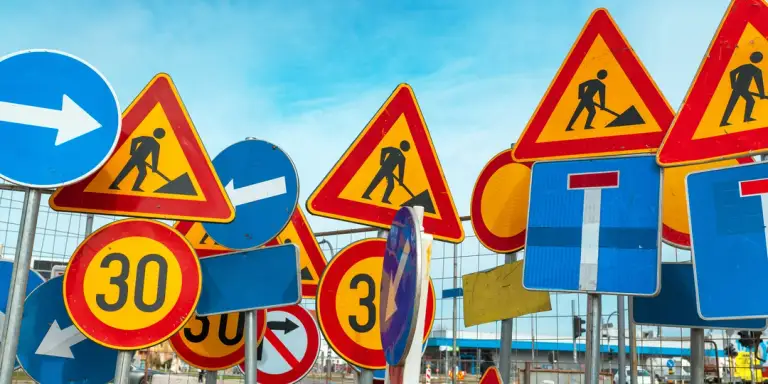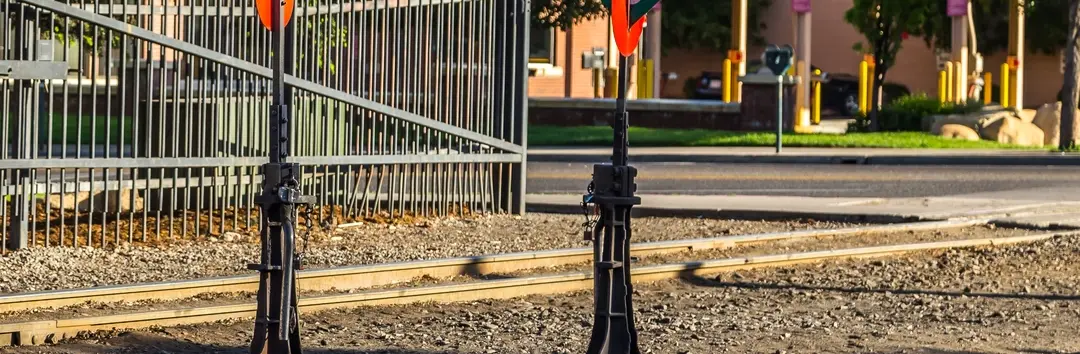

A level crossing is a place where you need to pay extra attention as a driver. Trains cannot stop quickly, and a mistake at a level crossing can have serious consequences. That is why it is important to know the traffic rules, recognize warning signals and know when you need to stop.

For your theory exam, it is not enough to simply know what a level crossing looks like. You need to understand how to approach a level crossing safely, what the lights and barriers mean and which mistakes you need to avoid.
What Is a Level Crossing?
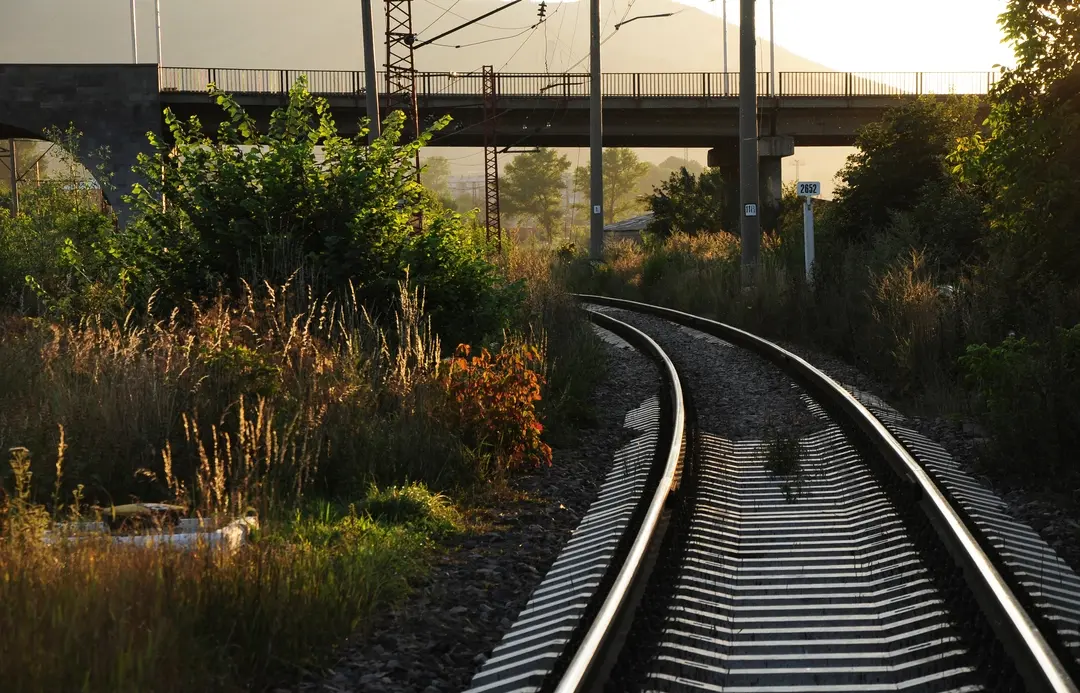
A level crossing is a place where a road and a railway line cross at the same level. Depending on the location, a level crossing may have barriers, warning lights, bells or other signals.
Some level crossings have full barriers that close the entire road, while others only have half barriers. There are also level crossings without barriers. At these crossings, you need to pay extra attention to the signals and the situation around the railway.
When approaching a level crossing, adjust your speed and pay close attention to traffic signs, signals, barriers and the railway tracks.
How Do You Cross a Level Crossing Safely?
The most important rule is simple: never cross a level crossing if it is not safe to do so.
Approach the level crossing at a speed that allows you to stop if necessary. Look and listen carefully for an approaching train and pay attention to all warning signals.
If the barriers are open and the signals indicate that you can continue, first check that the road on the other side of the tracks is clear before entering the level crossing.
This is especially important in traffic jams or busy traffic. You should never enter a level crossing if you could end up stopping on the railway tracks.
After crossing the railway, continue driving until your vehicle is completely clear of the level crossing.
What Do the Warning Lights Mean?
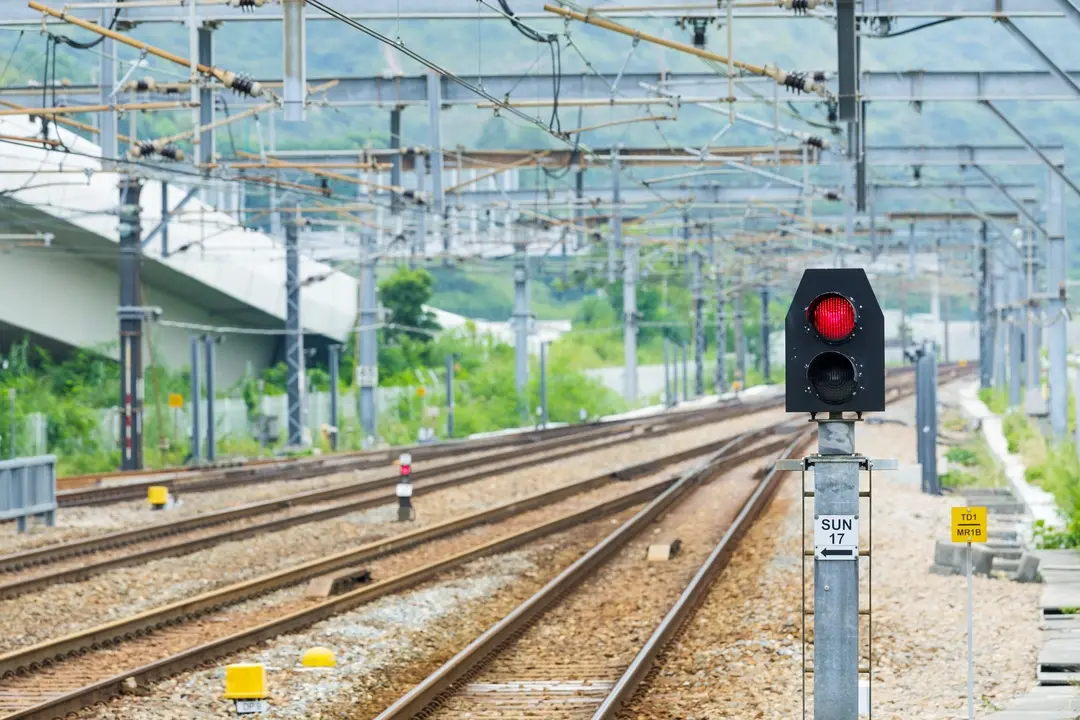
Flashing red lights at a level crossing mean that you must stop. You must not cross the stop line or enter the level crossing while the red lights are flashing.
If the barriers are coming down or are already closed, you must also stop and wait. Never try to drive around a closed or lowering barrier, even if you cannot see a train.
The warning systems are designed to give you enough time to stop. Ignoring them can put you and other road users in serious danger.
What If the Barriers Are Open?
An open barrier does not mean that you can continue without paying attention.
You should still approach the level crossing carefully and check the signals. If the warning lights are not active and there is no other indication that a train is approaching, you can continue when it is safe to do so.
However, always remain alert. Do not automatically assume that an open barrier means the level crossing is completely clear and safe.

Never Stop on the Railway Tracks
One of the most important rules to remember is: never stop on a level crossing.
Before entering the level crossing, check whether there is enough space on the other side for your entire vehicle. For example, if traffic is stopped immediately after the level crossing, wait before entering the railway tracks.
If you become stationary on the tracks, your vehicle could end up in the path of an approaching train.
This is an important point both in real-life driving and during the theory exam: you must be able to completely clear the level crossing before entering it.
What Should You Do If Your Vehicle Stops on the Tracks?
If your vehicle becomes stuck on a level crossing, the most important thing is to get yourself and your passengers to safety.
Do not remain inside the vehicle while waiting for the situation to change. Follow the instructions and emergency procedures at the level crossing and move yourself away from the railway tracks as quickly and safely as possible.
Some level crossings have emergency telephones or information signs that can help you contact the railway operator or emergency services.
The exact procedure may vary depending on the level crossing. Therefore, always follow the instructions provided at the location.
Common Mistakes at Level Crossings
There are several mistakes that can turn a normal crossing into a dangerous situation.
Driving Through a Red Light
A flashing red light means that you must stop. Never continue because you think the train is still far away.
Driving Around a Barrier
Never drive around a closed or lowering barrier. The barrier is a clear warning that you must stop.
Entering Without Checking the Other Side
Even when the level crossing is open, you must check whether there is enough space on the other side to cross completely.
Stopping on the Tracks
Traffic jams or heavy traffic can create a dangerous situation if you enter a level crossing without enough space on the other side. Wait before the level crossing until you can continue safely.
Relying Only on Other Drivers
Do not simply follow the driver in front of you. You are responsible for checking whether it is safe for you to cross.
How Do You Cross a Level Crossing Without Barriers?
Not every level crossing has barriers. That does not mean that you can cross without looking.
At these level crossings, you need to pay extra attention to traffic signs, signals and the railway tracks. Approach the crossing carefully and check that no train is approaching before crossing.
Your ability to assess the situation correctly and make a safe decision is particularly important at these types of level crossings.
Stay Alert at a Level Crossing
A level crossing requires your full attention. Avoid distractions, adjust your speed when approaching the crossing and never take unnecessary risks to save a few seconds.
The most important principle is simple: only enter a level crossing when you know that you can cross it safely and completely.
Understanding these rules will not only help you with your theory exam but also during your driving lessons and later when you drive independently.


.jpg)