
The hard shoulder is a familiar part of almost every motorway. It is the lane on the right-hand side of the carriageway that is intended for situations in which you cannot safely continue driving. But when exactly are you allowed to use the hard shoulder? And what should you do if your car breaks down, you have been involved in an accident, or the hard shoulder is temporarily being used as a peak-hour lane?

In this blog, we explain the most important rules regarding the hard shoulder. This way, you will know when you can and cannot use it and how to act safely in different situations.
What Is the Hard Shoulder Intended For?
The hard shoulder is primarily intended for vehicles that cannot safely continue driving due to a breakdown or emergency. For example, this could be a flat tyre, a technical problem, or a warning light that comes on while you are driving.
If your car suddenly develops a problem and you cannot safely continue driving, you may use the hard shoulder to bring yourself and other road users to safety.
It is important to remember that the hard shoulder is not an ordinary lane or parking area. You cannot simply use it because you want to stop for a moment.
For example, stopping to take a sandwich out of the boot, make a phone call, or take a short break is not allowed. Even if you only intend to stop for a few minutes, this is not a valid reason to use the hard shoulder.
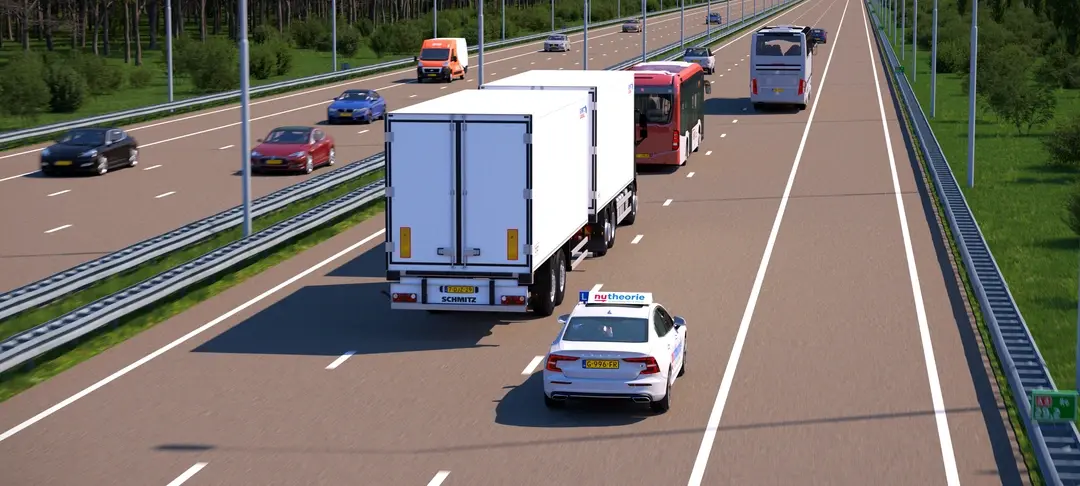
When Are You Allowed to Use the Hard Shoulder?
The most important rule is simple: you may use the hard shoulder in the event of a breakdown or emergency.
For example, if you have a flat tyre and can no longer safely continue driving, you may pull over onto the hard shoulder.
It may also be necessary to use the hard shoulder if an important warning light comes on while you are driving. This could be the oil warning light, for example. Continuing to drive in such a situation can cause serious engine damage or even be dangerous.
In an emergency, always try to reach a safe place as quickly as possible. If you can reach the hard shoulder without creating additional danger, you can stop there.
Once you are on the hard shoulder, it is important not to expose yourself unnecessarily to passing traffic. Only leave the vehicle when it is safe to do so and follow the appropriate safety measures in the event of a breakdown.
Can You Stop on the Hard Shoulder After an Accident?
An accident can happen at any time. It is important to distinguish between a serious accident and a collision involving only minor damage.
When there is only minor damage, you will often see drivers move their cars onto the hard shoulder to deal with the damage. However, this does not automatically mean that it is allowed. The hard shoulder is intended for breakdowns and emergencies, not as a place to calmly fill in accident forms.
The situation is different in the case of a serious accident. For example, the vehicles may no longer be able to be moved. It may also be important to leave the accident scene as undisturbed as possible so that the emergency services and police can investigate what happened.
In an accident, safety always comes first. Therefore, follow the instructions of the emergency services and make sure that you do not put yourself or other road users in further danger.
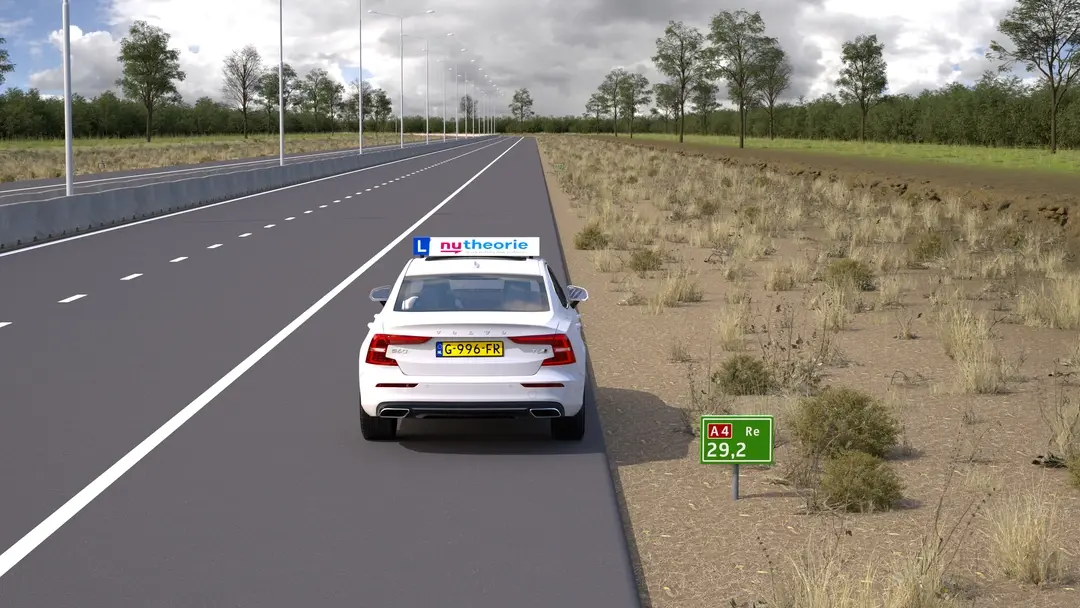
What Does the 'End of Hard Shoulder' Sign Mean?
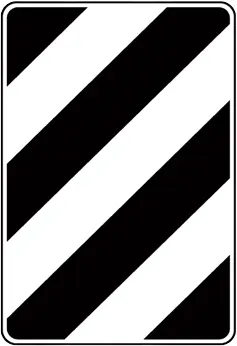
The sign indicating the end of the hard shoulder is also important to recognise. It indicates that the hard shoulder is narrowing or coming to an end.
This is particularly important if you experience a breakdown shortly afterwards. You cannot simply assume that the hard shoulder will remain available for the entire length of the road. Therefore, pay close attention to the traffic situation and the space available.
In many cases, another hard shoulder begins again after a relatively short distance. Nevertheless, you should remain alert when the hard shoulder ends, as you are then dealing with a different traffic situation.
What Is a Peak-Hour Lane?
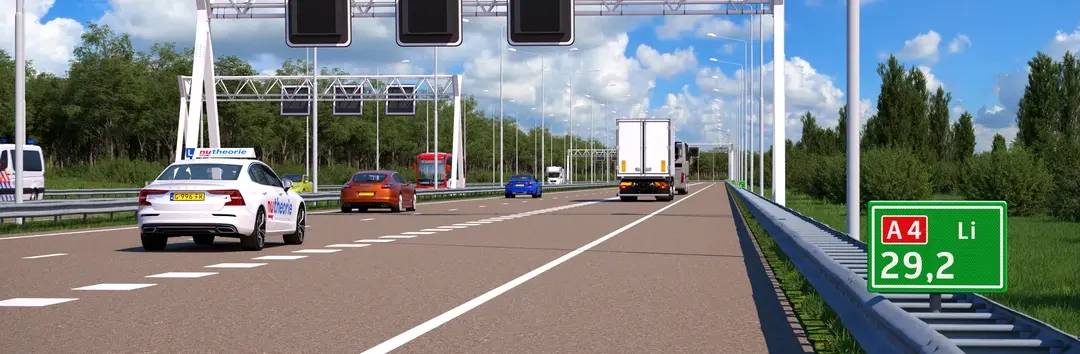
Sometimes, during busy periods, you may suddenly see cars driving on a lane that is normally used as the hard shoulder. This does not mean that all these drivers are simply allowed to use the hard shoulder.
During periods of heavy traffic, the hard shoulder can temporarily be opened as a peak-hour lane. At that point, the lane temporarily has a different function and you are allowed to drive on it.
An opened peak-hour lane functions as an additional traffic lane. This allows traffic to spread more evenly across the available lanes and can improve traffic flow.
Pay close attention to the traffic signs and signals. You may only use the hard shoulder as a driving lane when it has officially been opened as a peak-hour lane.
The Most Important Rules at a Glance
The hard shoulder is therefore not intended for making a quick stop or avoiding traffic jams. The most important rule to remember is that you normally only use the hard shoulder when you cannot safely continue driving due to a breakdown or emergency.
If your car breaks down, the hard shoulder can be a safe place to come to a stop. If the lane has temporarily been opened as a peak-hour lane, you may use it as a normal driving lane.
The most important thing is to pay close attention to the traffic situation, traffic signs, and signals. This will help you understand when the hard shoulder is and is not intended for you to use.
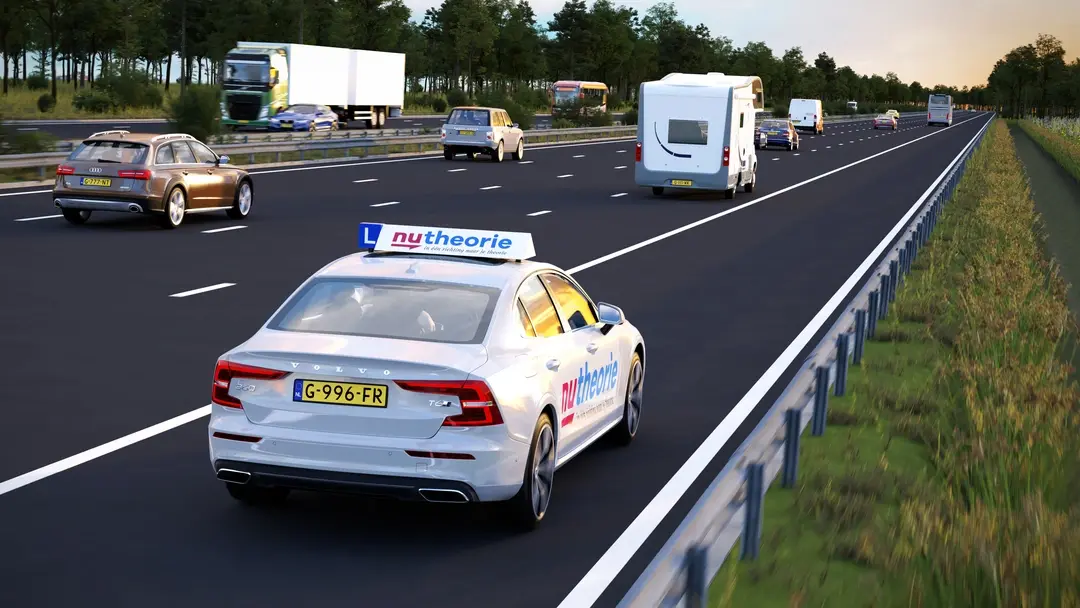
Want to Learn More Traffic Rules for Your Theory Test?
The rules surrounding the hard shoulder are just one small part of what you need to know for your theory test. Do you want to make sure you understand the traffic rules and are well prepared for your test?
Take our car, scooter, or motorcycle theory course and learn the most important theory step by step.
Sign up for our one-day theory course or online theory course and prepare effectively for your theory test.