
Parallel parking is one of the more nerve-racking manoeuvres for many beginner drivers. You need to steer in reverse, keep a close eye on your surroundings, maintain the right distance, and consider other road users at the same time. At first, it can feel like you have to do everything at once.

However, parallel parking does not have to be as complicated as it seems. By breaking the manoeuvre down into a few fixed steps and using reference points, you can gradually gain more control over your car. With enough practice, you will need to think less consciously about every movement.
In this blog, we explain how to parallel park in reverse in 5 steps. We will also share some useful tricks that you can use during your driving lessons.
1. Choose a suitable parking space
Good preparation makes parallel parking much easier. First, look for a parking space where your car has enough room to manoeuvre safely.
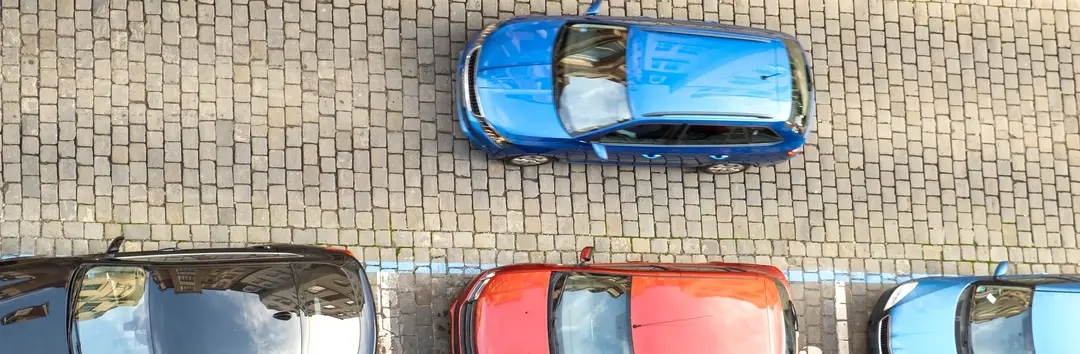
Use your turn signal and slowly drive alongside the car behind which you want to park. Keep approximately half a metre of distance from the parked car. A useful rule of thumb is to imagine about three side mirrors between the two cars. Of course, you do not need to measure this literally.
Try to position your car as straight as possible and roughly parallel to the other car. From this position, you have a good starting point for reversing into the parking space.
Take your time at this stage. A good starting position means you will need fewer corrections later in the manoeuvre.
2. Look around carefully before reversing
Before you start reversing, check your surroundings. Look in your mirrors and over your shoulder, and pay close attention to cyclists, pedestrians, scooters, and other road users.
When parallel parking, it is important not to focus only on the space you are reversing into. As you turn into the space, the front of your car swings outward. You therefore also need to make sure there is enough room in front of your car.
Is the situation safe? Then you can slowly start reversing.
Tip: drive slowly. You do not need to rush during a manoeuvre. By moving at walking pace, you have more time to check your surroundings and make corrections if necessary.
3. Use a reference point to start turning
For many learners, this is the most difficult part of parallel parking: when exactly should you start turning?
A useful method is to use a fixed reference point on your car. Instead of counting seconds, for example, look at a specific position in relation to the car next to you. You could use the position of your back seat or a reference point on your rear door.
A commonly used guideline is to reverse until the rear of the car next to you is approximately level with your back seat. From that point, you can start turning towards the parking space.
Turn the steering wheel calmly and continue reversing slowly. At the same time, keep checking your surroundings carefully.
Why are reference points useful?
Every car is different. The length of the car, your seating position, and the turning circle all affect the point at which you should start steering. That is why a fixed reference point can often be more useful than a rule such as “turn after three seconds.”
A simple way to remember it is:
Rear of the car alongside you → reference point reached → start turning.
Ask your driving instructor which reference point works best for the car you are learning in. Once you know what to look for, starting the turn becomes much more predictable.
4. Steer back and straighten your car
As you continue reversing, your car will turn further into the parking space. At a certain point, your car will be positioned at an angle in the space. This is when you need to start turning the steering wheel back.
You can use another reference point here as well. For example, look at your side mirror and the position of the car behind you. Once you have turned far enough, steer back so that your car gradually becomes straighter.
The goal is to finish roughly parallel to the kerb.
Did it not go exactly as planned? Do not panic. You do not need to correct a mistake quickly. If necessary, stop, check your surroundings again, and calmly adjust your position.
A small correction is better than rushing.
During your practical driving test, it is also more important to perform the manoeuvre safely and under control than to complete it in one smooth movement.
5. Check your position
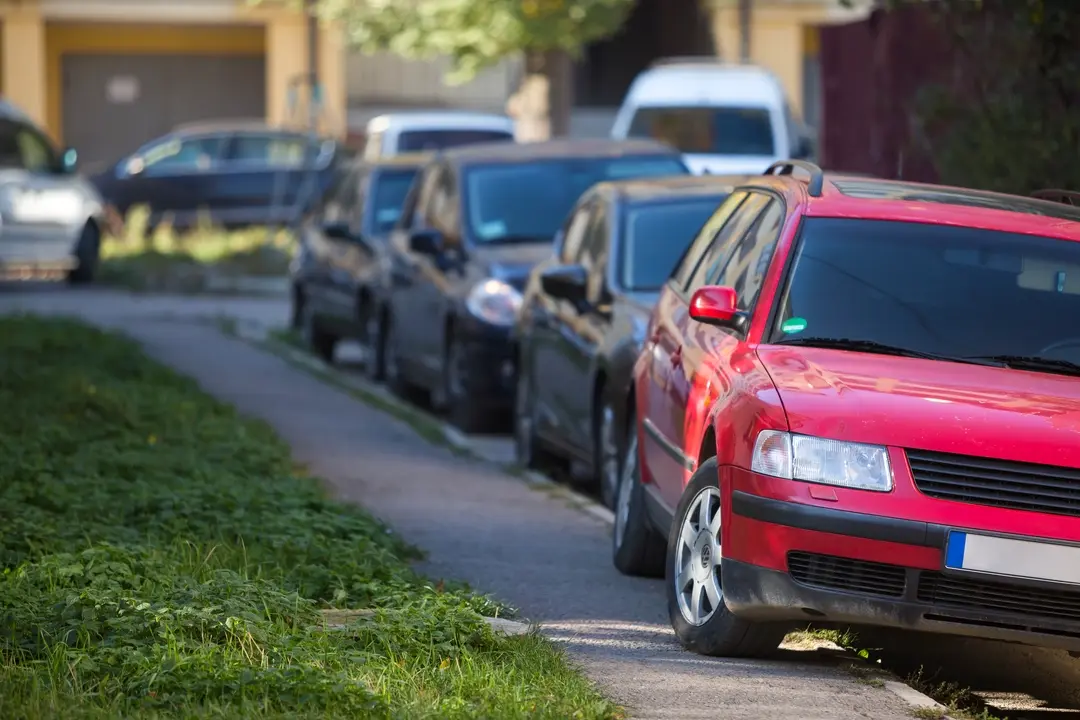
You are almost done. Before completing the manoeuvre, check that your car is positioned safely and neatly.
For example, check the following:
- Is your car roughly parallel to the kerb?
- Do you have enough space in front of and behind your car?
- Are you not unnecessarily far away from the kerb?
- Can other road users safely pass your car?
If everything is in order, you have completed the parallel parking manoeuvre.
Remember to check your surroundings again before driving away. While you were parking, a cyclist or scooter may have moved alongside your car.
The 3 most important parallel parking tricks
Finding it difficult to remember all the steps while driving? Start by focusing on these three basic principles:
1. Keep approximately 50 centimetres of distance
By leaving enough space between your car and the car next to you, you create room to perform the manoeuvre calmly.
2. Use reference points
Use a fixed point on your car, such as your back seat or side mirror. This can help you determine when to start turning and when to straighten the steering wheel.
3. Drive calmly and slowly
Parallel parking is not about speed. The slower you drive, the more time you have to look, steer, and make corrections when necessary.
Practice makes parallel parking easier
The first few times, parallel parking can feel quite complicated. You are simultaneously thinking about the steering wheel, your mirrors, the cars around you, and the position of your own car. That is completely normal.
By practising regularly, you will gradually develop a better sense of the size and movement of your car. Over time, you will naturally recognise when to start turning and when to straighten the steering wheel.
Use reference points during your driving lessons as a helpful guide, but eventually try to learn to judge the position of your car in relation to its surroundings as well. This will make you less dependent on fixed tricks and help you genuinely master the manoeuvre.
Drive calmly, look carefully, and steer at the right moment. With enough practice, parallel parking will become much easier.