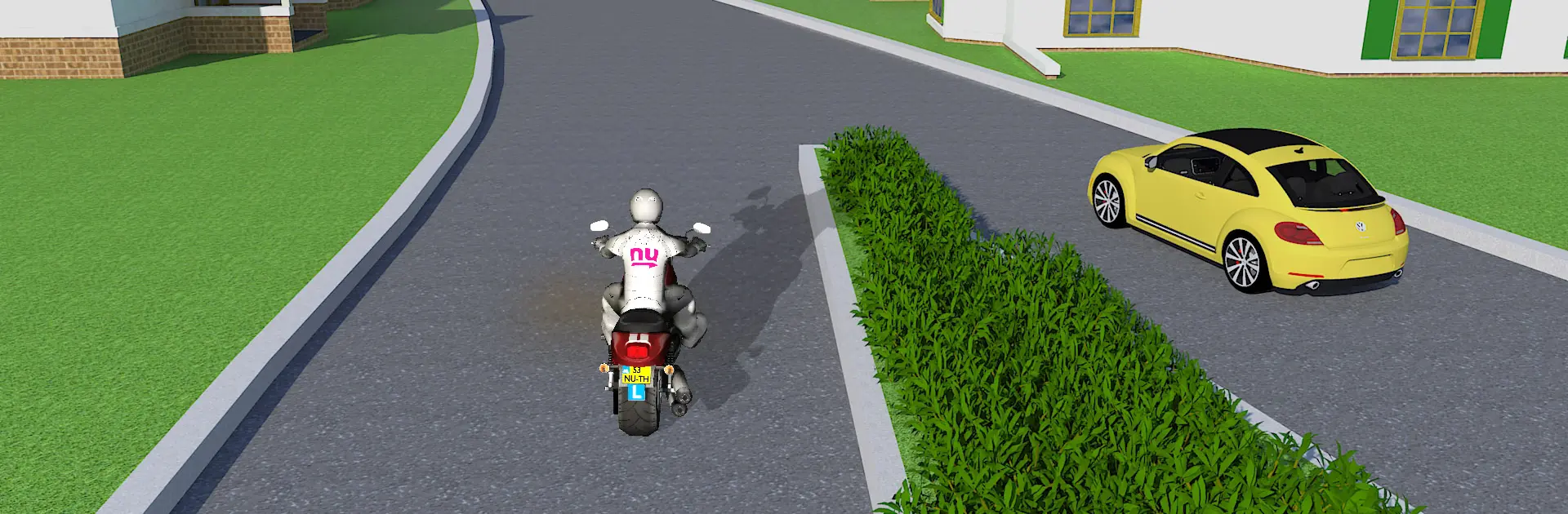

When preparing for your scooter (AM) course, most attention goes to riding skills and traffic rules. However, one topic that is often underestimated is where and how you are allowed to leave your vehicle.

This is especially important when comparing scooters (mopeds) and brommobielen (microcars). Although both can be driven with an AM license, the rules for leaving them are fundamentally different. Understanding this distinction is essential for your theory exam and for avoiding fines in practice.
Why This Matters in Your Scooter Course
Traffic law does not stop when you switch off the engine. The rules also apply when your vehicle is stationary. Many learners struggle with questions such as whether a scooter can be left on the pavement or why a brommobiel cannot.
The answer lies in the legal classification of these vehicles.
Scooters Are Non-Motor Vehicles
Scooters, mopeds, snorfietsen, and speed pedelecs fall under the category of non-motor vehicles. Although they have an engine, they are legally treated more like bicycles.
This classification determines how you leave the vehicle. A scooter is not “parked” but “placed.” In most cases, this means it is positioned on the pavement rather than on the roadway.
When placing a scooter, you must still consider your surroundings. The vehicle should not block pedestrians or create unsafe situations. Sufficient space must remain for others to pass.
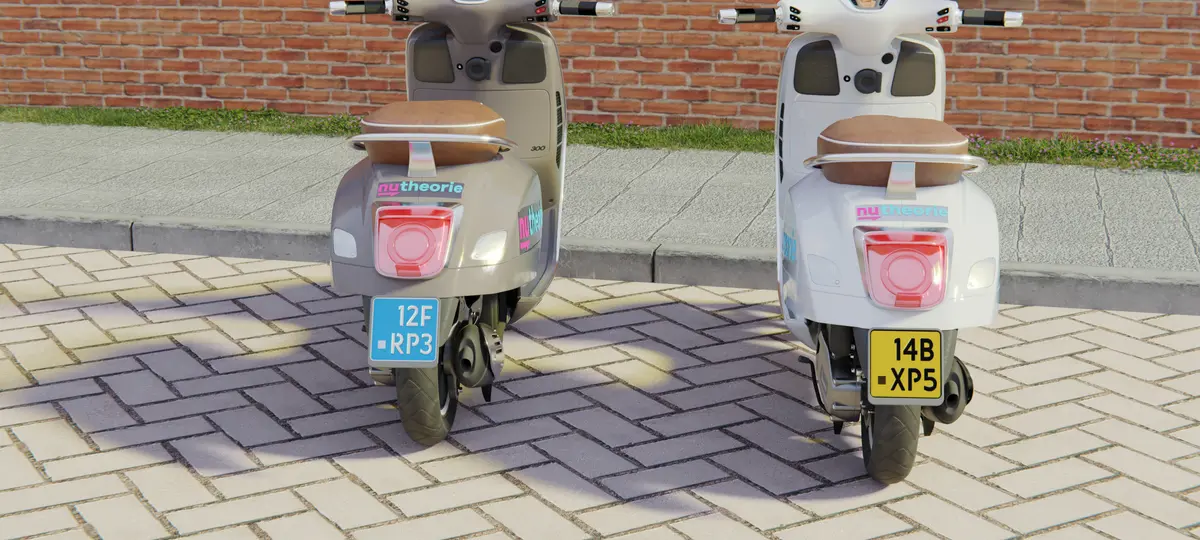
Brommobielen Are Motor Vehicles
A brommobiel, despite its small size, is legally classified as a motor vehicle. This places it in the same category as cars and motorcycles.
As a result, a brommobiel must be parked, not placed. Parking is only allowed on the roadway or in designated parking spaces. The pavement is not an acceptable location for a brommobiel under normal circumstances.
This distinction is one of the most common sources of confusion during the scooter course.
The Practical Difference
The difference can be summarized simply. Scooters are placed, usually on the pavement, while brommobielen are parked on the road or in parking spaces.
This rule determines how you should interpret traffic signs and how you behave in real traffic situations.
Traffic Signs and Their Meaning
A no-parking sign applies only to motor vehicles. This means it is relevant for brommobielen but not directly for scooters. If you are riding a scooter, this sign does not automatically prevent you from placing it on the pavement.
A no-placing sign, on the other hand, is specifically intended for non-motor vehicles such as bicycles and mopeds. When this sign is present, you are not allowed to place your scooter on the pavement.
Understanding which sign applies to your vehicle is essential for answering theory questions correctly.
Common Mistakes
A frequent misunderstanding is that scooters should follow the same rules as cars because they have an engine. In reality, for parking and placing rules, scooters follow regulations similar to bicycles.
Another mistake is ignoring the available space on the pavement. Even when placing is allowed, blocking pedestrians can still result in penalties.

Exam Focus
During the theory exam, questions about this topic are often designed to test whether you can correctly identify the type of vehicle and apply the right rule.
A reliable approach is to first determine whether the vehicle is a motor vehicle or not. Then consider whether the situation involves parking or placing, and finally interpret the traffic sign.
Conclusion
For your scooter course, it is essential to remember that scooters are classified as non-motor vehicles and are therefore placed, usually on the pavement. Brommobielen are motor vehicles and must be parked on the roadway or in designated parking spaces.
This distinction is simple once understood, but it plays a significant role in both your exam and your everyday behavior in traffic.