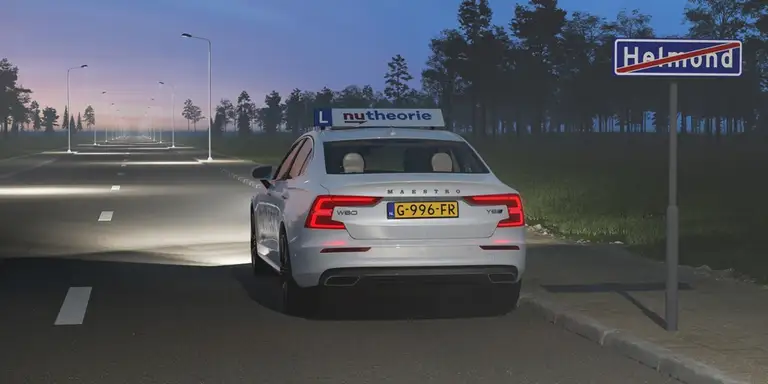

Do you live in the Netherlands and plan to get your driver’s license, but find the theory exam in Dutch too difficult? There’s good news: at the CBR, you can also take the car theory exam in English.

For many internationals and expats, this is the ideal solution. Instead of struggling with complex Dutch vocabulary, you can fully focus on understanding traffic rules and answering questions correctly.
As a course instructor at Nutheorie, I guide international students every day. I consistently see how much of a difference it makes when students choose the English exam—less stress, more confidence, and a significantly higher chance of passing.
In this blog, I’ll walk you through everything you need to know: how the exam works, what topics to study, and how to prepare effectively.
What Is the Car Theory Exam in English?
The English theory exam is exactly the same as the Dutch version in terms of content. The traffic rules, situations, and structure are identical—the only difference is the language.
This means you don’t have to translate questions in your head or deal with unfamiliar Dutch terms. Instead, you can focus entirely on understanding the rules and applying them correctly.
How Does the Exam Work in 2026?
The car theory exam has been updated in 2026. Instead of separate sections, everything is now combined into one test:
- You get 50 questions in total
- All topics are mixed together
- You are allowed a maximum of 6 mistakes
- You need at least 44 correct answers to pass
At first, this might sound strict. But with the right preparation, it’s very achievable. The advantage of this format is that it tests your overall understanding, not just isolated topics.
The 8 Topics You Need to Master
To pass the English theory exam, you need a solid understanding of the following eight areas:
1. Position on the road
Where you are allowed to drive and how to position your vehicle correctly on the road. This includes choosing the correct lane, preparing for turns, merging onto the highway, overtaking other vehicles, and safely parking or stopping. You also learn when to keep right and how to adjust your position based on traffic situations.
2. Right of way and yielding
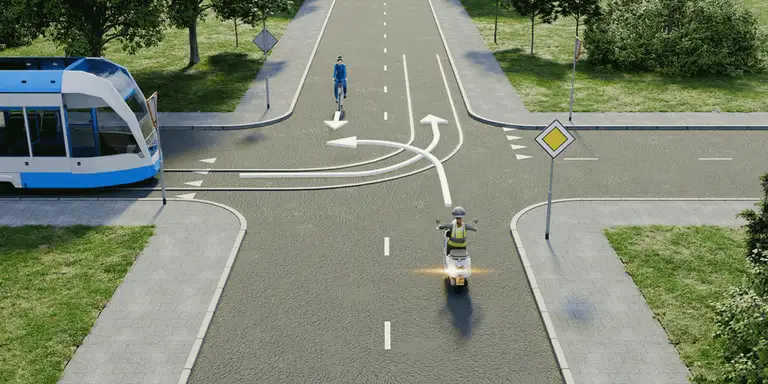
Who has priority at intersections, roundabouts, and when turning. You also learn how to deal with pedestrians, cyclists, trams, and special vehicles. This topic is essential to prevent dangerous situations and misunderstandings in traffic.
3. Special roads, road users, and manoeuvres
Driving on different types of roads such as highways, provincial roads, and residential areas. You also learn special manoeuvres such as turning around, reversing, parallel parking, and parking in different situations. Attention is also given to vulnerable road users.
4. Safe driving and emergency situations
The use of lights, indicators, seat belts, and other safety equipment. You also learn how to respond to breakdowns, accidents, or emergency situations, and how to recognize and avoid risks in traffic.
5. Traffic signs and signals
Recognizing and understanding all traffic signs, road markings, and traffic lights. You also learn how to respond to instructions from traffic controllers and special traffic situations such as temporary roadworks signs.
6. Responsible and environmentally conscious driving
How to participate in traffic in a safe, calm, and responsible way. This includes defensive driving, fuel-efficient driving, environmentally friendly behavior, and reducing unnecessary emissions and noise.
7. Legislation
The most important traffic laws in the Netherlands, such as speed limits, alcohol regulations, and driving licence requirements. You also learn which documents you must always carry and the legal responsibilities of a driver.
8. Vehicle knowledge
Basic knowledge of the car itself, such as dashboard warning lights, lighting, mirrors, tires, and brakes. You also learn when a vehicle is technically safe to drive and which checks you can perform yourself.
Master these eight topics, and you’re well on your way to passing.
Who Is the English Theory Exam For?
The English theory exam is designed for anyone who feels more comfortable in English than Dutch, including:
- Expats working in the Netherlands
- International students
- New residents still learning Dutch
- Anyone who prefers studying in English
If English is your strongest language, this option can make a big difference in your results.
Practice in English: The Key to Success
.jpg)
Passing your exam depends on preparation. Without practice, your chances are low—especially with the stricter format.
At Nutheorie, we provide everything international students need:
- Clear and structured English theory courses
- Practice exams similar to the real CBR exam
- Explanatory videos for difficult topics
- A complete English e-book with detailed explanations
This step-by-step approach helps you build confidence and fully understand the material.
One-Day Theory Course in English
Many students prefer an intensive approach. That’s why we offer a one-day English theory course.
In just one day, you will:
- Cover all eight exam topics
- Get clear explanations in English
- Practice with real exam-style questions
- Receive personal tips and guidance
Most students take the exam immediately after the course—and many pass on their first attempt.
Tips from an Instructor
Based on my experience coaching international students daily, here are my top tips:
- Start early – the material is extensive
- Learn traffic signs thoroughly – small details matter
- Practice under time pressure
- Repeat regularly – consistency builds confidence
- Use English materials only – match your exam conditions
Why Choose Nutheorie?
There are many ways to prepare, but Nutheorie makes it simple:
- Everything available in English
- Immediate online access
- High pass rates
- Fast-track one-day course
- Personal guidance from experienced instructors
Our goal is not just to help you pass, but to ensure you truly understand how to drive safely and responsibly.
Conclusion
Passing your car theory exam is the first major step toward getting your driver’s license in the Netherlands. Taking the exam in English removes the language barrier and allows you to focus entirely on learning the rules.
No more struggling with difficult Dutch terms—just clear, effective preparation in a language you understand.
My advice: start practicing today, take plenty of mock exams, and consider joining a one-day English course if you want fast results. With the right preparation, you can walk into your exam with confidence—and pass on your first try.
Ready to get started? Register with Nutheorie today and take the first step toward your driver’s license in the Netherlands.