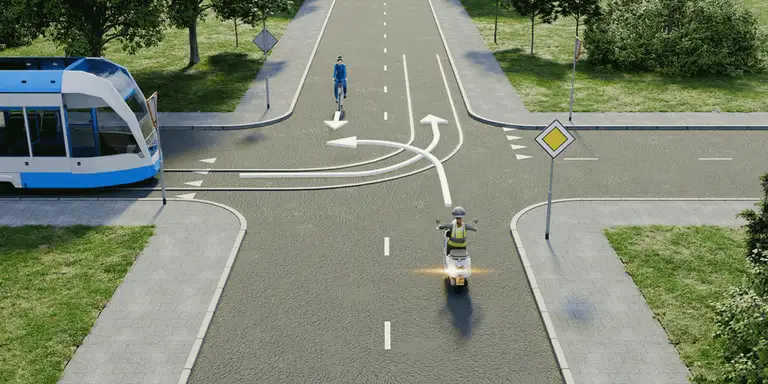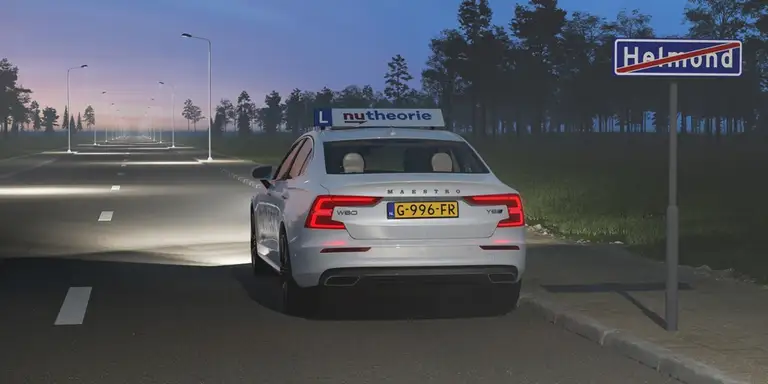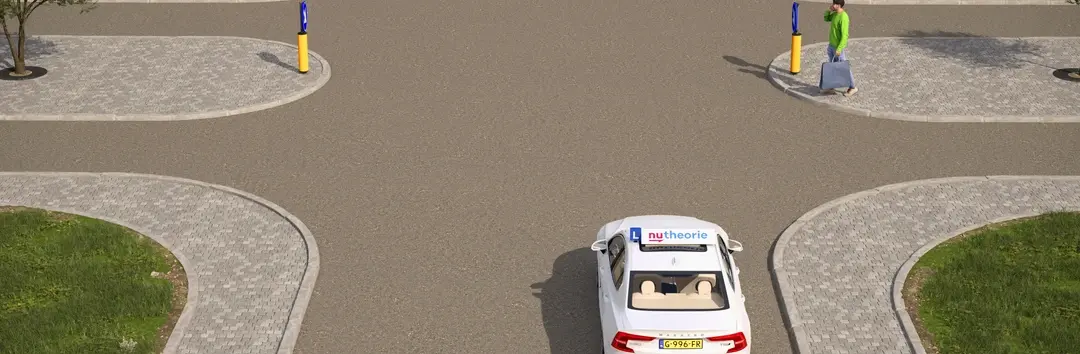

You may think it is harmless to park your car just before an intersection, especially if you are only going to be away for a few minutes. However, you cannot simply park anywhere along the road. In the Netherlands, there are specific rules about where you are allowed to park.

One of the most important rules to remember is: you are not allowed to park within five metres of an intersection. But how exactly do you measure those five metres? And does the same rule apply if you are only stopping briefly? In this article, we explain the rules.
What Is the Rule at an Intersection?
Under Article 24 of the Dutch Road Traffic and Traffic Signs Regulations (RVV 1990), you are not allowed to park at an intersection at a distance of less than five metres from it.
This means that you must keep at least five metres between your vehicle and the intersection before parking your car.
The main reason for this rule is road safety. A car parked too close to an intersection can obstruct the view of other road users. Drivers, cyclists and pedestrians may have more difficulty seeing each other approaching. A parked vehicle can also reduce the space available for turning or passing through the intersection.
An easy rule to remember for your theory test: less than 5 metres from an intersection = no parking.
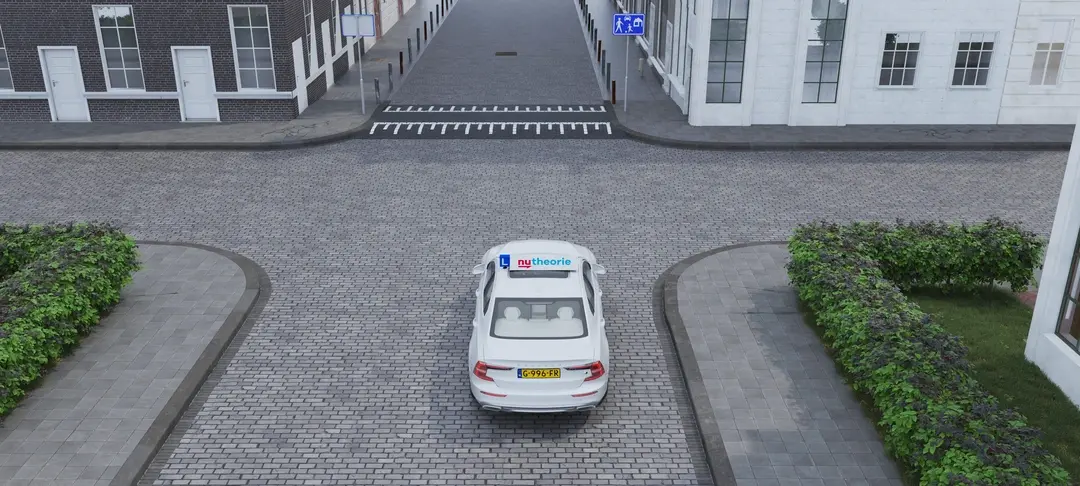
How Do You Measure the Five Metres?
The five-metre rule concerns the distance from the intersection. You therefore need to look at where the intersection begins, rather than simply judging the distance between your car and the corner of the street.
If your car is, for example, three metres from an intersection, you are not allowed to park there. If your car is five metres or more away, the specific parking prohibition in Article 24 no longer applies. However, other parking rules or traffic signs may still prohibit you from parking there.
In practice, it is sensible to leave a little extra space if you are unsure. This helps ensure that your vehicle is not too close to the intersection.
Can You Stop There Briefly?
This is where it is important to understand the difference between stopping and parking.
The five-metre rule specifically concerns parking. Stopping has its own set of rules. Under Article 23 of the RVV, for example, you are not allowed to stop on an intersection itself. There are also other locations where stopping is prohibited.
So you cannot simply think: "I am not parking here, I am just stopping for a moment." Even if you do not intend to leave your vehicle for a long time, stopping may still be prohibited at that location.
That is why it is important to pay close attention during your theory test to whether a question is about parking or stopping.
What Is the Difference Between Parking and Stopping?
The distinction is important for several traffic rules.
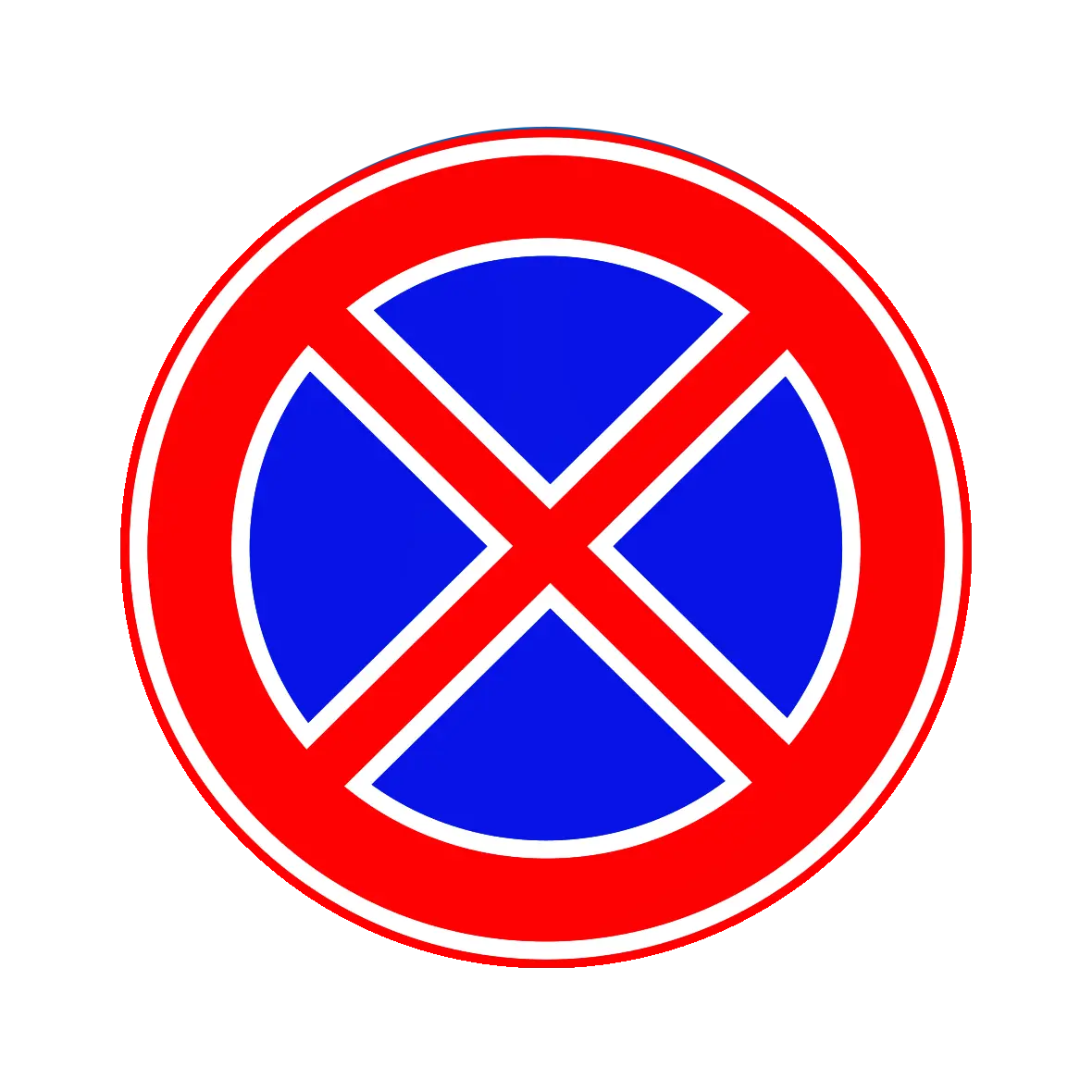
Stopping means bringing your vehicle to a standstill for purposes such as immediately allowing passengers to get in or out, or immediately loading or unloading goods.
Parking goes further. Your vehicle is stationary for a purpose other than immediately allowing passengers to get in or out or immediately loading or unloading goods.
You will encounter this distinction regularly in questions about traffic regulations. A situation where you stop only briefly does not automatically mean that all parking prohibitions apply. At the same time, it does not mean that you are allowed to stop anywhere.
Why Can't You Park Close to an Intersection?
The main reasons are visibility and road safety.
Imagine a car parked directly next to an intersection. A driver approaching from another road may have difficulty seeing whether traffic is coming because the parked car blocks their view. The same applies to cyclists and pedestrians.
A parked car can also force drivers to take a wider turn or move around the vehicle. At busy intersections, this can create additional dangerous situations.
The five-metre rule therefore helps keep the area around an intersection clear.
Watch Out for Other Parking Restrictions
Being five metres or more from an intersection does not automatically mean that you are allowed to park there. There are several other situations in which parking is prohibited.
For example, you are not allowed to park:
- in front of an entrance or exit;
- outside built-up areas on the carriageway of a priority road;
- alongside a broken yellow line;
- where a traffic sign prohibits parking;
- in a way that results in double parking;
- in a parking space when you do not meet the conditions indicated for that space.
Therefore, always check the entire traffic situation before leaving your car.
Does the Five-Metre Rule Also Apply to Roundabouts?
A roundabout is not necessarily treated in exactly the same way as a conventional intersection in every legal context. However, there are also specific rules concerning stopping and parking around roundabouts, and you should always make sure that your vehicle does not obstruct traffic or reduce visibility.
For your theory test, it is therefore better not to simply memorise the "five metres from an intersection" rule. Instead, practise identifying the rules that apply to different traffic situations.
What Should You Remember for Your Theory Test?
The most important points are simple:
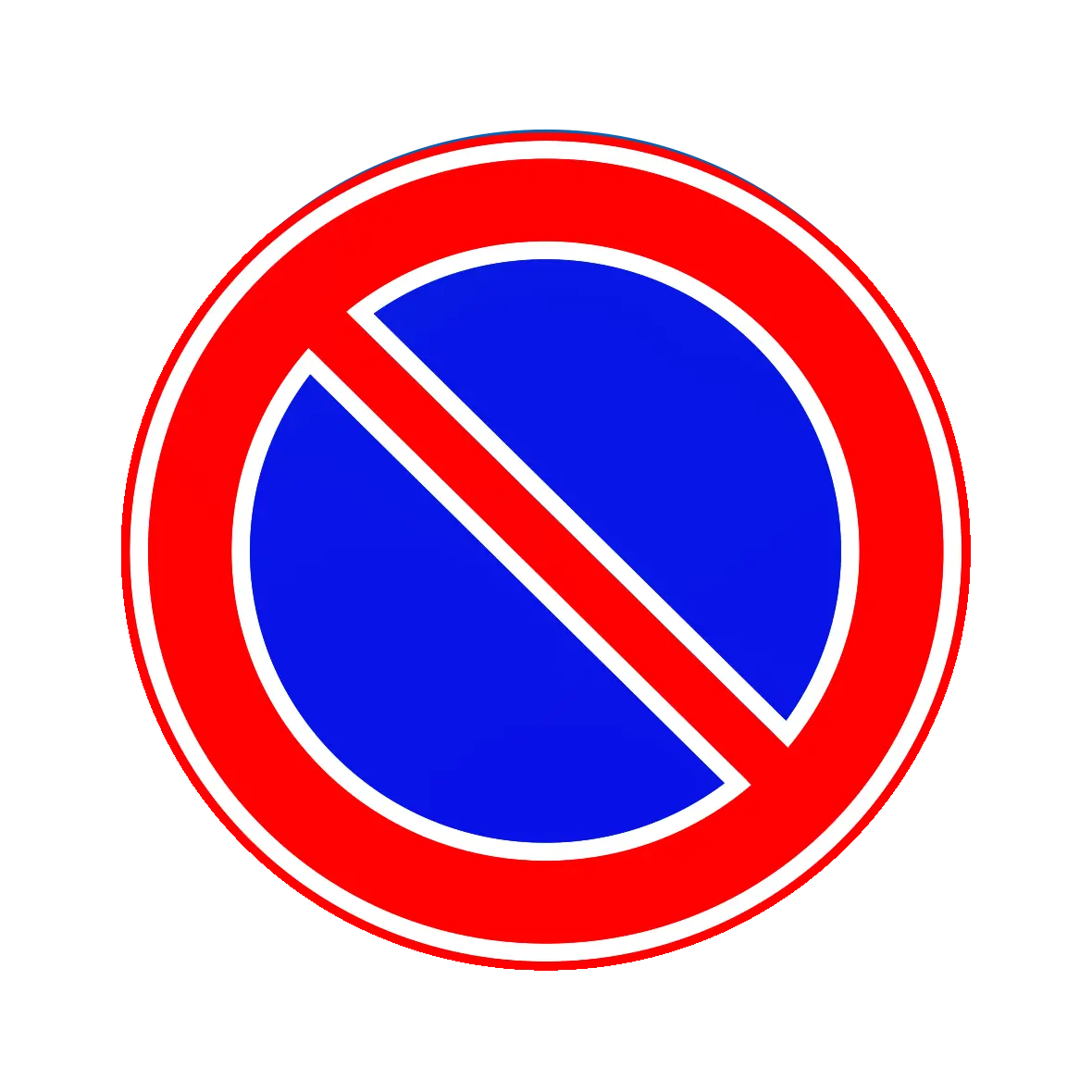
Parking: you are not allowed to park less than five metres from an intersection.
Stopping: you are not allowed to stop on an intersection itself, as well as at other locations where stopping is prohibited.
Remember: other traffic signs, road markings and parking rules may also prohibit parking in other locations.
A common mistake is to look only at the distance from the intersection. During your theory test, you need to assess the entire situation. Also look for traffic signs, yellow lines, cycle lanes, pedestrian crossings and entrances or exits.