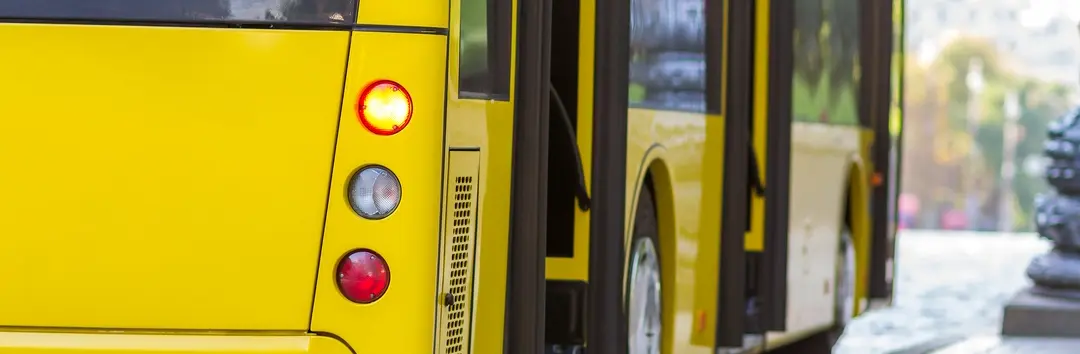

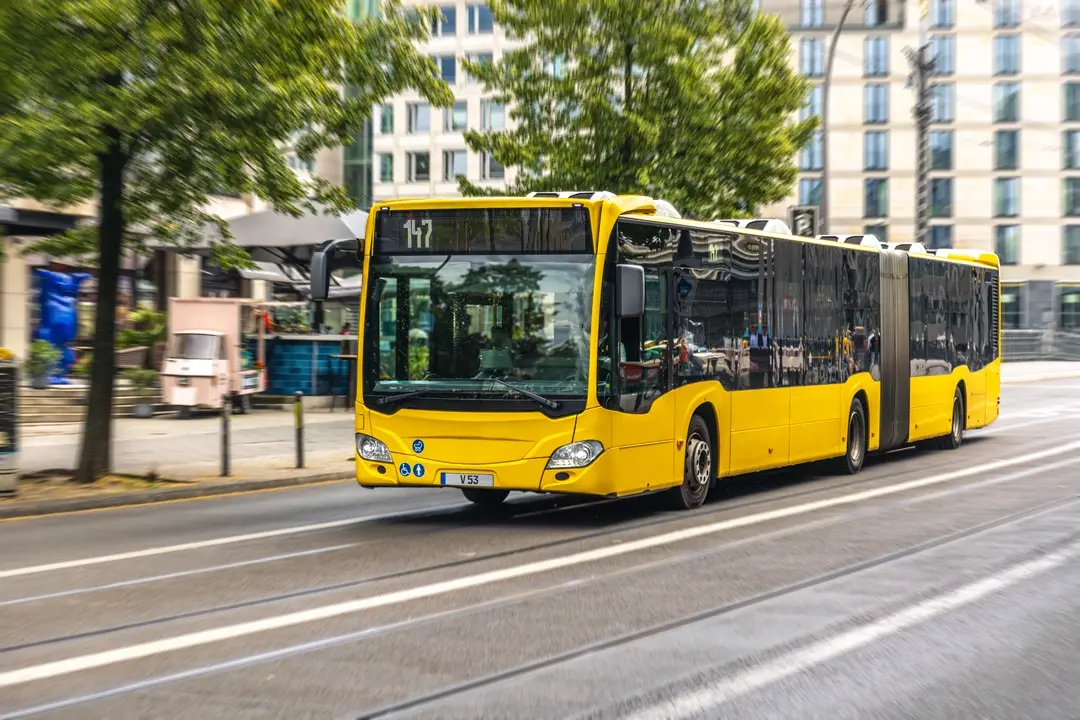
A bus has priority when it pulls away from a bus stop inside a built-up area and indicates that it wants to leave with its indicator. In that situation, you must give the bus the opportunity to pull away. Outside the built-up area, this special rule does not apply.

The rule comes from Article 56 of the RVV 1990, the Dutch traffic regulations. It is an important topic for the Dutch driving theory exam and can appear as a photo or situation question.
See our Dutch right-of-way rules while you practise this topic.
What the rule actually says
Inside a built-up area, you must give a bus the opportunity to pull away from a bus stop. This obligation applies when the bus driver switches on the indicator to signal that the bus wants to leave the stop.
As long as the bus is not signalling, this special rule does not apply. You may continue driving and, when otherwise permitted, overtake the bus.
The important word here is opportunity. You do not have to brake sharply or make an emergency stop. You simply need to give the bus enough room to safely join the traffic.
In practice, this usually means easing off the accelerator or slowing down when you see that the bus is about to leave the stop. If necessary and safe, you can stop to give the bus enough space.
Why this is not technically right of way
Although people often say that a bus "has priority", that is not technically what the Dutch traffic rules say. The rule states that you must give a bus the opportunity to pull away from a bus stop.
That distinction matters because right of way normally concerns traffic flows that cross each other, such as at a junction. The bus rule concerns one specific situation: a bus leaving a bus stop.
Once the bus has left the stop and is moving normally with the other traffic, it is an ordinary road user again.
For example, if the bus later wants to change lanes, it must follow the normal rules for changing lanes and give way where required. It cannot rely on the bus-stop rule to force its way into another lane.
Inside or outside the built-up area
The special bus rule applies only inside a built-up area, known in Dutch as the bebouwde kom.
A blue Dutch place-name sign indicates the beginning of a built-up area. A corresponding sign with a red line indicates where the built-up area ends.
Outside the built-up area, a bus receives no special treatment when it pulls away from a bus stop. Leaving the stop is considered a special manoeuvre, which means the bus must give way to other road users.
You may therefore overtake the bus outside the built-up area if doing so is otherwise permitted, even if the bus has its indicator on.
This is an important theory-exam trap. When you see a question about a bus leaving a stop, check first whether you are inside or outside the built-up area.
Which buses does the rule cover?
The Dutch traffic rules use the term autobus. This refers to a motor vehicle designed to carry more than eight people, not including the driver.
This means the rule can apply to:
- city buses;
- regional buses;
- coaches.
It does not matter whether passengers are currently on board or which company operates the bus.
A taxi van or minibus designed to carry eight people or fewer, excluding the driver, does not fall under this specific bus rule. It does not receive the same special treatment when pulling away from a stop.
When you do not have to let the bus go first
There are several situations where this specific bus rule does not require you to let the bus go first:
- Outside the built-up area: the rule does not apply, even if the bus is signalling.
- When the bus is not signalling: no indicator means the special obligation does not arise.
- When you are driving in a military column: specific rules apply to traffic travelling as part of a military column.
- When you are part of a funeral procession: funeral processions have specific traffic rules.
- When you are driving an emergency vehicle: an emergency vehicle using its blue flashing lights and siren has a special position in traffic.
For the theory exam, the most important combination to remember is:
Built-up area + bus stop + bus signalling = give the bus the opportunity to pull away.
What to do if you cannot safely let the bus out
The rule does not require you to make an emergency stop.
If you are already almost alongside the bus when its indicator comes on, you should not suddenly brake hard just to let it out. Continue driving calmly if stopping would be unsafe.
If you can slow down safely and in good time, do so smoothly. At the same time, keep an eye on the traffic behind you.
A bus is long and needs enough space to turn from the stop into the traffic lane. By reducing your speed in good time, you can give the bus that space without creating a dangerous situation.
Once you are behind the bus, leave enough following distance. A large bus can significantly reduce your view of the road ahead.
Stopping and parking at a bus stop
The rules around stopping at a bus stop are another important point to remember.
You may not stop where the block marking at a bus stop is painted. If there is no block marking, you may not stop within 12 metres of the bus stop sign.
There is an exception for immediately allowing passengers to get in or out. This is allowed as long as you do not obstruct a bus. Once the passengers have got in or out, you should continue driving.
You cannot use a bus stop as a place to wait for someone. Loading and unloading is also not permitted where the stopping restriction applies.
A bus coming off a bus lane
A bus moving from a bus lane onto the ordinary carriageway is not automatically a bus pulling away from a bus stop.
If the bus is simply moving from a bus lane into another lane, the normal traffic rules apply. The bus does not automatically get priority simply because it is a bus.
However, if the bus stop itself is located on the bus lane and the bus is leaving that stop inside a built-up area, the special bus rule does apply.
So when answering a theory-exam question, look at the stop and what the bus is doing, not just the lane the bus is travelling on.
How to spot the situation on your theory exam
When you get a question about a bus pulling away from a stop, work through the situation step by step:
- Check whether you are inside a built-up area. Look for the blue place-name sign or other clues.
- Check the indicator. Is the bus actually signalling that it wants to leave?
- Check whether the bus is at a bus stop. The special rule applies to leaving a stop, not simply to a bus standing beside the road.
- Work out what the bus is doing. Is it pulling away from the stop, or is it doing something else, such as changing lanes?
- Apply the rule. Inside a built-up area, with the bus leaving a stop and signalling, you must give it the opportunity to pull away.
A simple way to remember the main rule is:
Built-up area + bus leaving a stop + indicator = give the bus the opportunity to pull away.
To practise questions like this, see our one-day theory course.
Conclusion
Knowing when a bus has priority in the Netherlands comes down to recognising a few key conditions. If a bus is leaving a bus stop inside a built-up area and has its indicator on, you must give it the opportunity to pull away. Outside a built-up area, this special rule does not apply.
For your theory exam, always check three things: where you are, whether the bus is leaving a stop, and whether it is signalling. Also remember that this rule applies specifically to leaving a bus stop; once the bus is back in normal traffic, the standard traffic rules apply.
Understanding these distinctions will help you avoid one of the common traps in theory-exam questions and respond correctly to bus-related traffic situations.


.jpg)