
If you are moving to the Netherlands or planning to stay for an extended period, one of the first things you may want to know is whether you can continue driving with your existing driving licence. The answer depends largely on where your licence was issued and whether you are visiting the country or becoming a resident.

The Netherlands has different rules for driving licences issued within the European Union (EU) and European Economic Area (EEA) compared with those issued outside these regions. While EU and EEA licence holders can generally continue driving for a longer period, non-EU licence holders may need to exchange their licence or obtain a Dutch driving licence sooner.
Understanding these differences is important because driving with a licence that is no longer recognised in the Netherlands can have legal and insurance consequences. In this guide, we explain the main differences between EU and non-EU driving licences, how long you can use them and what steps you may need to take to continue driving legally.
What is the difference between an EU and a non-EU driving licence?
The main difference between EU and non-EU driving licences in the Netherlands concerns how long they are recognised and whether they can be exchanged for a Dutch driving licence.
An EU driving licence is issued by a country that belongs to the European Union. The Netherlands also applies similar recognition rules to licences issued in the EEA countries of Iceland, Liechtenstein and Norway.
A non-EU driving licence is issued by a country outside the EU. However, not all non-EU licences are treated the same. Licences issued in EEA countries benefit from EU-style recognition rules, while licences from countries such as the United Kingdom, the United States, India or Turkey are subject to different requirements.
The rules also depend on whether you are a tourist or a registered resident of the Netherlands. A licence that is valid during a short visit may not remain valid once you establish residency.
How long can you drive in the Netherlands with an EU driving licence?
If your driving licence was issued in an EU or EFTA country before you moved to the Netherlands, you can generally continue using it without immediately exchanging it for a Dutch licence.
However, the period during which your licence remains recognised depends on the vehicle category.
For passenger cars, motorcycles and mopeds, including categories AM, A1, A2, A, B and BE, you can generally drive for up to 15 years from the original issue date of your licence. For heavier vehicles, including trucks and buses, the period is usually five years from the issue date.
These rules apply only while the relevant licence categories remain valid. If your licence expires earlier, you cannot continue driving simply because the 15-year or five-year period has not ended.
There are also exceptions. For example, if your EU licence was issued more than 15 years before you moved to the Netherlands and remained valid, you may be able to continue using it for another two years after relocating.
Another important exception concerns licences issued while you were already living in the Netherlands. If you obtained an EU or EFTA driving licence while registered as a Dutch resident, you generally cannot use it to drive in the Netherlands until it has been exchanged.
How long can you drive in the Netherlands with a non-EU driving licence?
The rules are different if your driving licence was issued outside the EU or EFTA.
If you move to the Netherlands and become a resident, you can generally continue driving with your valid non-EU licence for the first 185 days after relocating. Once this period ends, you must have a Dutch driving licence to continue driving legally.
For example, someone who moves to the Netherlands with an Indian or American driving licence can generally use that licence during the initial 185-day period. After that, they must either have exchanged their licence, if eligible, or obtained a Dutch licence by passing the required examinations.
The 185-day rule does not mean that your foreign licence automatically becomes invalid worldwide. It means that the Netherlands no longer recognises it as sufficient for driving there as a resident.
There are exceptions, including special arrangements for certain Ukrainian licence holders covered by temporary protection.
EU vs non-EU driving licences: key differences
The following table summarises the main differences for people who move to the Netherlands.
| Requirement | EU/EFTA licence | Other non-EU licence |
|---|---|---|
| Driving after moving | Generally permitted | Generally permitted for 185 days |
| Recognition period for category B | Up to 15 years from issue | First 185 days after relocating |
| Exchanging for a Dutch licence | Generally possible | Only under certain conditions |
| Theory and practical exams | Usually not required for exchange | Required if exchange is not possible |
| International Driving Permit | Generally unnecessary | May be advisable depending on licence format |
Driving after moving
Generally permitted
Generally permitted for 185 days
Recognition period for category B
Up to 15 years from issue
First 185 days after relocating
Exchanging for a Dutch licence
Generally possible
Only under certain conditions
Theory and practical exams
Usually not required for exchange
Required if exchange is not possible
International Driving Permit
Generally unnecessary
May be advisable depending on licence format
These are the general rules. Your circumstances, licence category and country of issue can affect which requirements apply.
Can you exchange an EU driving licence for a Dutch driving licence?
If you have a driving licence issued in an EU or EFTA country, exchanging it for a Dutch licence is generally straightforward.
You usually do not need to take another theory or practical driving test. Instead, you can submit an application through the municipality where you are registered.
To exchange your licence, you generally need to be registered in the Dutch Personal Records Database (BRP), meet the applicable residency requirements and provide the required documents.
Your municipality forwards the application to the RDW, which checks whether your licence can be exchanged. Once the application has been approved, you can collect your Dutch driving licence.
Although exchanging an EU licence is generally possible, you should check the requirements before applying, especially if your licence has expired or was issued while you were already living in the Netherlands.
Can you exchange a non-EU driving licence for a Dutch driving licence?
Exchanging a non-EU driving licence can be more complicated because the Netherlands does not have exchange agreements with every country.
Some countries have agreements that allow their driving licences to be exchanged without requiring the holder to take new driving examinations.
Examples of countries and territories with eligible licences include Japan, South Korea, Singapore, Israel, Taiwan, Andorra and certain Canadian provinces. The United Kingdom also has exchange arrangements with the Netherlands.
However, these agreements may apply only to specific driving licence categories. Having a licence from one of these countries does not automatically mean every category can be exchanged.
Another important requirement is that applicants with non-EU/EFTA licences generally must have lived in the issuing country for at least 185 days during the year they obtained their licence.
If your licence is not eligible for exchange, you will usually need to pass both the Dutch theory and practical driving examinations to obtain a Dutch driving licence.
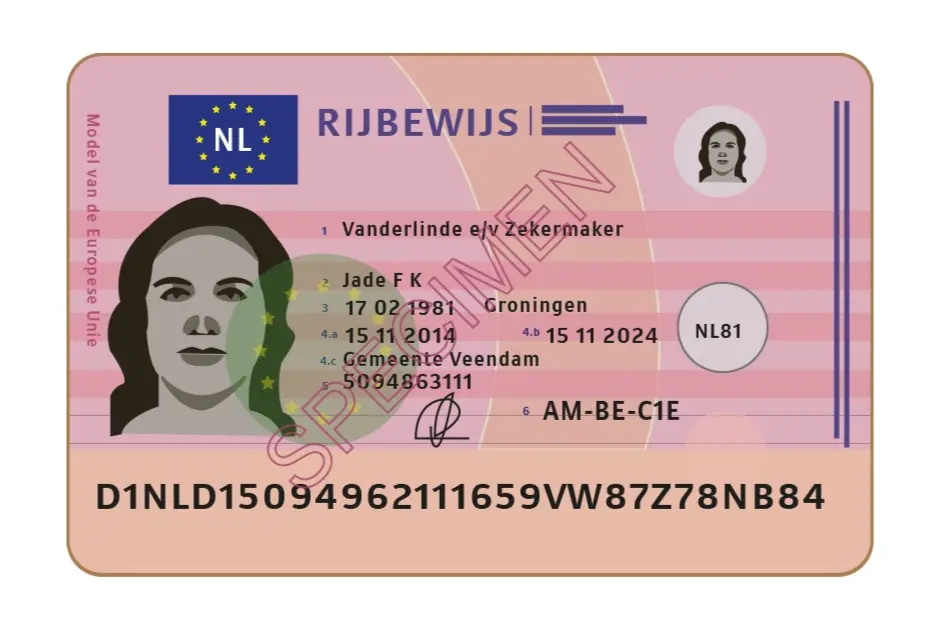
Does the 30% ruling make a difference?
There is an important exception for certain international employees who qualify for the Dutch expat tax scheme, commonly known as the 30% ruling.
If this scheme applies to you and you have the required valid decision from the Dutch Tax Administration, you may be able to exchange a driving licence issued in any country.
This means that even if your country does not have a driving licence exchange agreement with the Netherlands, you may still qualify for an exchange without taking new driving tests.
However, you must meet the relevant conditions, including the applicable registration and residency requirements.
How do you exchange a foreign driving licence in the Netherlands?
If you are eligible to exchange your foreign driving licence, the process takes place through your local municipality.
Step 1: Check whether your licence can be exchanged
Before applying, check the requirements on the official RDW website. The rules depend on your country of issue, licence category and personal circumstances.
Step 2: Prepare the required documents
You will generally need your foreign driving licence, a passport photograph that meets Dutch requirements and the necessary identification or residency documents.
Depending on your situation, you may also need a certified translation, a CBR Health Declaration or proof that you qualify for the expat tax scheme.
Step 3: Submit your application at your municipality
Visit the municipality where you are registered and submit your application. You will need to hand in your foreign driving licence and pay the applicable fee.
Your municipality will then forward the documents to the RDW for assessment.
Step 4: Wait for the application to be processed
The RDW generally needs at least 15 working days to process an exchange application, and additional checks can make the process longer.
Because you must surrender your foreign licence during the process, you may be unable to present it during a police check. You should therefore plan for a period without driving.
Step 5: Collect your Dutch driving licence
Once your application has been approved, you will receive instructions about collecting your new Dutch driving licence from your municipality.
Your original foreign driving licence will not be returned.
What if your foreign driving licence cannot be exchanged?
If your non-EU driving licence is not eligible for exchange, you will generally need to obtain a Dutch driving licence through the standard examination process.
This means passing the theory examination and the practical driving test administered by the CBR.
Even if you have several years of driving experience in another country, you may still need to complete both examinations. Previous driving experience does not automatically exempt you from the Dutch requirements.
The theory examination tests your understanding of Dutch traffic rules, road signs and how to respond safely to different traffic situations. These may differ from the rules you learned in your home country, especially regarding cyclists, priority rules and road layouts.
If you need to prepare for the examination, an English theory course from Nutheorie can help you become familiar with Dutch traffic rules and practise exam-style questions before taking the CBR theory test.
Do tourists need a Dutch driving licence?
The rules for tourists are different from those for people who move to the Netherlands.
If you are visiting the Netherlands temporarily and are not becoming a resident, you can generally drive with your valid foreign driving licence, regardless of whether it was issued inside or outside the EU.
For non-EU/EFTA licences, the format of the licence can matter. If the vehicle categories are not identified using the familiar A, B, C, D or E designations, the RDW advises obtaining an International Driving Permit alongside your national licence.
An International Driving Permit is not a replacement for your original driving licence. You must carry the original licence as well.
Before travelling, it is also sensible to check the requirements of your car rental company, as rental conditions may differ from the general legal rules.
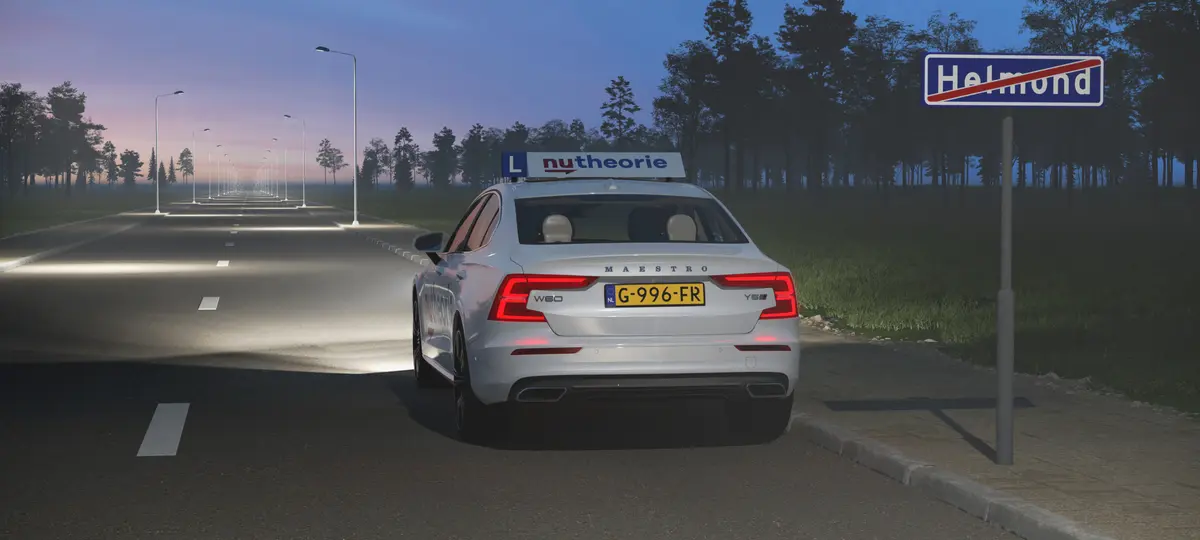
Why is it important to understand Dutch traffic rules?
Even if your foreign driving licence is recognised in the Netherlands, you are still expected to follow Dutch traffic laws.
The Netherlands has an extensive cycling infrastructure, and drivers regularly encounter situations involving cyclists, pedestrians, trams and different types of intersections.
For people who learned to drive in another country, some traffic situations may initially feel unfamiliar. Understanding local priority rules, speed limits and road signs can help you adapt to Dutch roads.
This is particularly important for drivers who must take the Dutch theory examination. Preparing properly can help you understand not only the traffic rules themselves but also how to apply them in real driving situations.
Driving in the Netherlands with a Foreign Licence
The main difference between EU and non-EU driving licences in the Netherlands is how long they remain recognised after you move to the country and whether they can be exchanged for a Dutch licence.
EU and EFTA licence holders can generally continue driving for a longer period and exchange their licence without taking new driving examinations. Non-EU licence holders usually have 185 days after relocating before they need a Dutch driving licence, and exchange eligibility depends on the issuing country and any applicable exceptions.
Whether you are moving to the Netherlands for work, study or personal reasons, checking the rules early can help you avoid unnecessary delays. If your licence cannot be exchanged, preparing for the Dutch theory and practical examinations will be an important step towards continuing to drive legally.