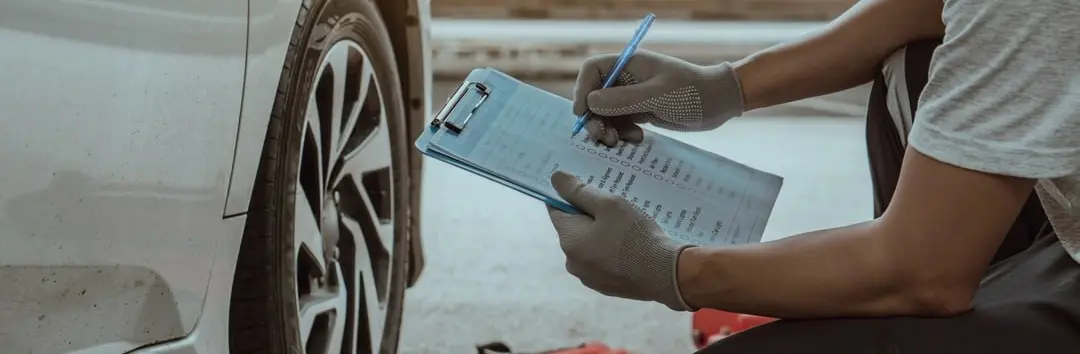

Before the driving test begins, the examiner will ask you one or two questions about the car. These may be about the tyres, engine fluids, lights or controls inside the car. You will not fail simply because you do not know an answer.

This part of the test is called the vehicle check. It starts as soon as you walk towards the car with the examiner. You can read more about how the exam day works in How Does the CBR Practical Driving Test Work?
What Does the Vehicle Check Involve?
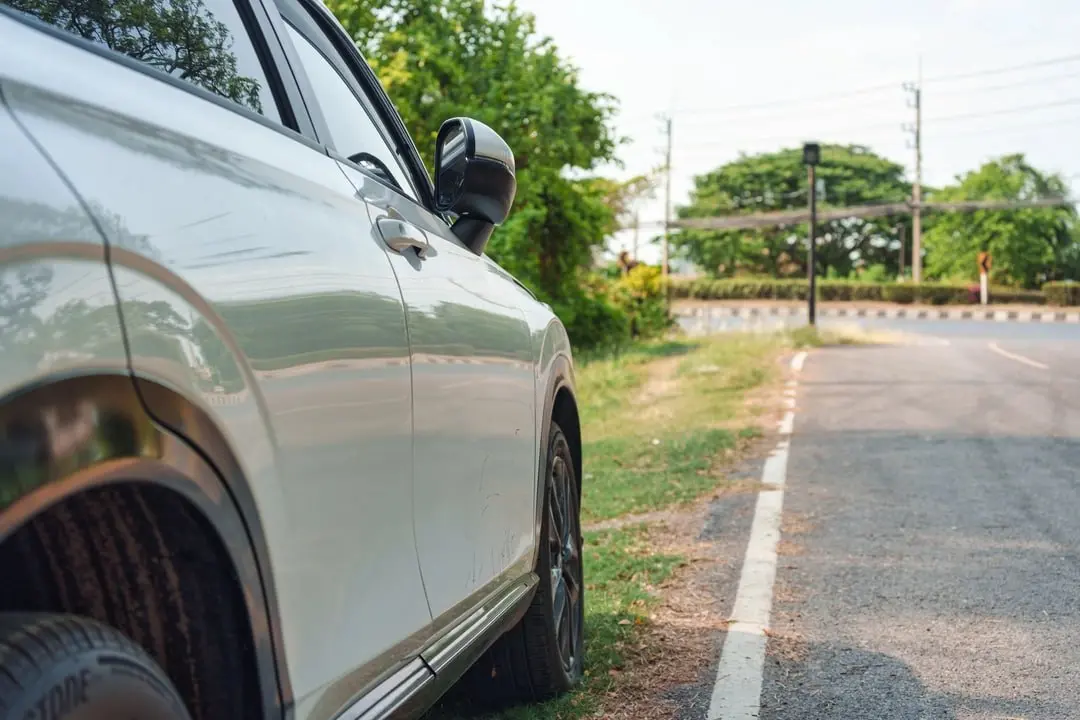
The questions during the vehicle check can generally be divided into three groups: checks outside the car, checks under the bonnet and checks inside the car. You will usually get one or two questions, so you do not have to demonstrate every check.
The examiner mainly wants to see that you understand how to use a car safely and responsibly. It is therefore not just about memorising a list. You should also be able to explain what you are checking and why.
Before the driving test, you will also take the eyesight test. You will be asked to read the registration number of a stationary car from a distance of approximately 25 metres.
Checks Outside the Car
During a check outside the car, the examiner may ask you to look at things such as:
- the tyre tread and tyre pressure;
- the lights, including dipped headlights, full beam, brake lights, indicators and fog lights;
- damage or dirt on the windows, mirrors and lights;
- fluid underneath the car, which could indicate a leak;
- whether the car is sitting unevenly, which could indicate a flat or damaged tyre;
- the windscreen wipers and the condition of the wiper blades.
You can spot many of these things from a few metres away. Make it a habit to take a quick look around the car before getting in. This is also a good habit to practise during your regular driving lessons.
Tyre Tread and Tyre Pressure
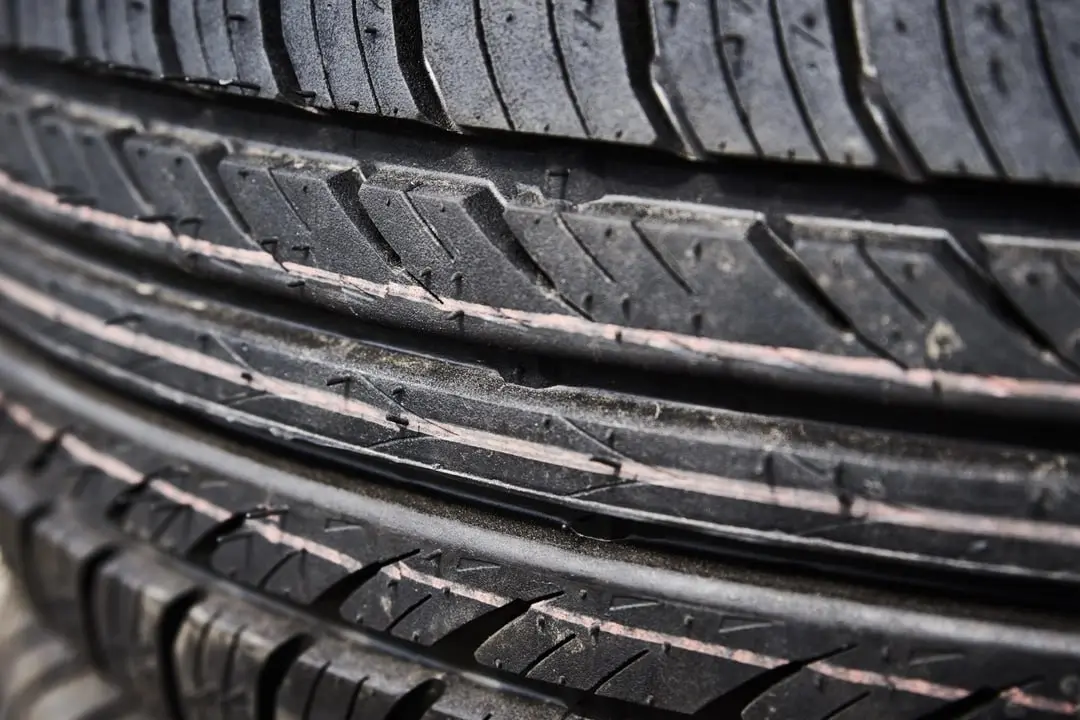
Car tyres must have a minimum tread depth of 1.6 millimetres across the entire width of the tread. You can check this using the tread wear indicators in the grooves of the tyre. These are small raised sections inside the grooves.
When the tyre rubber is level with one of these wear indicators, the tyre has reached its minimum tread depth and needs to be replaced.
Sufficient tread is important because the grooves help remove water from the road surface. With insufficient tread, the risk of aquaplaning increases.
Tyre pressure is also important. You can usually find the recommended tyre pressure on a sticker inside the fuel flap or on the door frame. You can also find the correct pressure in the car's owner's manual.
It is best to check tyre pressure when the tyres are cold. Driving heats up the tyres, which increases the air pressure and can result in a higher reading.
Underinflated tyres can increase your stopping distance, cause additional tyre wear and increase fuel consumption. Check your tyre pressure regularly, for example about once a month.
Checks Under the Bonnet
The examiner may also ask you to check certain fluids under the bonnet.
Engine oil is checked using the dipstick. Remove the dipstick, wipe it clean with a cloth, insert it fully again and then remove it once more. The oil level should be between the minimum and maximum markings.
Coolant is checked using the transparent coolant reservoir. The level should also be between the indicated minimum and maximum markings.
Important: never simply open the coolant system cap when the engine is hot. The system can be pressurised, and hot coolant may spray out.
Screenwash can be checked by looking at the reservoir and its indicated level. On some cars, the level is not clearly visible. In that case, you can usually check the filler opening or owner's manual to see how the fluid should be checked.
Brake fluid also has minimum and maximum markings. If the level is noticeably low or continues to drop, have the car checked. Simply topping it up is not always the solution.
Checks Inside the Car
The examiner can also ask questions about the controls inside the car. Make sure you know where the most important functions are located and how to use them.
For example:
- the interior and exterior mirrors;
- the seat and headrest;
- the seat belt;
- the front and rear fog lights;
- the heated rear window;
- the windscreen wipers and washers;
- the hazard warning lights;
- the horn.
You should be able to find the most important buttons and controls without having to search for them. While driving, it is important to keep your attention focused on the road as much as possible.
It is therefore a good idea to practise these functions regularly during your driving lessons. This way, you will not have to hesitate when looking for a button during the test.
Dashboard Warning Lights
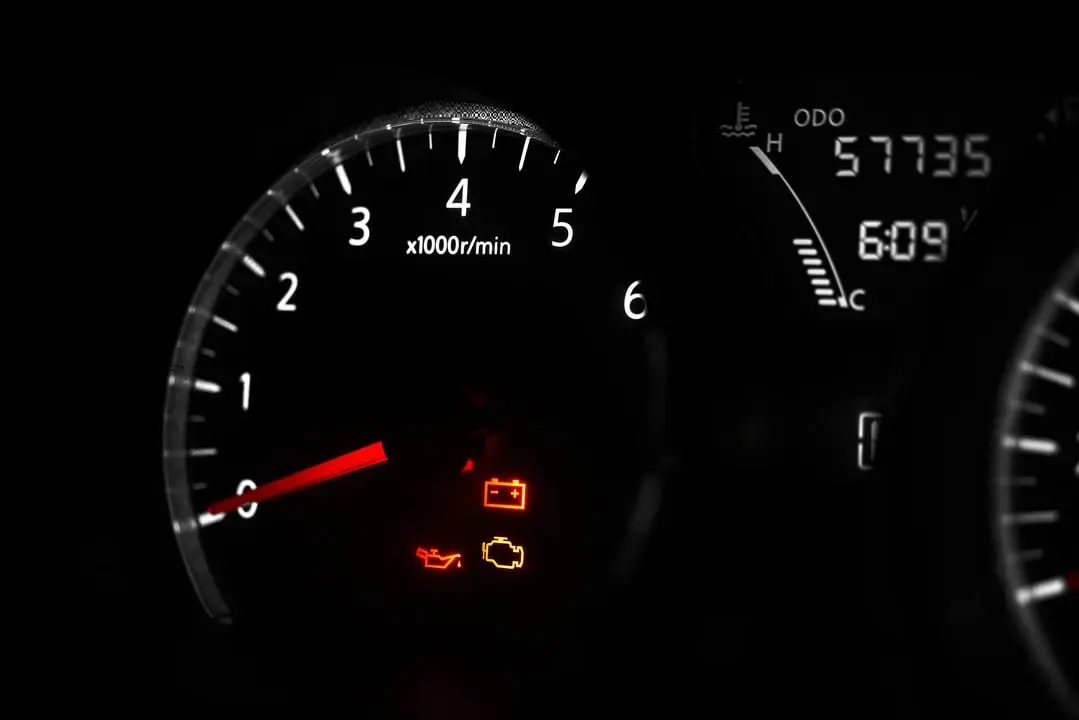
The examiner may also ask you what a particular warning or indicator light means. It is therefore useful to recognise the most important colours and symbols.
A red warning light usually indicates a serious problem. For example, it could indicate a problem with the oil pressure, braking system or battery. In such a situation, you should stop as soon as it is safe to do so.
An orange or yellow warning light is usually a warning. You can often continue driving, but you should have the problem checked as soon as possible. The tyre pressure warning light is one example.
Green and blue lights are generally not warnings. They indicate that a particular function is active. For example, a blue light can indicate that the full beam headlights are switched on.
Would you like to learn what the different symbols mean? Read The Meaning of Dashboard Warning Lights.
What If You Don't Know the Answer?
You do not need to panic if you do not know an answer during the vehicle check. The examiner knows that candidates can be nervous and may sometimes give you a little help.
If you ultimately do not know the answer, that does not automatically mean you will fail. The vehicle check itself does not determine whether you pass the practical driving test. The examiner assesses your driving during the test.
If you are unsure about something, it is better to honestly say that you do not know and explain what you do know. That is better than simply guessing an answer.
Checklist for the Morning of Your Driving Test
- Walk around the car before leaving or before the test and check the tyres, windows and lights.
- Ask your instructor to go through the most important checks under the bonnet with you one more time.
- Adjust your seat, mirrors and headrest carefully before you start driving.
- After starting the engine, check whether any warning lights remain illuminated.
- Bring your identification document.
- Check that your theory certificate is still valid.
Is your theory certificate about to expire, or have you not yet passed your theory test? Take a look at our one-day theory course.
Conclusion
The vehicle safety check is a small but important part of the practical driving test. Make sure you know how to check the most important parts of the car and can explain why these checks are important. Practise them during your driving lessons so that you can answer confidently during the test. And if you don't know something, stay calm: the vehicle safety check alone does not determine whether you pass your practical driving test.