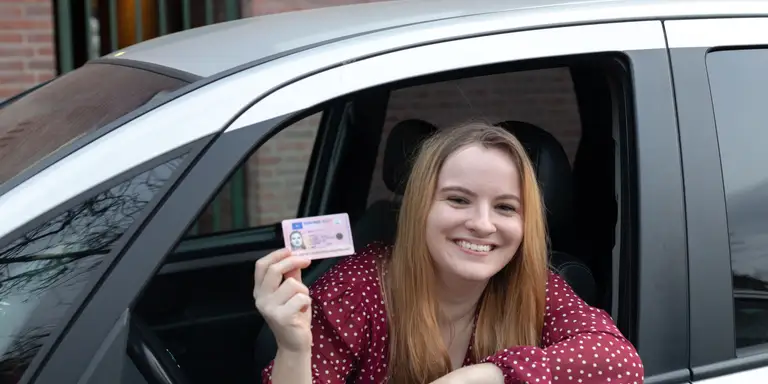

One of the most important moments during the Dutch practical driving test is when your instructor or examiner stops telling you exactly where to go. Instead of receiving turn-by-turn instructions, you may be asked to drive towards a particular destination, follow road signs or use a navigation system.

This is known as independent driving. It is an important part of showing that you can handle everyday traffic without someone constantly telling you what to do.
But what does independent driving actually involve? What happens if you miss a turn? Can you ask the examiner for help? And do you fail if you take the wrong route?
Here is what you need to know before your practical driving test.
What Is Independent Driving?
Independent driving means making your own decisions about your route while continuing to drive safely.
The examiner does not necessarily tell you every turn. Instead, you may be given a destination or a general direction and expected to work out how to get there.
For example, the examiner could ask you to drive towards a particular town or location. You then need to use the information available to you, such as:
- Road signs
- Lane markings
- Your navigation system, if one is being used
- The layout of the road
- Your knowledge of the traffic rules
The important point is that you remain responsible for the decisions you make while driving.

Why Is Independent Driving Part of the Practical Test?
In everyday driving, you will rarely have someone next to you telling you exactly when to turn left or which lane to take.
You need to be able to look at the road, understand where you are going and make appropriate decisions yourself.
Independent driving therefore gives the examiner an opportunity to see how you cope when you have to combine navigation and driving at the same time.
It is not primarily a test of your sense of direction. You do not need to know every street in the area around the exam centre.
Instead, you need to demonstrate that you can process information, make decisions and remain safe when you are not receiving constant instructions.
How Can the Examiner Ask You to Drive Independently?
There are several ways independent driving can be incorporated into your practical test.
Following Road Signs
You may be given a destination and asked to follow the relevant road signs.
This means you need to start looking ahead rather than waiting for the examiner to tell you which way to go.
For example, if you are driving towards a city, pay attention to directional signs before you reach an intersection. Identifying the correct direction early gives you more time to choose the appropriate lane.
Using Navigation
Navigation can also form part of independent driving.
If you are following a navigation system, you need to be able to listen to or read the instructions while still paying attention to the road.
This can be more challenging than it sounds. A navigation instruction might arrive just as you approach a busy intersection, roundabout or lane change.
In these situations, safe driving comes first.
If you cannot safely follow an instruction, do not make a sudden manoeuvre simply because the navigation system told you to turn.
Choosing Your Own Route
You may also have to make decisions about which route to take.
There can be more than one safe way to reach a destination. You should therefore not assume that there is only one “correct” route.
If you accidentally choose a different road but continue to drive safely and legally, the situation can usually be managed without panicking.

What Happens If You Miss a Turn?
This is probably one of the biggest worries candidates have about independent driving.
Imagine the examiner has asked you to follow signs towards a particular destination. You realise too late that you should have taken a different exit.
Your first instinct might be to correct the mistake immediately.
That can be dangerous.
Do not suddenly change lanes, brake sharply, make an illegal turn or take another risky action just because you missed your intended route.
Instead, continue safely and look for another opportunity to reach your destination.
A missed turn is a navigation problem. It should not become a safety problem.
Do You Fail If You Take the Wrong Route?
Taking a different route does not automatically mean that you have failed your practical driving test.
What matters is how you deal with the situation.
If you realise that you have gone the wrong way, stay calm and continue driving safely. You can reassess your route when you have enough time and space to do so.
This is actually one of the reasons independent driving can be useful during the test: it gives you the opportunity to show that you can deal with an unexpected situation without losing control of your driving.
The key principle is simple:
Never sacrifice safety to follow a planned route.
Can You Ask the Examiner Where to Go?
If you genuinely do not understand an instruction, it is better to ask for clarification than to guess.
A misunderstanding can otherwise lead to unnecessary confusion, particularly when you are approaching an intersection or need to choose a lane.
However, asking for clarification is different from expecting the examiner to make every decision for you.
During independent driving, you are expected to take responsibility for your route and respond appropriately to the road around you.
What If the Navigation Says Something That Is Not Possible?
Your navigation system does not override traffic rules.
For example, imagine the navigation tells you to turn left, but you are in a lane where that movement is not permitted. Or perhaps the instruction arrives too late for you to change lanes safely.
You should not force the manoeuvre.
Continue according to the traffic rules and look for another opportunity to follow the route.
The same principle applies if a road is temporarily closed or traffic conditions have changed.
A navigation system provides information. You are still the driver responsible for deciding what is safe and legal.
Common Mistakes During Independent Driving
Independent driving can create some specific challenges for learners.
Looking at Signs Too Late
If you only start looking for directional signs when you are already at the intersection, you may not have enough time to position your vehicle correctly.
Try to scan ahead and identify signs early.
Focusing Too Much on the Route
It is easy to become obsessed with finding the correct road.
However, you should never allow navigation to distract you from the traffic around you.
Your surroundings should always remain your priority.
Making Last-Second Corrections
Missing an exit can feel stressful, especially during an exam.
But making a sudden lane change or turn is usually much more dangerous than simply continuing and finding another route.
Depending Completely on the Navigation
You should not switch off your awareness simply because the navigation system is giving you directions.
You still need to observe signs, road markings and other road users.
Panicking After a Mistake
One mistake can quickly lead to another if you let it affect your concentration.
If you miss a turn, take a breath, continue safely and focus on the next decision.
How Should You Practise Independent Driving?
Independent driving is something you can practise during your normal driving lessons.
Ask your instructor to stop giving you detailed turn-by-turn directions. Instead, ask them to give you a destination and let you work out how to get there.
You can practise by:
- Following directional road signs.
- Using a navigation system during lessons.
- Driving in areas you do not know well.
- Planning a route before you start driving.
- Practising lane selection before intersections.
- Recovering calmly after taking a wrong turn.
You can also ask your instructor to deliberately give you less information. This helps you become comfortable making decisions without constantly waiting for instructions.
A Good Exercise Before Your Practical Test
One useful exercise is to practise a route without memorising it beforehand.
Have someone give you a destination and let you navigate using road signs or a navigation system.
During the drive, pay attention to how early you need to start looking for signs, when you need to choose your lane and how you react when you miss an instruction.
The goal is not to reach the destination as quickly as possible.
The goal is to become comfortable with making safe decisions while navigating.
What Should You Remember on Test Day?
Independent driving may sound complicated, but you do not need perfect navigation skills to handle it well.
Remember these basic principles:
- Look ahead for signs and road markings.
- Choose your lane early when possible.
- Keep your attention on the road, not just the navigation.
- Do not make dangerous last-second corrections.
- If you miss a turn, continue safely.
- Ask for clarification if you genuinely do not understand an instruction.
- Always prioritise traffic rules and safety over the planned route.
The examiner is not sitting beside you expecting you to know every road by heart. Independent driving is about demonstrating that you can make sensible decisions when you are given more responsibility for your route.