
Fog lights are one of those small topics that often get overlooked—until they show up on your theory exam. Many candidates underestimate them, yet questions about fog lights regularly appear and can easily cost you points if you’re not prepared. But it’s not just about passing your test.

Knowing how and when to use fog lights is essential for safe driving, especially in poor weather conditions where visibility is limited. In this guide, you’ll learn everything you need to know, from the different types of fog lights to the rules, common mistakes, and practical tips to help you succeed both on your exam and on the road.
What Are Fog Lights and Why Do They Matter?

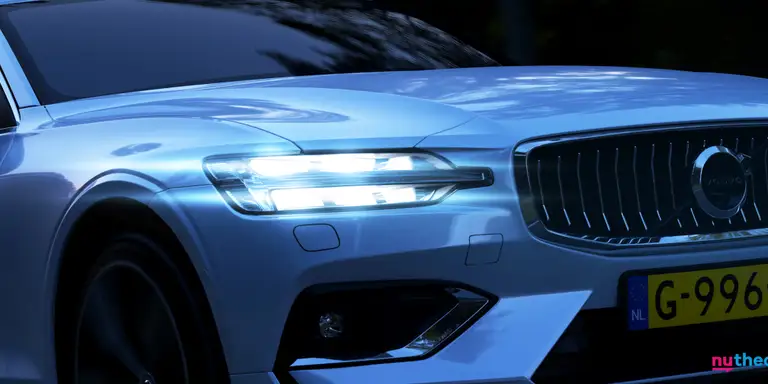
Fog lights are special vehicle lights designed to improve visibility in poor weather conditions. Unlike regular headlights, they are positioned lower on the vehicle and angled toward the road. This helps reduce glare caused by fog, rain, or snow reflecting light back at you.
Their main purpose is simple:
- Help you see better and help others see you in dangerous conditions.
Understanding when and how to use them correctly is not just important for your theory test—it’s essential for safe driving.
Fog Light vs. Rear Fog Light
If a theory question only mentions fog lights, it always refers to the front fog lights.
If it says rear fog light, then it’s clearly about the rear one.
How to recognize the symbols
A handy trick for the exam:
Both symbols include a squiggly line (this represents fog).
- If the bend points forward, it’s the front fog light

- If the bend points backward, it’s the rear fog light

This simple trick can quickly help you choose the correct answer during the test.
Front Fog Lights
Front fog lights are designed to improve your view of the road in low visibility.
You may use them in:
- Heavy fog
- Snow
- Heavy rain
They shine low and wide, helping you see the edges of the road better.
Important tip:
You can combine fog lights with dipped headlights, but it’s not recommended. Using both can sometimes reduce visibility instead of improving it. In most cases, it’s better to choose one.
Rear Fog Lights
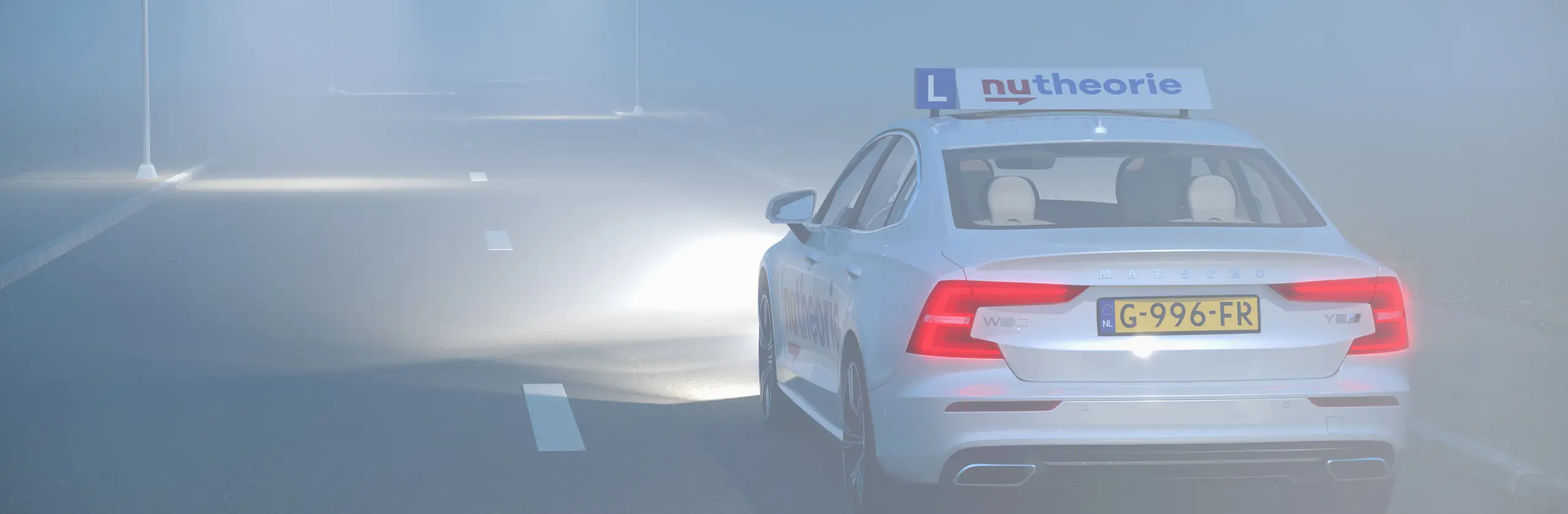
Rear fog lights are meant to make your vehicle more visible to drivers behind you—but they must be used carefully.
You may ONLY use rear fog lights when:
- Visibility is less than 50 meters
- And only in fog or snow
Important: Never use rear fog lights in the rain.
They are extremely bright and can reflect off wet roads, which may blind or distract drivers behind you.
Misusing rear fog lights is not only dangerous but can also lead to fines.
How Do You Know If Visibility Is Less Than 50 Meters?
This is a classic theory exam question.
Use the hectometer posts along the road:
- These posts are spaced 100 meters apart
- If you can clearly see the next post → visibility is more than 50 meters → rear fog lights are NOT allowed
- If you cannot see the next post → visibility is less than 50 meters → rear fog lights are allowed
Simple, practical, and very useful during both the exam and real driving.
Common Mistakes Candidates Make
Many learners lose points on this topic because of small but important mistakes:
- Thinking fog lights are always allowed
- Using rear fog lights in the rain
- Forgetting the 50-meter visibility rule
- Mixing up the front and rear symbols
Avoiding these mistakes can easily earn you extra points on your theory exam.
Are Fog Lights Mandatory?
A common misconception is that fog lights are required—but that’s not true.
- Not all vehicles are equipped with fog lights
- Dipped headlights can always be used instead
This means fog lights are optional, not mandatory.
Tip for the Theory Exam
This topic appears regularly in theory exams, so make sure you:
- Understand the difference between front and rear fog lights
- Remember the symbol trick
- Know the 50-meter rule
- Avoid common mistakes
Mastering these points will give you a clear advantage.
Practice Question
Now that you know everything about fog lights, try this:

When are front fog lights allowed?
A. Only for rear fog light situations
B. In heavy fog, snow, and rain
C. Only dipped headlights are always allowed
Correct answer: B
Front fog lights may be used in heavy fog, snow, and rain.
Conclusion
Fog lights may seem like a small topic, but they play a big role in both your theory exam and road safety. Knowing the difference between front and rear fog lights, understanding when to use them, and recognizing their symbols can make all the difference.
Front fog lights help you see better in poor conditions, while rear fog lights are designed to help others see you—but only when used under strict rules. In both cases, visibility and proper usage are key to staying safe on the road.

.jpg)