

The Netherlands has an extensive network of tunnels that are used by thousands of drivers every day. From short urban tunnels to long motorway tunnels, they help traffic flow safely and efficiently. Modern tunnels are equipped with advanced technology such as cameras, ventilation systems, smoke detection, and 24/7 monitoring from control rooms.

However, technology alone is not enough. Safe driving in a tunnel starts with the driver. Because you are driving in an enclosed space with fewer opportunities to avoid hazards, special traffic rules and safety procedures apply. Knowing these rules will help you drive safely through a tunnel and understand what to do if something goes wrong.
Why Are There Special Rules for Tunnels?
A tunnel is a different driving environment from a regular road. There is less room to manoeuvre, lighting conditions change quickly, and in the event of an incident, smoke and heat can spread rapidly. That is why tunnels are designed with extensive safety systems and clear rules for road users.
Because space is limited, it is essential that every driver behaves predictably, keeps a safe following distance, and follows all traffic signs and signals.
Dipped Headlights Are Mandatory in a Tunnel
One of the most important rules is the use of dipped headlights.
Even if a tunnel is well lit, you are legally required to drive with dipped headlights. This makes your vehicle more visible to other road users. Your rear lights will also be on, making it easier for drivers behind you to see your vehicle, which contributes to overall road safety.
Many people assume that the tunnel's lighting is sufficient, but this is not the case. Dipped headlights are always mandatory, regardless of how well the tunnel is illuminated.
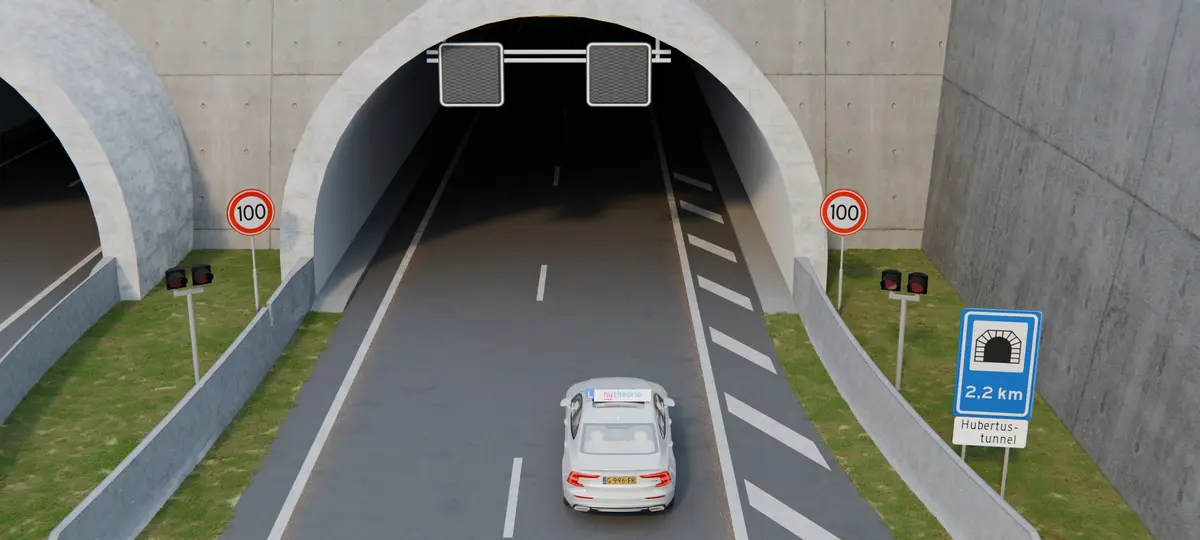
Turn On Your Lights Before Entering the Tunnel
Do not wait until you are already inside the tunnel. It is best to switch on your dipped headlights just before entering.
This ensures that you are visible from the moment you enter the tunnel, making it safer for both you and other road users.
Driving with a Faulty Headlight
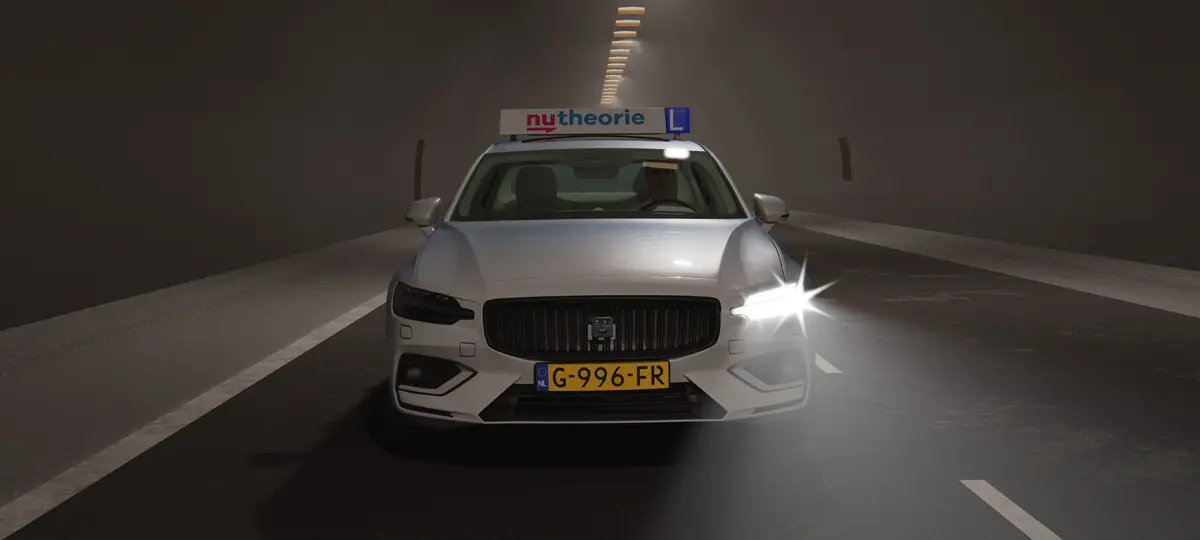
Properly functioning lights are an essential part of a roadworthy vehicle. If one of your dipped headlights is not working, have it repaired as soon as possible.
You may not replace a faulty dipped headlight by using:
- high beam;
- parking lights;
- fog lights.
Check your vehicle's lights regularly to help prevent dangerous situations and ensure you can drive safely.
What Should You Do If You Break Down in a Tunnel?
Breaking down in a tunnel requires extra caution. A stationary vehicle can block traffic and create dangerous situations because other drivers have fewer opportunities to avoid obstacles.
If your vehicle breaks down, try to leave the tunnel or reach an emergency lay-by if it is safe to do so. If that is not possible, switch on your hazard warning lights immediately so other road users are aware of the situation.
If you need to leave your vehicle, only do so when it is safe. Do not stand next to your car. Once outside, walk approximately 50 metres in the direction of traffic and stand against the tunnel wall. This keeps you out of immediate danger while allowing emergency services enough room to work.
What Should You Do If There Is a Fire in a Tunnel?
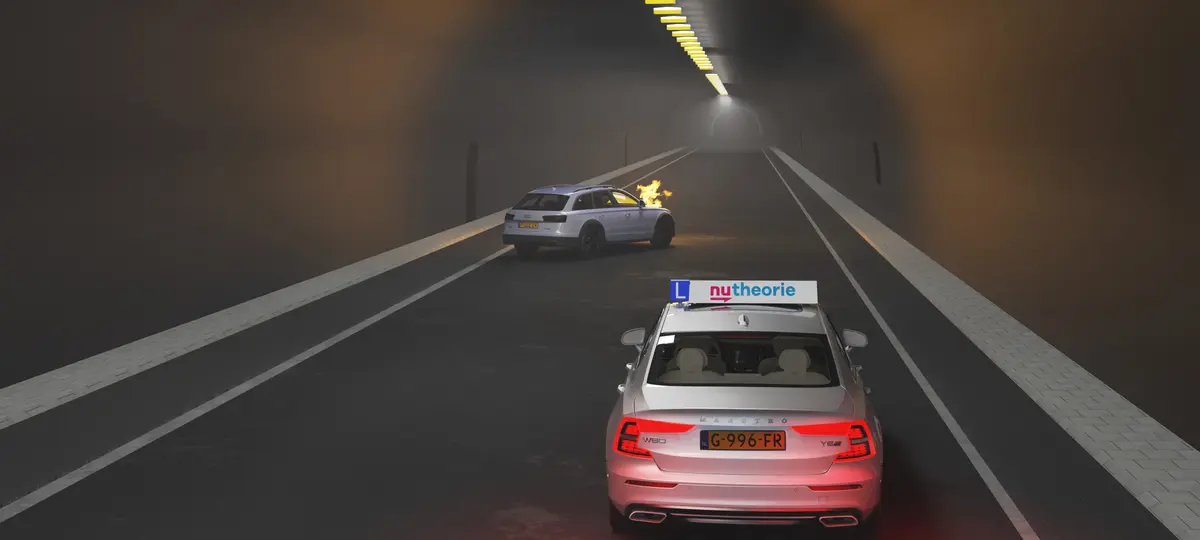
A fire inside a tunnel is an emergency in which quick and calm action is essential.
If you see a vehicle on fire or your own vehicle catches fire:
- keep a safe distance and switch on your hazard warning lights;
- never turn around or reverse;
- switch off the engine;
- leave the key in the ignition;
- leave the vehicle immediately;
- follow instructions given through loudspeakers, electronic signs, or emergency services;
- walk along the tunnel wall away from the fire;
- leave the tunnel using the nearest emergency exit.
Always remain as calm as possible and follow the instructions provided. This helps maximise safety for yourself and everyone else.
Why Should You Leave the Keys in the Ignition?
Many drivers are unaware that, during an evacuation, they should leave their car keys in the ignition.
There is an important reason for this. Emergency services may need to move your vehicle quickly if it is blocking traffic or creating a hazard. Every second counts during an emergency. Leaving the keys behind allows firefighters and other emergency responders to move vehicles without delay.
Smoke from Under the Bonnet Near the End of the Tunnel
If you notice smoke coming from under your bonnet when you are almost at the end of the tunnel, continue driving until you have exited the tunnel, provided it is safe to do so.
Once outside, stop in a safe location, such as the hard shoulder, and contact emergency services if necessary.
Avoid stopping inside the tunnel whenever possible, as doing so could create additional danger for other road users and make it more difficult for emergency services to reach you.
What Should You Watch Out for When Leaving a Tunnel?
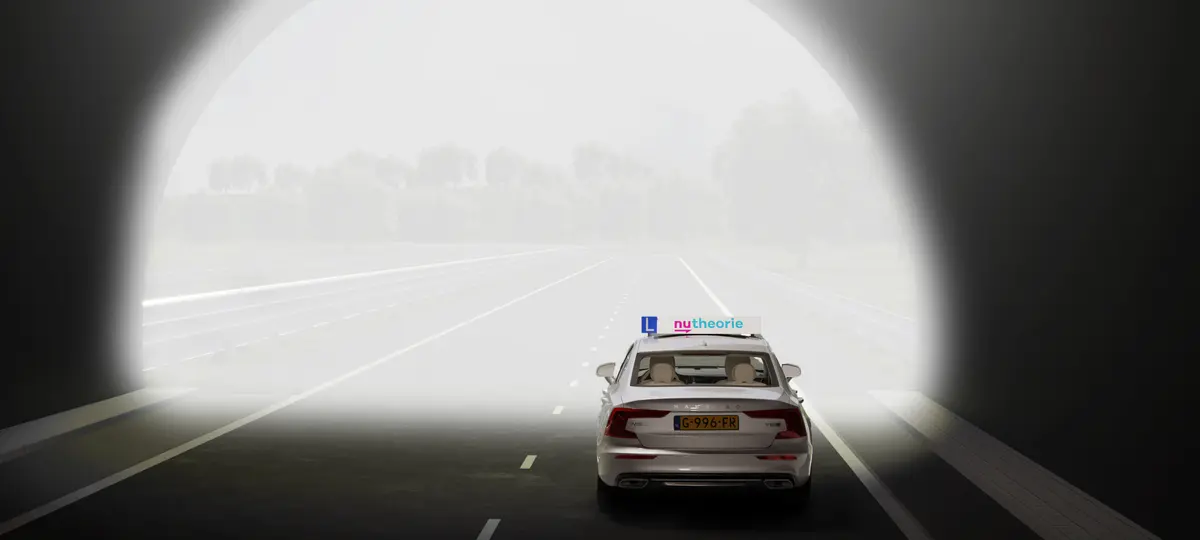
When you leave a tunnel, the amount of light changes dramatically within a short period of time. On bright sunny days, your eyes may need a few seconds to adjust to the daylight.
Keep the following in mind:
- temporarily reduced visibility;
- changing traffic conditions outside the tunnel;
- maintaining a safe distance from the vehicle ahead.
Adjust your speed to the conditions and stay alert until your vision has fully adapted.
Common Mistakes When Driving in a Tunnel
Although the rules are clear, drivers still make common mistakes, including:
- forgetting to switch on dipped headlights;
- turning on headlights only after entering the tunnel;
- following too closely;
- stopping in a dangerous location after a breakdown;
- standing next to the vehicle;
- taking the car keys during an evacuation;
- reversing or turning around during an incident.
Avoiding these mistakes helps create a safer environment for everyone on the road.
Safe Tunnel Driving Starts with the Right Knowledge
Driving through a tunnel may seem straightforward, but safe driving is especially important in this enclosed environment. By switching on your dipped headlights before entering, keeping a safe following distance, and knowing what to do in the event of a breakdown or fire, you can significantly reduce the risk of dangerous situations.
Whether you have been driving for years or are still preparing for your driving test, understanding the rules for tunnel driving will help you drive with greater confidence and stay safer on the road.