.jpg)

Seat belts and child seats play a crucial role in road safety. Many theory exam questions focus on the correct use of seat belts, booster seats, and child restraints. Understanding these rules not only helps you pass your theory exam but also protects you and your passengers on the road.

This guide explains the most important rules step by step.
Wearing a Seat Belt in the Car
In a car, wearing a three-point seat belt is mandatory. This rule applies to everyone in the vehicle, including the driver and all passengers.
Important rules to remember:
- A seat without a functioning seat belt may not be used.
- Everyone must wear a seat belt, both in the front and the back of the vehicle.
- Not wearing a seat belt is punishable by law.
- Wearing a seat belt significantly increases your chances of surviving a traffic accident.
For this reason, it is essential that the seat belt is worn correctly.
Who Is Responsible for Wearing a Seat Belt?
Responsibility depends on the passenger’s age.
Passengers under 12 years old
- The driver is responsible for ensuring the child wears a seat belt.
- If the child does not wear a seat belt, the driver can receive a fine.
Passengers aged 12 or older
- The passenger is responsible for wearing their own seat belt.
If they fail to wear one, they receive the fine themselves.
When a Seat Belt Is Not Positioned Correctly
A common mistake is when the seat belt runs against the neck of a child instead of across the chest. This situation is not safe.
You also cannot use the belt as a lap belt only. A three-point seat belt must always be worn properly across the shoulder and chest. If the belt does not fit correctly, the correct solution is to use a booster seat.
A booster seat raises the child so the seat belt fits properly across the chest and shoulder, making it much safer.
Children Shorter Than 1.35 Meters
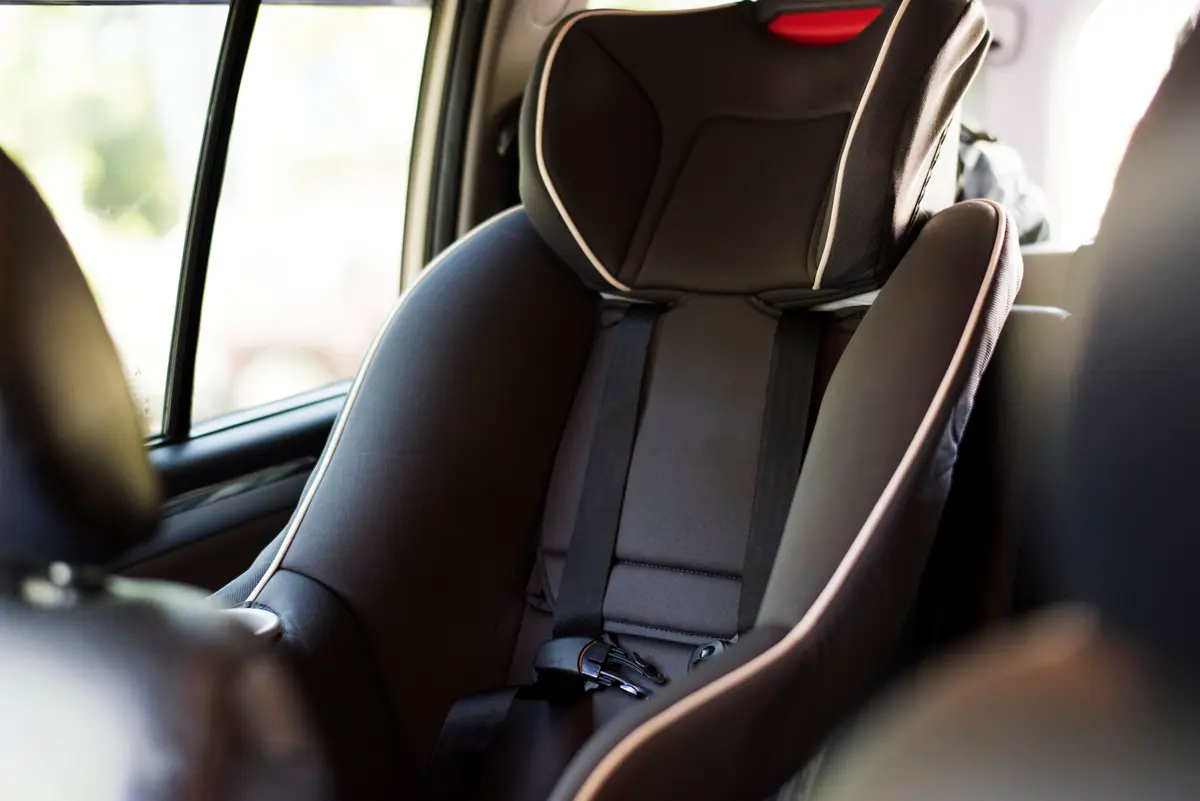
Children under 1.35 meters must use a booster seat or an approved child car seat.
At this height, a normal seat belt does not fit safely yet. Without a proper child seat, the belt could cause serious injuries in the event of an accident.
Key rule:
- Children under 1.35 meters must use an approved child restraint system.
Can a Child Sit in the Front Seat?
Many people think children are not allowed to sit in the front seat, but that is not entirely true. A child may sit in the front seat if a proper child seat is used.
Children can therefore be transported:
- In the front seat
- In the back seat
However, there are additional safety considerations.
Rear-Facing Child Seats and Airbags
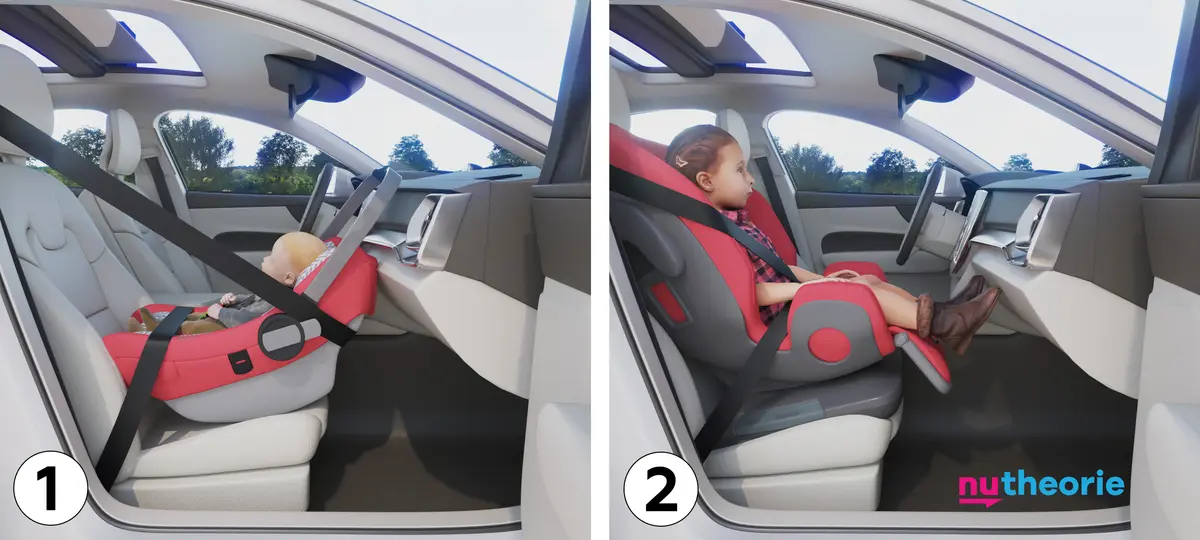
For very young children, it is strongly recommended to use a rear-facing child seat. This position offers much better protection for the child’s head and neck during a collision.
But there is one critical rule when placing a rear-facing child seat in the front passenger seat. The airbag must be switched off.
If the airbag deploys while a rear-facing child seat is installed, it can strike the back of the seat with great force. This can cause serious or even fatal injuries.
Always check that the airbag is disabled before placing a rear-facing child seat in the front.
A Common Theory Exam Question
A frequently asked question in the theory exam involves the safest placement of a child seat.
If a child seat is placed on the front passenger seat and the airbag is switched off, the safest position is rear-facing. This setup provides the best protection during a collision because the child’s body is supported by the entire seat structure.
In theory exam questions, the rear-facing option is usually the safest choice when the airbag is disabled.
Why These Rules Matter
Seat belts and child seats are designed to reduce injuries and save lives. Using them correctly ensures that both adults and children are protected during unexpected situations on the road.
For your theory exam, remember these key points:
- Everyone in the car must wear a seat belt.
- Children under 12 are the driver’s responsibility.
- Children under 1.35 meters must use a child seat or booster seat.
- Rear-facing child seats are safest for young children.
When using a rear-facing seat in the front, the airbag must be switched off.
Prepare Properly for Your Theory Exam
Want to make sure you fully understand traffic rules and pass your theory exam with confidence? Follow a car, scooter, or motorcycle theory course and learn everything step by step.
Sign up for a one-day theory course or an online theory course and prepare effectively so you can pass your theory exam quickly and move one step closer to getting your driver’s license.