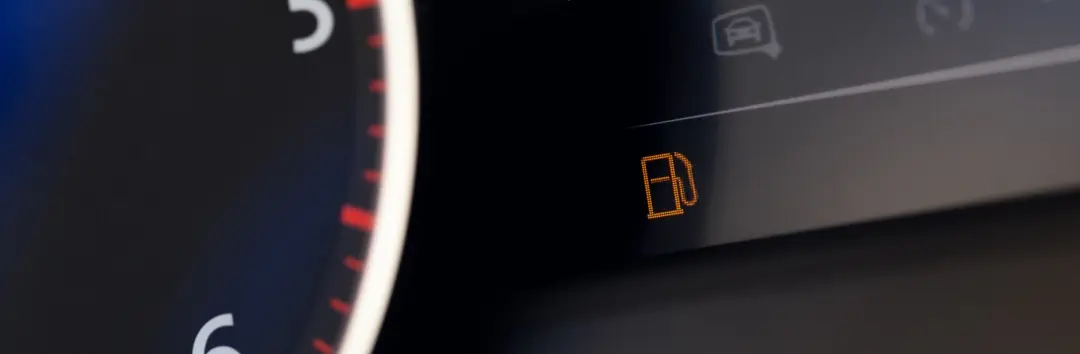

A warning light rarely comes out of nowhere. Usually it points to a problem that has been building for a while: too little oil, low tyre pressure or a coolant level that slowly drops. The good news is that you can spot many of these problems yourself, in time. You don't need to be a mechanic.

Want to know what a light means once it is already on? Then start with our article on dashboard lights. Here we go one step further and show you how to keep it from getting that far.
Why prevention beats reaction
When a red light comes on, you often have to stop right away. That is inconvenient, sometimes dangerous and usually expensive. A quick check of a few minutes a month costs almost nothing. You see the problem coming before your car has to tell you.
You also drive more safely. A car with the right tyre pressure, good brakes and enough oil responds the way you expect. That gives you peace of mind, especially when you have just passed your test.
Before you start: how to check safely
Park on level ground and switch off the engine. Apply the handbrake. Open the bonnet with the lever inside the car, usually below the steering wheel on the left, and secure it with the support rod.
Check fluids when the engine is cold, or at least wait a few minutes after driving. Parts under the bonnet can get very hot. Your owner's manual shows exactly where everything is.
How to check your oil level
Engine oil lubricates and cools the moving parts of your engine. Too little oil can cause serious engine damage. That makes checking the oil the most important check of all.
Here is how:
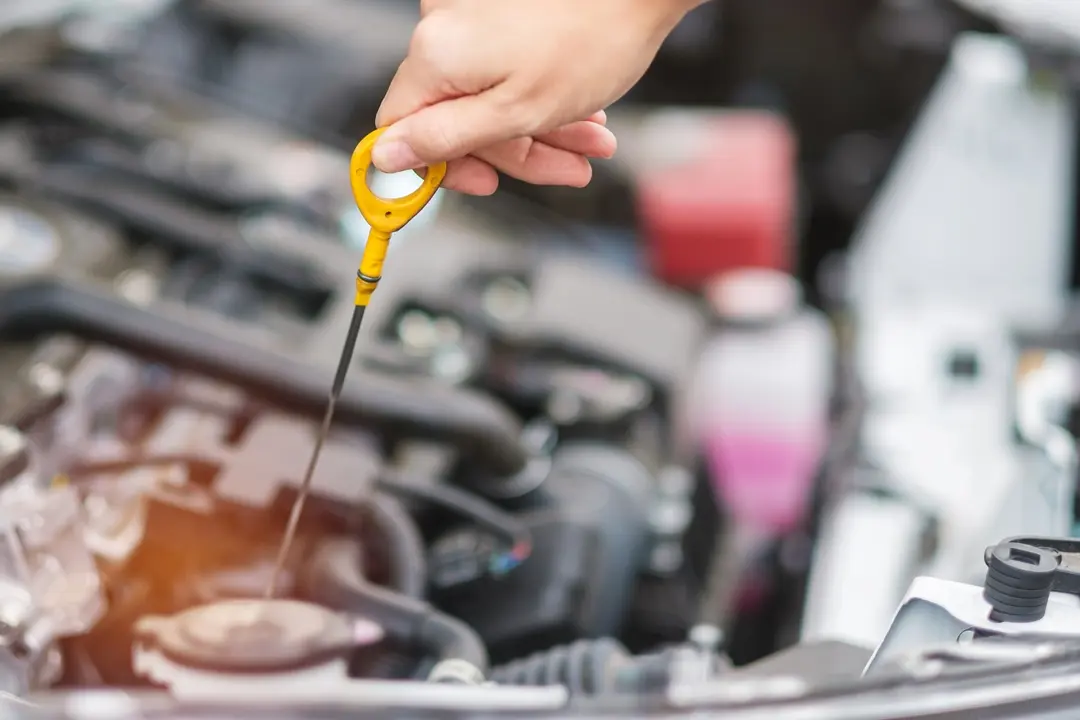
- Pull out the dipstick. It often has a yellow or orange ring.
- Wipe it clean with a cloth or paper towel.
- Push it all the way back in and pull it out again.
- Look where the oil stops on the dipstick. The level should sit between the minimum and maximum marks.
Is the level at or below the minimum? Top up with the oil listed in your owner's manual. Add small amounts and check again in between. Too much oil is also bad for the engine. Some newer cars have no dipstick. In that case you read the oil level on the on-board computer.
How to check your coolant
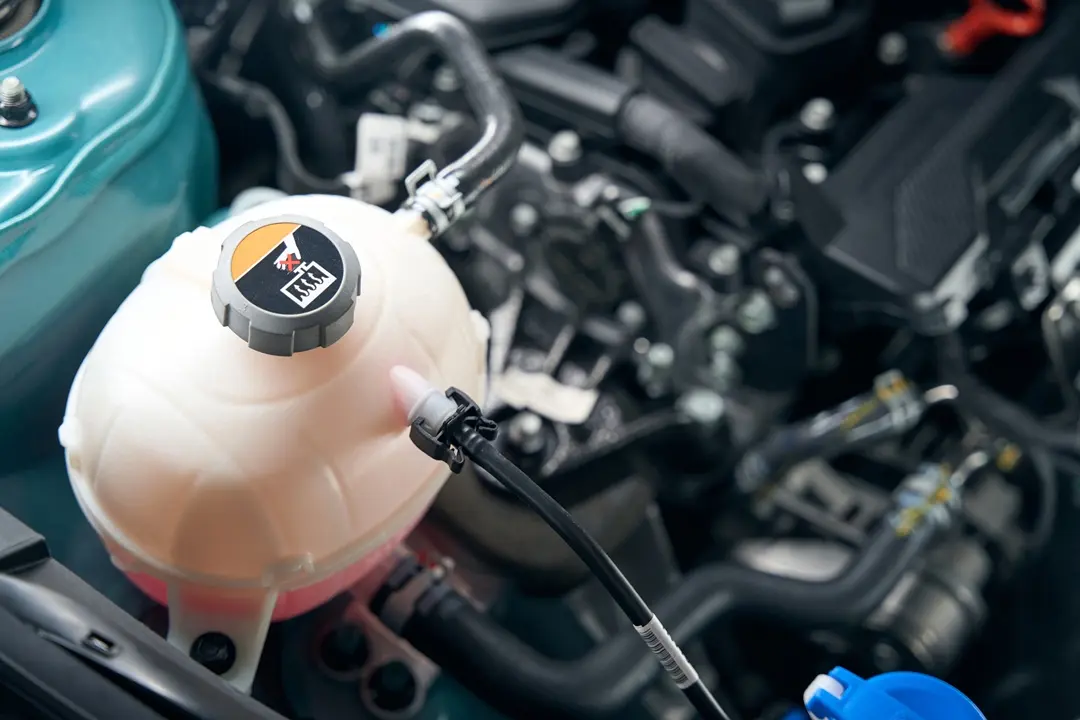
Coolant keeps your engine from overheating. You check the level at the expansion tank. That is a see-through reservoir with a min and a max line.
Only check coolant when the engine is cold. Never open the cap of a hot cooling system: the fluid is under pressure and can cause serious burns. Does the level keep dropping? Have a garage check for a leak.
How to check your brake fluid
Without good brake fluid, your brakes work less well. The reservoir usually sits at the back of the engine bay on the driver's side and also has a min and a max line.
The level drops very slowly as your brake pads wear. That is normal. Does it drop quickly or suddenly? Drive no further than you need to and have your brakes checked straight away. Brake fluid also needs replacing regularly, on many cars about every two years. Check your car's service schedule.
How to check your tyre pressure
Low tyre pressure means higher fuel use, faster wear and poorer road holding. On many cars it also triggers a warning light.
You can find the right pressure on a sticker in the door frame, inside the fuel flap or in the owner's manual. Measure it when the tyres are cold, for example at a petrol station close to home. Do this about once a month and always before a long trip. Take a look at the tread while you are there.
Topping up screen wash
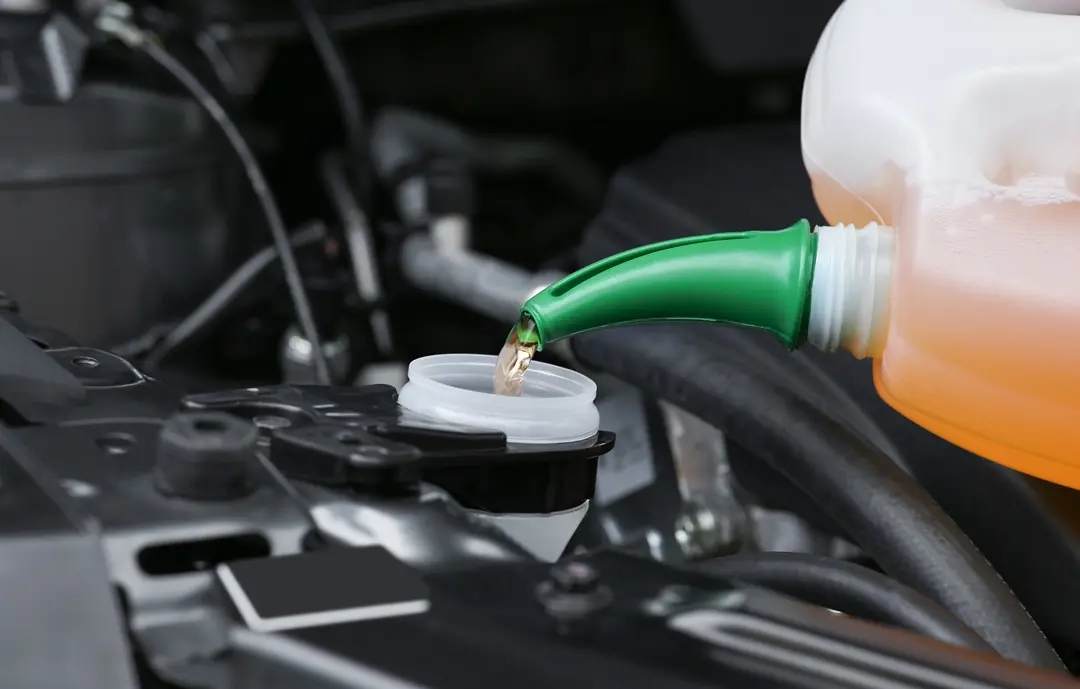
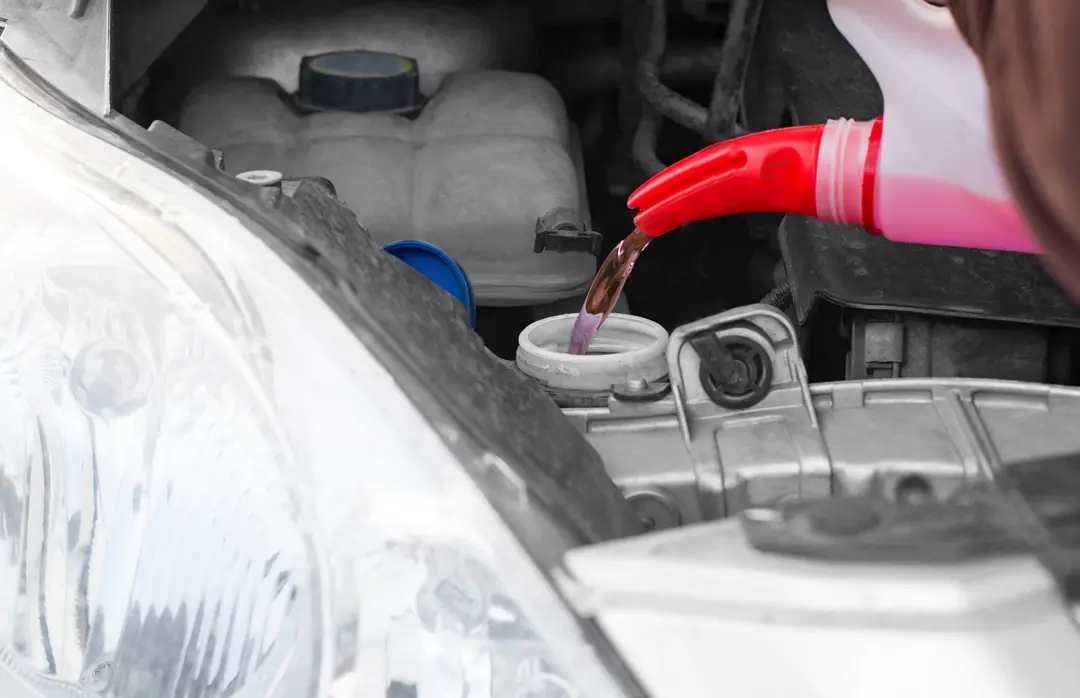
A clean windscreen matters for your view of the road, especially with low sun, rain or dirty roads. You can recognise the screen wash reservoir by the cap with a windscreen and water spray symbol.
Top it up before it runs empty. In winter, use screen wash with antifreeze so it doesn't freeze. Many cars show a message when the reservoir is nearly empty.
Lights and battery
Every now and then, walk around your car with the lights on. Check the dipped headlights, rear lights, brake lights and indicators. Ask someone to stand behind the car while you brake. On many cars a warning light comes on when a bulb has failed.
Does the engine struggle to start, especially in cold weather? Your battery may be getting weaker. Have a garage test it before it leaves you stranded.
How often to check your car
- Every month: oil level, tyre pressure and screen wash.
- Before a long drive or holiday: every check in this article, plus lights and tread.
- Every season: coolant, brake fluid and the battery, especially before winter.
- According to the service schedule: a service at the garage, where parts you can't see yourself are replaced.
Why this matters for your theory exam
he theory exam can include questions about your vehicle. Think of lights, tyres, brakes and what to do when a warning appears. The exam doesn't only test whether you know the rules, but also whether you handle your car responsibly.
When you understand why a check matters, the answer is easier to remember. That helps you in the exam and later on the road.
In short
You prevent warning lights by giving your car a quick check now and then. Check your oil level, tyre pressure and screen wash every month. Look at coolant and brake fluid every season. And have your car serviced on time. That keeps your dashboard quiet and lets you drive off with confidence.